

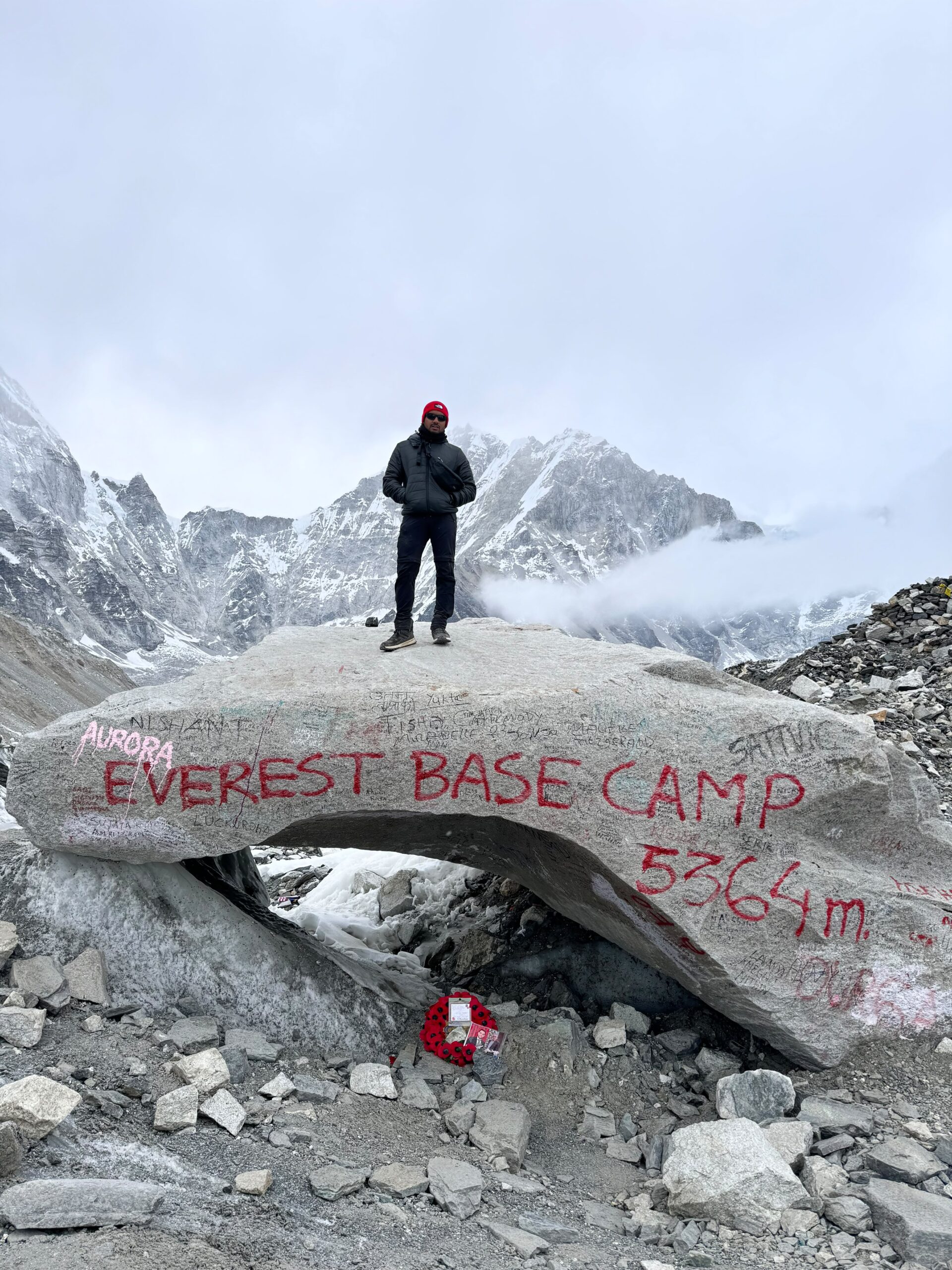

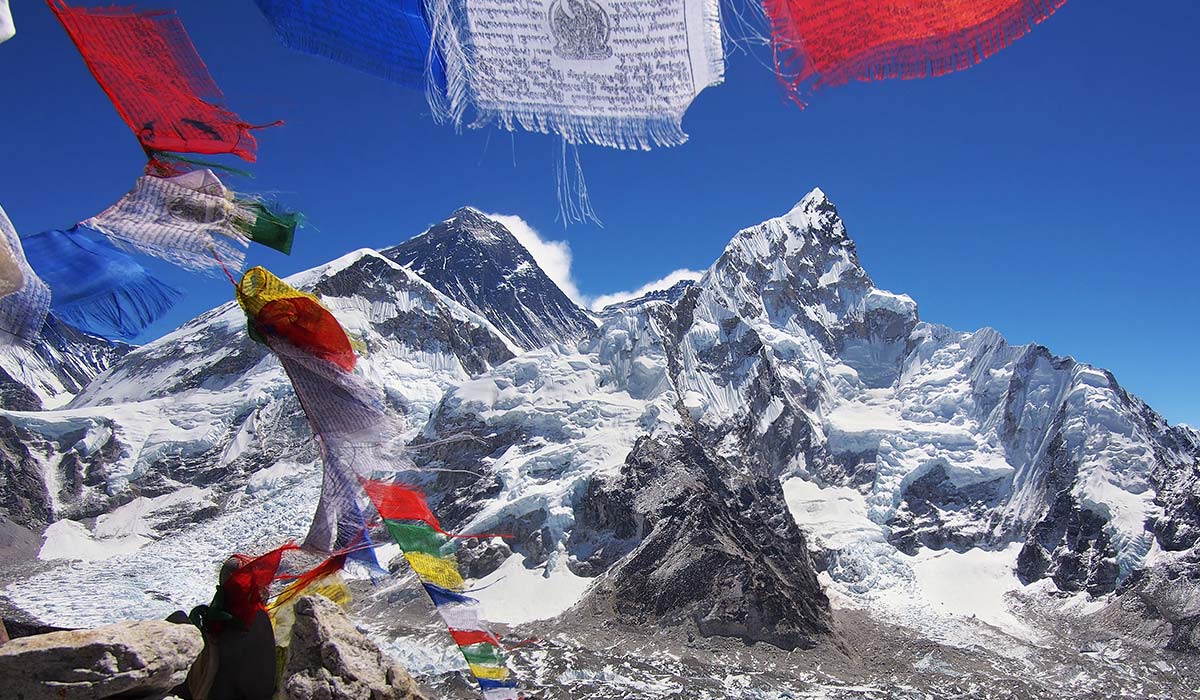

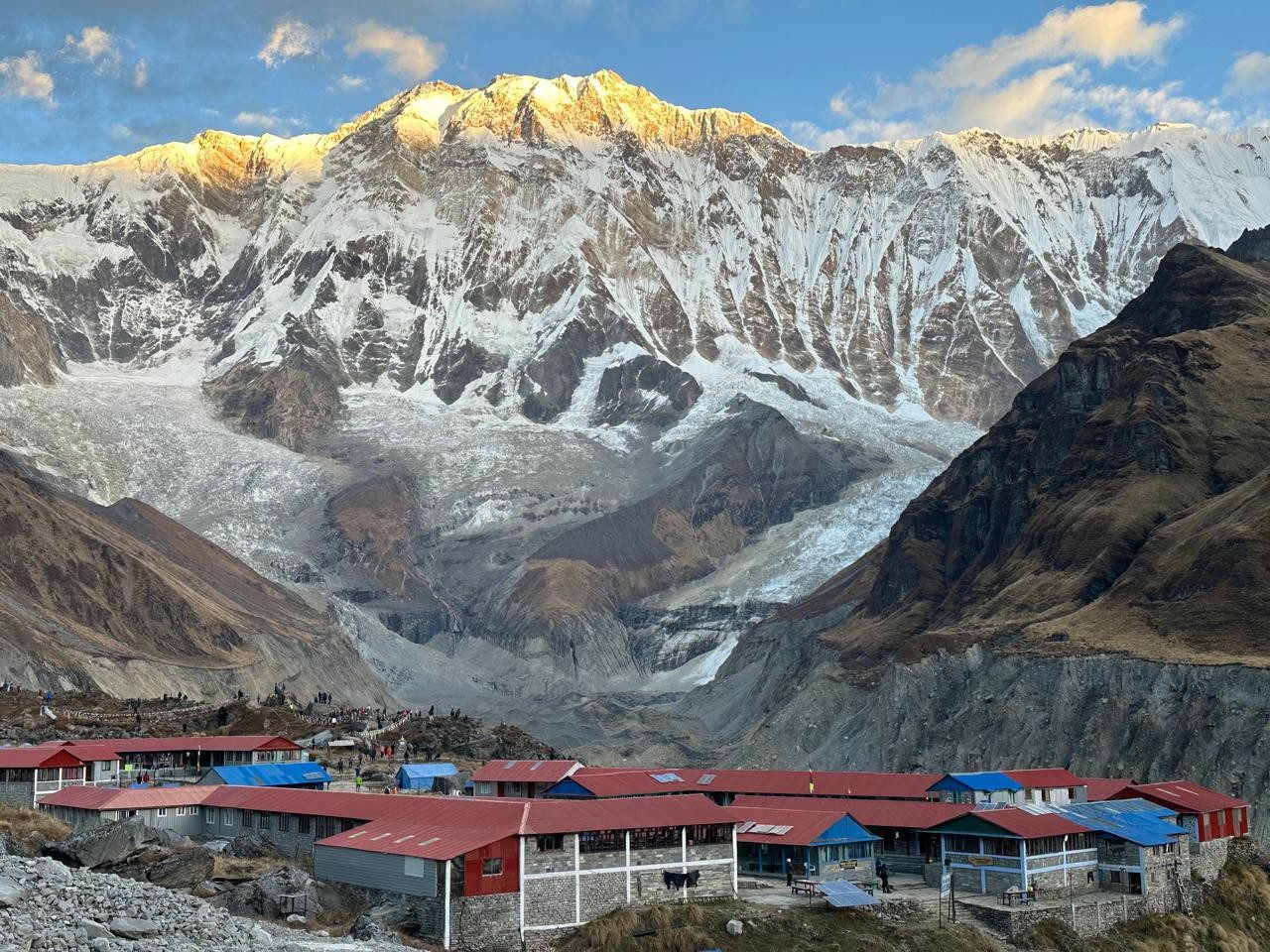
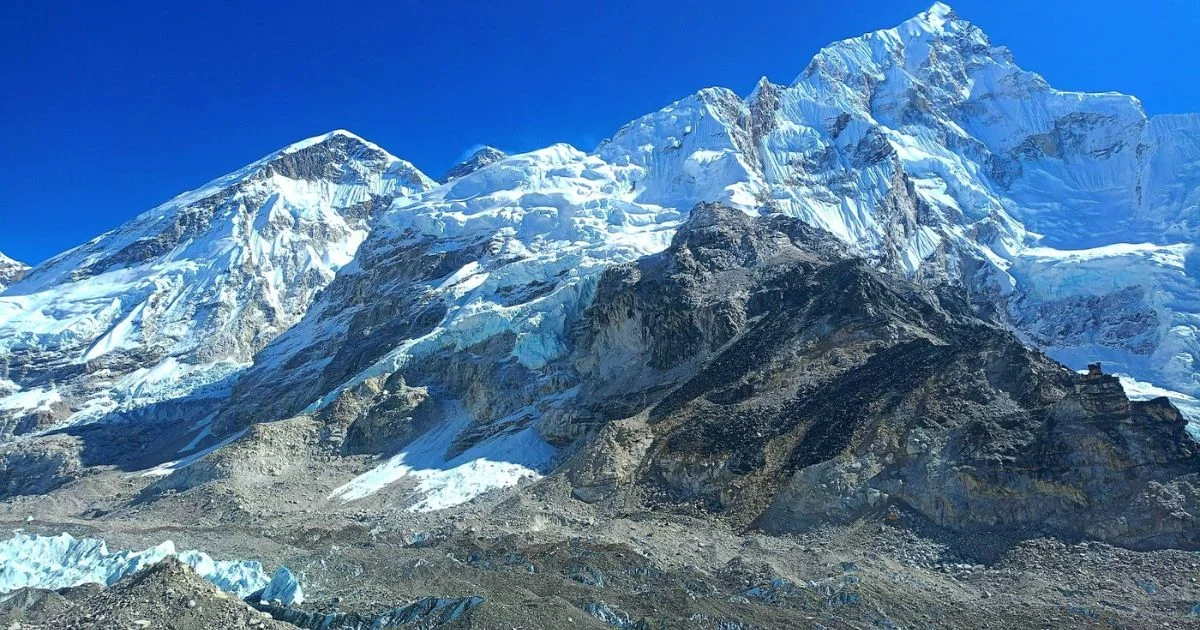





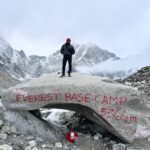


Everest Base Camp (5,364 m) is cold all year. In the main trekking seasons, daytime temperatures at Base Camp are usually around 0 to 8 °C in sunshine, and nights drop to about −6 to −15 °C. In winter, nights can fall to −20 °C or colder.
Lower down it is much milder: Lukla and Namche often reach 10 to 18 °C on sunny days. The air gets roughly 6 to 7 °C colder for every 1,000 m you climb, and wind makes it feel colder still.
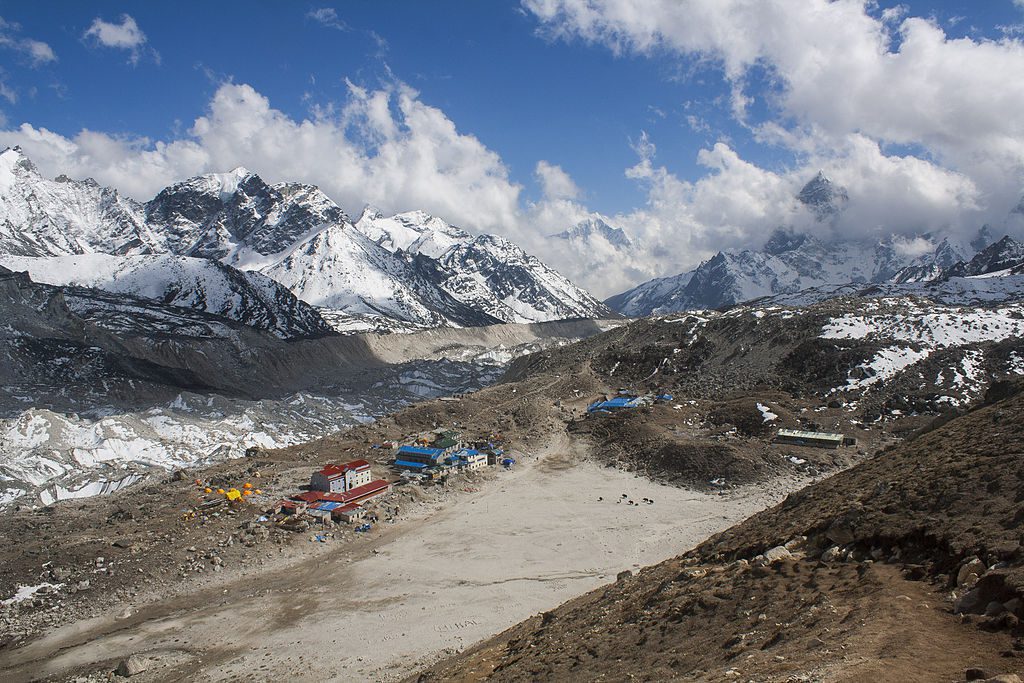
Everest Base Camp temperature by month
These are typical ranges at Base Camp and Gorak Shep (5,164 to 5,364 m), the coldest part of the trek. They change from year to year, so use them to pack, not as a promise. To choose when to go, see our best time to trek to Everest Base Camp guide.
| Month | Day (sun) | Night | Weather | Trekking |
|---|---|---|---|---|
| January | −5 to 0 °C | −15 to −25 °C | Coldest month, dry, clear, strong wind | Very cold |
| February | −4 to 2 °C | −15 to −22 °C | Cold and clear, some snowfall | Very cold |
| March | −2 to 4 °C | −10 to −18 °C | Warming up, afternoon cloud begins | Good |
| April | 0 to 6 °C | −6 to −14 °C | Stable, sunny mornings, expedition season | Best |
| May | 2 to 8 °C | −4 to −10 °C | Warmest dry month, more afternoon cloud | Best |
| June | 3 to 9 °C | −2 to −6 °C | Monsoon arrives, cloud, rain lower and snow higher | Wet |
| July | 4 to 10 °C | 0 to −5 °C | Warmest but wettest, views often hidden | Wet |
| August | 4 to 10 °C | 0 to −5 °C | Monsoon continues, flight delays | Wet |
| September | 2 to 8 °C | −3 to −10 °C | Rain early, clearing late in the month | Mixed |
| October | 0 to 6 °C | −8 to −15 °C | Clearest skies of the year, dry | Best |
| November | −2 to 4 °C | −10 to −18 °C | Crisp, clear, colder nights | Best |
| December | −4 to 2 °C | −14 to −22 °C | Clear, cold, short days | Good, cold |
At 5,000 m the sun is very strong. On a calm, sunny morning it can feel warm enough for a fleece, even when the air is below freezing. The moment a cloud passes or the sun sets, it feels 10 °C colder.
Temperature by village on the trek
You walk through several climates on the way up. These are typical temperatures in October and April, the main trekking months.
| Village | Altitude | Day | Night | What it feels like |
|---|---|---|---|---|
| Lukla | 2,860 m | 12 to 18 °C | 2 to 6 °C | T-shirt or light layer by day, fleece at night |
| Phakding | 2,610 m | 13 to 19 °C | 3 to 7 °C | Mild river valley, warmest night of the trek |
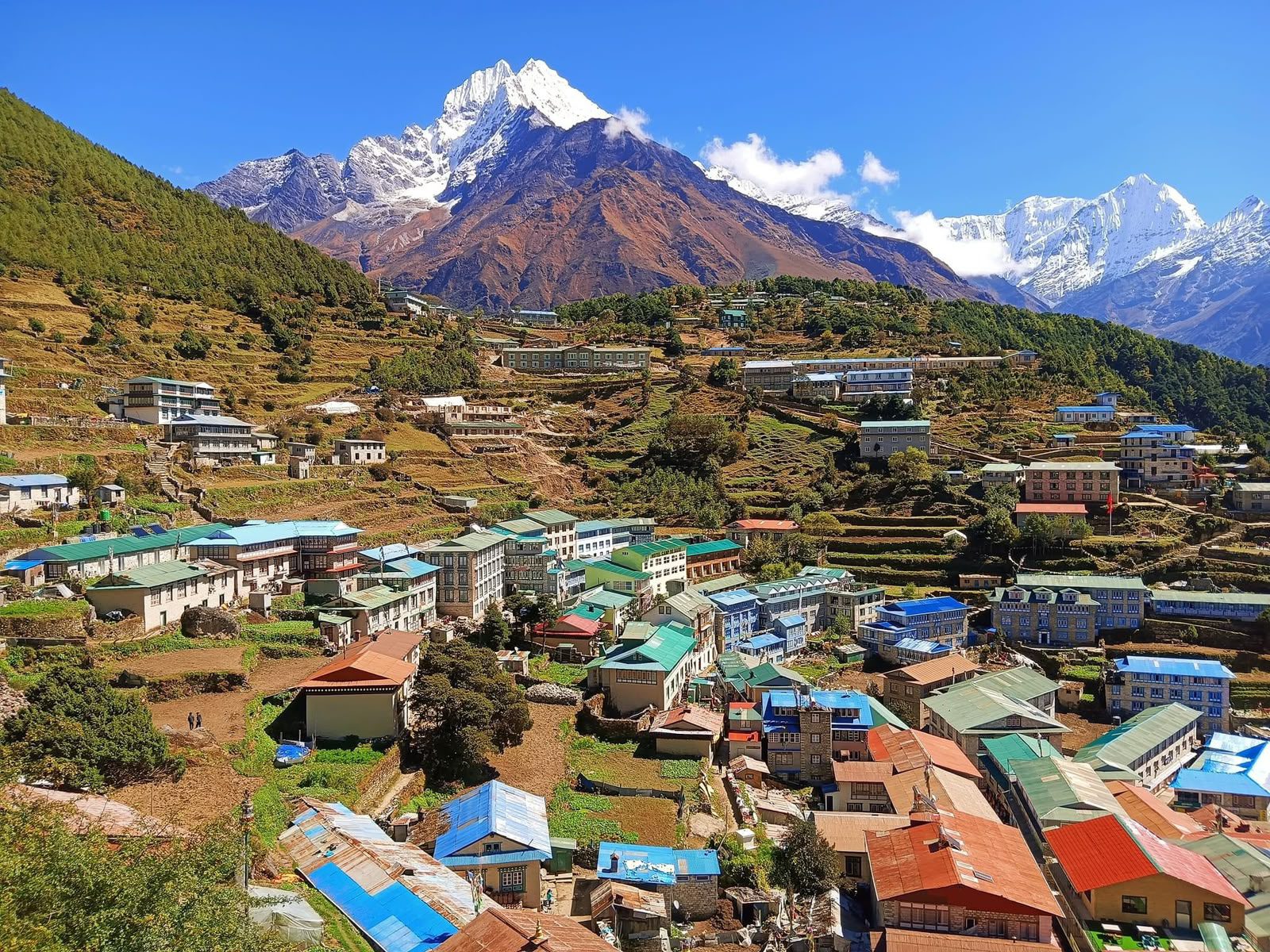
| Namche Bazaar | 3,440 m | 7 to 14 °C | −2 to 3 °C | Cool, first frosty mornings |
| Tengboche | 3,860 m | 5 to 12 °C | −4 to 0 °C | Cold evenings, down jacket time |
| Dingboche | 4,410 m | 3 to 10 °C | −6 to −10 °C | Windy afternoons, freezing nights |
| Lobuche | 4,940 m | 0 to 6 °C | −8 to −13 °C | Cold all day out of the sun |
| Gorak Shep / Base Camp | 5,164 to 5,364 m | 0 to 6 °C | −8 to −15 °C | The coldest night of the trek |
| Kala Patthar at sunrise | 5,644 m | −5 to −15 °C | — | Coldest moment of the trip, plus wind |
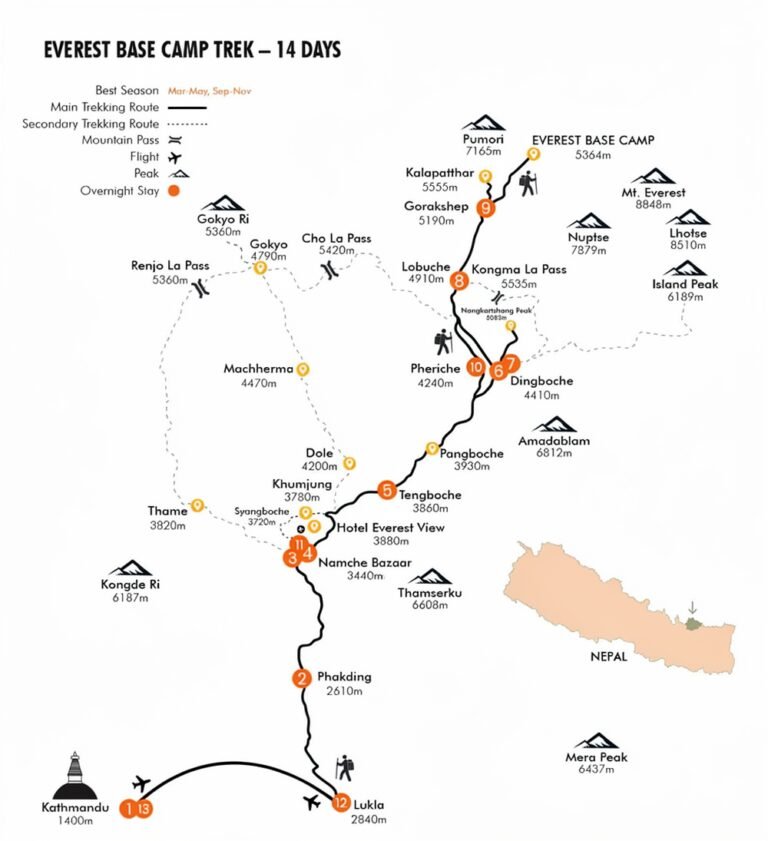
In winter, take roughly 5 to 8 °C off these numbers. In May, add a few degrees. See where each village sits on the route on our Everest Base Camp trek map.
A typical day of weather on the trail
6 to 9 am
Coldest and clearest. Frost on the ground, blue sky, the best mountain views of the day.
9 am to 1 pm
Sun warms the trail fast. Most trekkers walk in a base layer and fleece.
1 to 4 pm
Wind picks up and cloud often rolls up the valleys, especially in spring.
After sunset
Temperatures drop below freezing within an hour at higher villages.
This pattern is why treks start early. Our guides plan the walking day so you arrive before the afternoon wind and cloud.
Wind, sun and wind chill
- Wind: above Dingboche, afternoon winds of 20 to 40 km/h are common. A −5 °C day with wind can feel like −15 °C.
- Sun: UV is very strong at altitude and snow reflects it. Wear sunglasses, a sun hat and high-SPF sunscreen even when it’s cold.
- Dry air: the cold, dry air irritates throats (the “Khumbu cough”). A buff over your mouth helps.
Rain and snow by season
| Season | Rain and snow | Effect on the trek |
|---|---|---|
| Autumn (Oct–Nov) | Very little. Rare early snow at the highest points. | Dry trails, the most reliable Lukla flights |
| Winter (Dec–Feb) | Dry, but snowstorms can cover upper trails | Ice on the path, microspikes useful, some high lodges close |
| Spring (Mar–May) | Mostly dry, afternoon showers or light snow in late spring | Hazier afternoons, good mornings |
| Monsoon (Jun–Sep) | Most of the year’s rain. Rain lower down, wet snow higher up | Muddy trails, leeches below Namche, frequent flight delays |
Lukla flights need clear visibility, so even in good seasons a cloudy morning can delay them. Keep one or two spare days in Kathmandu. Our Lukla flight guide explains how delays work.
How cold are the teahouses?
Teahouse bedrooms are not heated. Above Dingboche, water bottles left in your room can freeze overnight, and inside temperatures are often below 0 °C. The dining room usually has a stove burning yak dung or wood in the evening, so that’s where everyone gathers to stay warm.
- Use a sleeping bag rated to about −15 °C or warmer (we provide one with our trek).
- Fill a bottle with hot water before bed and keep it in your sleeping bag.
- Keep your phone and batteries inside your sleeping bag so the cold doesn’t drain them.
What to wear for each temperature
| Temperature | Where and when | What to wear |
|---|---|---|
| 10 to 18 °C | Lukla to Namche, daytime | T-shirt or thin base layer, light trousers, sun hat |
| 0 to 10 °C | Upper villages by day, lower villages at night | Base layer + fleece, soft-shell or wind jacket |
| −10 to 0 °C | Evenings above 4,000 m | Base layer, fleece, down jacket, warm hat and gloves |
| Below −10 °C | Nights at Gorak Shep, Kala Patthar sunrise | Thermal top and bottoms, fleece, heavy down jacket, mittens, buff, warm socks |
Layers matter more than one big jacket. For the full list, see our Everest Base Camp packing list.
How to check the Everest weather forecast
- Before you fly: check a mountain forecast for Namche Bazaar and Gorak Shep a few days ahead, and Nepal’s Department of Hydrology and Meteorology for warnings.
- On the trail: mobile data works in many villages, and teahouse owners and guides know the local patterns well.
- Trust your guide: if a storm is coming, an extra night in a village is always safer than pushing on.
Worried about the risks? Read how risky the Everest Base Camp trek is and how difficult it is.
Upcoming Everest Base Camp departures
Pick a month with the weather you want. Dates and prices come straight from our booking calendar.
Upcoming Everest Base Camp departures
Choose your season and join a group
32 departures
November 2026 32 departures
- 14 Days EBC Trek (Group) 12 left$ 1,485 per person
- Private 14 Days EBC Trek$ 2,150 per person
- Everest Three Passes Trek 18 Days (Group)$ 1,795 per person
- Private Everest Three Passes Trek 18 Days$ 2,245 per person
- 7 Days EBC Short Trek (Group)$ 1,950 per person
- Private 7 Days EBC Short Trek$ 2,500 per person
No departures match these filters.
Everest Base Camp weather: FAQs
How cold is Everest Base Camp?
In the main trekking seasons, days at Base Camp are around 0 to 8 °C in sunshine and nights around −6 to −15 °C. In winter, nights can drop to −20 °C or colder.
What is the temperature at Everest Base Camp in October?
Typically about 0 to 6 °C during the day in sunshine and −8 to −15 °C at night, with clear, dry weather.
What is the temperature at Everest Base Camp in April and May?
April is usually 0 to 6 °C by day and −6 to −14 °C at night. May is a little warmer, around 2 to 8 °C by day and −4 to −10 °C at night.
What is the coldest month at Everest Base Camp?
January, when nights can fall to −20 to −25 °C and strong winds make it feel even colder.
Does it snow at Everest Base Camp?
Yes, snow can fall in any month. It is most likely in winter and during the monsoon, when rain lower down falls as snow higher up.
Are teahouses heated on the Everest Base Camp trek?
Bedrooms are not heated. Dining rooms usually have a stove in the evening. Above Dingboche, bedrooms are often below freezing at night.
When is the weather best for Everest Base Camp?
October and November have the clearest, most stable weather. April and May are warmer with more afternoon cloud.
Trek in the Best Weather Window
Our 14-day Everest Base Camp Trek runs in spring and autumn, with warm sleeping bags and down jackets included and guides who plan each day around the weather.
Temperatures are typical ranges gathered from trekking records and our guides’ experience, and vary with altitude, time of day, wind and each year’s weather. Always check a current mountain forecast before you travel.