


Holidays Holidays
Tours & Activities Tours & Activities
Transport Transport
Travel Essentials Travel Essentials
Trekking Trekking
HotelsHotels
Menu
Help
Choose your currency
Converted at today's rate. Final amount shown at checkout.
Packing listUpdated 26 Oct 20266 min readReviewed by Sudarshan Adhikari

Everest Base Camp Packing List 2026: Complete Trekking Gear Guide

Everything you need to pack for a safe, comfortable trek to Everest Base Camp

Quick answer

For the Everest Base Camp Trek, pack layered clothing for +20°C days in Lukla and -20°C nights at Gorak Shep, broken-in waterproof trekking boots, trekking poles, a headlamp, sun protection, a first-aid kit and personal medicines. A four-season sleeping bag and down jacket are included on our trek, and most other gear can be rented in Kathmandu, so keep your porter duffel under 10–12 kg.

Duration
14 days
Max altitude
5,545 m (Kala Patthar)
Best season
Mar–May, late Sep–Nov
Duffel weight
10–12 kg (porter carries)
Daypack
25–35 L, about 5 kg (you carry)
Lukla flight limit
15 kg in total
Temperature range
+20°C (Lukla, day) to -20°C (Gorak Shep, night)
Included free
Sleeping bag and down jacket

Packing for the Everest Base Camp Trek is about layering smart, not packing heavy. Over 14 days you move from the mild forests around Lukla (around +20°C by day) to freezing nights at Gorak Shep and Kala Patthar (as low as -20°C), so your gear has to handle both without going over your porter’s 10–12 kg duffel limit.

The good news: you don’t need to buy everything new. On our Everest Base Camp Trek 14 Days, a four-season sleeping bag and a down jacket are included free, and most other bulky items can be rented cheaply in Kathmandu or Namche Bazaar. This list covers everything you need, split into what to bring and what you can rent from us — and we check your gear together at the Kathmandu briefing, so nothing important gets missed.

Before you pack, see what’s included in the trek, the day-by-day itinerary and the route map with altitudes.

Packing list

Everything you’ll need for the trek

62 items6 categories11 you can rent
Simply check it off as you pack.
0 of 62 packed 0%
  • 🔑 Rent from us

    Your knees will thank you on every descent.

  • 🔑 Rent from us

    25–35 L with a porter; 40–60 L if you carry everything yourself.

  • Refill often — a hot one doubles as a hot-water bottle at night.

  • 🔑 Rent from us

    Needed on icy trails above Dingboche, mainly November to March.

  • Waterproof with ankle support — break them in before you fly.

  • Essential for the 4 am Kala Patthar start. Bring spare batteries.

  • Keep gear dry and separate dirty clothes.

  • 🔑 Rent from us

    Keeps your daypack dry in rain and dust.

  • UV is strong at altitude and snow glare can burn your eyes.

  • Long hours on open ridges need good shade.

  • Find anything in seconds in a dark teahouse room.

  • Your warmth foundation — merino or synthetic, never cotton.

  • 🔑 Rent from us

    Warm mid-layer that packs small.

  • Merino stays fresh for days without washing.

  • Light and quick-drying; one softshell pair for the higher days.

  • 🔑 Rent from us

    A proper shell for wind, rain and snow.

  • Pull them on over trekking trousers in bad weather.

  • Included free on our EBC trek — for evenings, mornings and Kala Patthar.

  • Change out of sweaty trail clothes when you arrive.

  • Liners under wool socks help prevent blisters.

  • Thin enough to use your phone, warm enough for cold mornings.

  • 🔑 Rent from us

    Windproof and warm for the high days.

  • Wear it in the evenings and to sleep up high.

  • Protects against dust, cold air and the Khumbu cough.

  • Laundry is rare on the trail.

  • Good support for long downhill sections.

  • Included free on our EBC trek; if you bring your own, it should be rated to -15°C or lower.

  • 🔑 Rent from us

    Adds a few degrees of warmth and keeps the bag clean.

  • Teahouse walls are thin.

  • Pillows are provided, but some trekkers prefer their own.

  • Helps on early-morning light and rest days.

  • Dries quickly — teahouses don't provide towels.

  • Travel sizes save weight.

  • For days without a shower above Dingboche.

  • Painkillers, blister plasters, rehydration salts, stomach medicine and your prescriptions. Your guide carries a full team kit.

  • UV gets stronger the higher you go, and snow reflects it.

  • Dry mountain air cracks lips fast.

  • Small and gentle on mountain streams.

  • Use before every meal — the best way to avoid stomach bugs.

  • Teahouses don't provide it, and it gets expensive higher up.

  • Altitude can change your cycle — pack extra.

  • Trim toenails before the trek to protect toes on descents.

  • Never drink untreated tap or stream water.

  • A small courtesy in shared lodges.

  • Download the Khumbu area in an offline map app before you fly.

  • Cold drains batteries — keep it inside your jacket.

  • 🔑 Rent from us

    Charging costs USD 1–5 a time in teahouses.

  • Bring a spare — one always goes missing.

  • Nepal uses round-pin sockets; a universal adapter covers them.

  • Handy for tracking altitude and distance.

  • Good for rest days in Namche and Dingboche.

  • Music helps on long climbs.

  • Needed for permits; we handle the paperwork.

  • Must cover trekking to 6,000 m and helicopter rescue.

  • Cards are rarely accepted on the trail.

  • Give your feet a break at the teahouse.

  • 🔑 Rent from us

    Keep snow and grit out of your boots.

  • 🔑 Rent from us

    Hot drinks on cold mornings.

  • Cheaper from home or Kathmandu than on the trail.

  • Help with hydration at altitude.

  • For evenings and rest days.

  • Duct tape, safety pins, needle and thread.

Good to know

This packing list is here to help, not set strict rules. During our meeting in Kathmandu, we’ll check your gear together. Missing anything? Rent it from us, or we’ll guide you to the best shop for your budget.

Your ticks are saved on this device — come back any time.

Packing Tips / How to Pack

  • Separate wet and dry: Use dry bags or packing cubes to keep sweaty clothes away from clean layers — teahouses rarely have laundry or fast-drying space.
  • Pack your “summit day” layer on top: Keep your warmest jacket, gloves, and hat easily accessible for the early, cold push to Kala Patthar.
  • Roll, don’t fold: Rolling clothes saves space and makes it easier to see what’s in your duffel at a glance.
  • Use ziplock bags for small items: Keep medications, cash, and electronics dry and organized in case of rain or snow.
  • Test your boots before you fly: Never trek in brand-new boots — break them in with at least 2-3 weeks of regular wear beforehand.
  • Keep valuables in your daypack: Passport, cash, camera, and medication should never go in the duffel, since it’s carried separately by your porter.
  • Layer thin, not thick: 3 thin layers trap more heat and are easier to adjust throughout the day than 1 heavy layer.

Weight Limits & Porter Policy

Your duffel bag must not exceed 10-12 kg. This is the standard weight one porter can carry safely and sustainably over 14 days of high-altitude trekking. Your daypack (carried by you) is separate and typically weighs 3-5 kg with water, snacks, and layers included.

If your gear exceeds the limit, we’ll help you rent lighter alternatives in Kathmandu or arrange an extra porter (additional cost) before departure.

Seasonal Packing Differences

Spring (Mar–May): Mild days, blooming rhododendrons at lower altitudes, but still cold nights above Dingboche. Standard packing list applies.

Autumn (Oct–Nov): The clearest skies and most popular season. Similar temperatures to spring, slightly colder at night in November. Standard list applies.

Winter (Dec–Feb): Significantly colder, especially above 4,000m. Add: heavier down jacket, down pants, extra base layers, and better-rated sleeping bag (-20°C or colder). Fewer crowds, but expect snow.

Monsoon (Jun–Sep): Wet, humid lower down, less common for this trek. Add: extra rain protection, quick-dry layers, and leech-proof socks/gaiters for lower elevations.

What NOT to Bring

  • Cotton clothing — it absorbs sweat and stays wet, increasing hypothermia risk. Stick to synthetic or wool layers.
  • Heavy jeans or cotton pants — slow to dry, heavy when wet, poor insulation.
  • A 4-season tent — not needed; you’ll stay in teahouses the entire trek.
  • Too many “just in case” clothes — you won’t shower daily above Namche, so extra outfits just add dead weight.
  • New, unbroken-in boots — a guaranteed way to get blisters on Day 1.
  • Heavy books or bulky electronics — a Kindle or phone is lighter and more practical.
  • Excess cash in large bills — small denominations are far more useful at teahouses.

Frequently asked questions

How much should my duffel bag weigh?

Your porter carries up to 10–12 kg per trekker, plus you carry your own daypack of about 5 kg. The Lukla flight allows 15 kg in total.

Do I need to buy a sleeping bag?

No. A four-season sleeping bag rated to about -15°C to -20°C is included free on our trek, together with a down jacket. If you prefer your own, bring one rated to at least -15°C.

What temperatures should I prepare for?

From about +20°C on sunny days around Lukla to -20°C at night in Gorak Shep. Layers work better than one heavy jacket, because days can be warm while nights are very cold.

Are trekking poles really necessary?

Yes, especially for the steep descents and to save your knees over 11 days on the trail. They are cheap to rent if you don't own a pair.

Can I rent gear in Kathmandu?

Yes. Jackets, poles, gaiters, microspikes and more can be rented in Thamel or Namche Bazaar for a small daily fee, which saves money and luggage space.

Do I need microspikes?

Usually only from November to March or after fresh snow, when trails above Dingboche can be icy. Your guide will tell you before the trek.

What medicines should I bring?

Basic painkillers, blister plasters, rehydration salts, stomach medicine and your personal prescriptions. Ask your doctor about Diamox (acetazolamide) for altitude before you travel.

How much cash should I bring?

Bring Nepali rupees in small notes for snacks, hot showers, Wi-Fi and charging — roughly USD 20–25 a day. The only ATMs on the route are in Lukla and Namche Bazaar and they often run out.

What do people most often forget?

A headlamp with spare batteries, a power bank, toilet paper and lip balm. Teahouses often have limited electricity and mornings start before sunrise.
Everest Base Camp Trek 14 Days – Classic Nepal Himalayan Journey4.9(96)14 Days$ 1,800.00$ 1,485.00per person
Book now

Plan your Everest Region trip

Places to see

Khumjung Monastery (Yeti Scalp)Monastery
Khumjung village, above Namche Bazaar, Khumbu, Solukhumbu, Nepal

Khumjung Monastery (Yeti Scalp)

The little monastery that keeps the Khumbu's famous yeti scalp

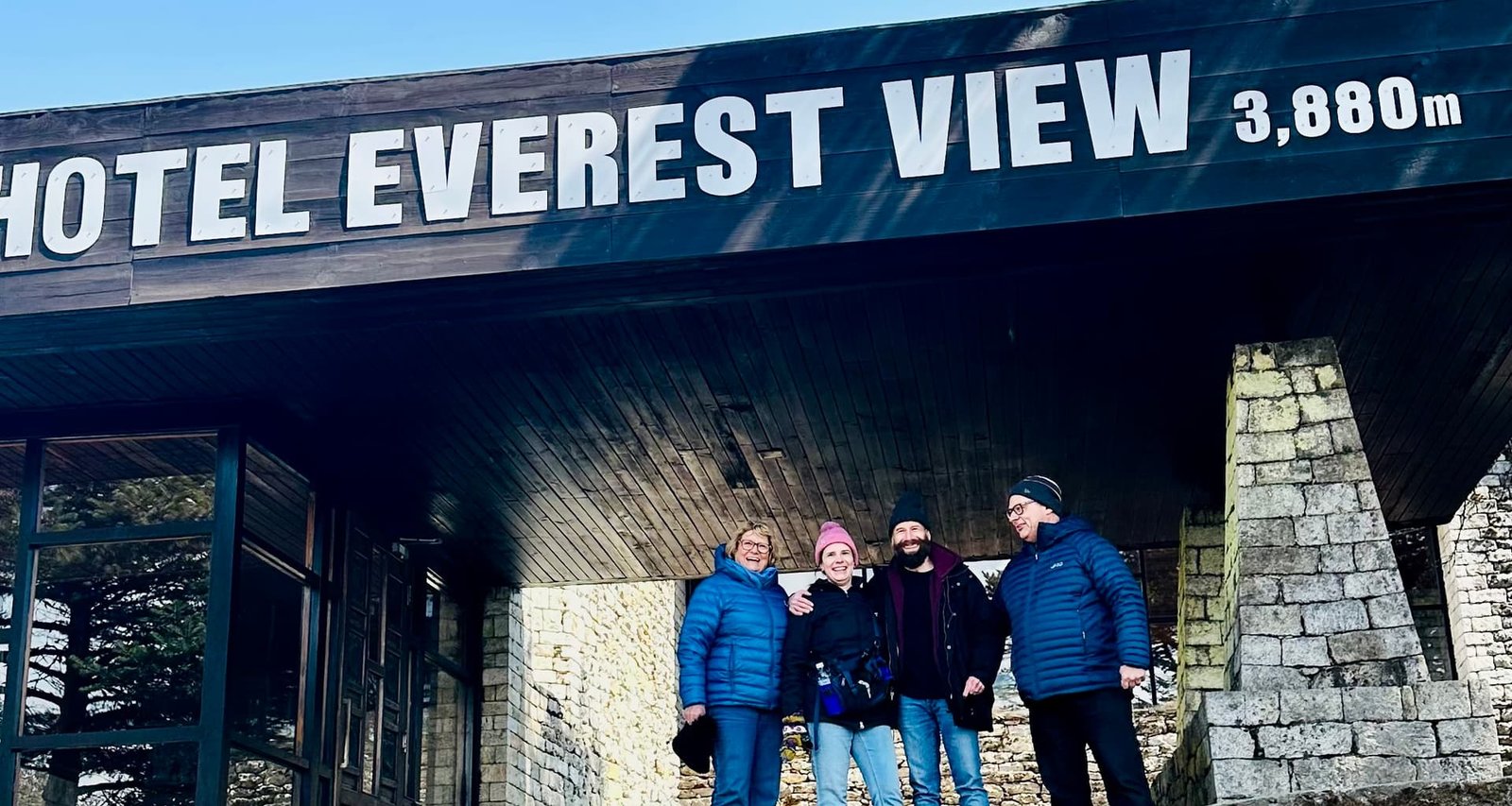
Khumjung Monastery (about 3,790 m) keeps the Khumbu's last 'yeti scalp', examined by Sir Edmund Hillary's 1960 expedition and found to be made from serow skin. Visit it on the Namche acclimatisation day, with the Hillary School and Hotel Everest View.

About 3,790 m / 12,430 ftMarch to May and September to NovemberModerate (uphill walk from Namche)
Explore place
Hillary School (Khumjung School)Landmark
Khumjung village, above Namche Bazaar, Khumbu, Solukhumbu, Nepal

Hillary School (Khumjung School)

The school that answered 'our children have eyes, but cannot see'

The Hillary School (Khumjung School) was the first school in the Everest region, opened in 1961 by Sir Edmund Hillary's Himalayan Trust in the Sherpa village of Khumjung. You can see it on the Namche acclimatisation day, combined with Khumjung Monastery and Hotel Everest View.

About 3,790 m / 12,430 ftMarch to May and September to November (school term)Moderate (uphill walk from Namche)
Explore place
KhundeVillage
Khunde, above Namche Bazaar, Khumbu Pasang Lhamu Rural Municipality, Solukhumbu, Nepal

Khunde

Khumjung's quiet twin village and home of Hillary's hospital

Khunde (about 3,840 m) is the quiet twin village of Khumjung above Namche Bazaar, home to Khunde Hospital, founded with Sir Edmund Hillary's Himalayan Trust in 1966. Visit it on the Namche acclimatisation day via Hotel Everest View.

About 3,840 m / 12,600 ftMarch to May and September to NovemberModerate
Explore place
Nangkartshang PeakViewpoint
Ridge above Dingboche, Imja valley, Sagarmatha National Park, Solukhumbu, Nepal

Nangkartshang Peak

Climb high, sleep low: the best viewpoint above Dingboche

Nangkartshang Peak (about 5,083 m) is the classic acclimatisation hike above Dingboche, climbing about 700 m to views of Makalu, Lhotse, Ama Dablam and Island Peak. It takes 4 to 5 hours return and prepares your body for Lobuche and Everest Base Camp.

About 5,083 m / 16,677 ftOctober to November and March to May (go early in the morning)Strenuous (steep, high altitude, easy scrambling near the top)
Explore place

Good to know before you go

Nepal Visa on Arrival 2026: Fees, eVisa & How to ApplyTravel info

Nepal Visa on Arrival 2026: Fees, eVisa & How to Apply

Nepal visa on arrival in 2026: US$30 for 15 days, US$50 for 30 days, US$125 for 90 days. The new eVisa, who…

Travel info
Read more
Kathmandu to Lukla Flights 2026: Ramechhap Rule, Cost, Delays & BaggageTravel info

Kathmandu to Lukla Flights 2026: Ramechhap Rule, Cost, Delays & Baggage

Kathmandu to Lukla flights explained: 2026 fares, why peak-season flights leave from Ramechhap (Manthali), the 15 kg baggage limit, weather delays, helicopter…

Travel info
Read more
Is Nepal Safe for Tourists?Travel info

Is Nepal Safe for Tourists?

Is Nepal safe to visit in 2026? The current situation, real risks (roads, weather, altitude), common scams, trekking safety, solo travel and…

Travel info
Read more
Altitude Sickness on Nepal Treks: Signs & PreventionTravel info

Altitude Sickness on Nepal Treks: Signs & Prevention

Altitude sickness on Nepal treks: early signs, AMS vs HAPE vs HACE, how to prevent it on the Everest and Annapurna treks,…

Travel info
Read more
Money in Nepal: ATMs, Cards, Cash & TippingTravel info

Money in Nepal: ATMs, Cards, Cash & Tipping

Money in Nepal for tourists: ATM limits and fees, using cards, exchanging cash, how much to carry on a trek, and how…

Travel info
Read more
SIM Card & Internet in Nepal for TouristsTravel info

SIM Card & Internet in Nepal for Tourists

How to get a SIM card in Nepal as a tourist: Ncell vs NTC, cost, documents needed, where to buy, and mobile…

Travel info
Read more

Where to stay

Lukla LodgeLodge
Lukla, Khumbu, Solukhumbu District, Nepal

Lukla Lodge

Your last mountain night and farewell dinner, steps from Lukla airport

Stay in Lukla (2,840 m), a few minutes' walk from Tenzing-Hillary Airport, on the last night of the trail. Night 12 on our 14-day Everest Base Camp Trek, with a farewell dinner before the flight to Kathmandu.

2,840 m
View stay
Pheriche LodgeLodge
Pheriche, Khumbu, Solukhumbu District, Nepal

Pheriche Lodge

Easier breathing and a well-earned rest after Everest Base Camp

Stay in Pheriche (4,240 m), the first night down after Everest Base Camp and Kala Patthar, in a broad valley below Taboche and Cholatse. Night 10 on our 14-day Everest Base Camp Trek.

4,240 m
View stay
Gorak Shep TeahouseTeahouse
Gorak Shep, Khumbu, Solukhumbu District, Nepal

Gorak Shep Teahouse

The highest night of the trek, between Everest Base Camp and Kala Patthar

Stay in Gorak Shep (5,164 m), the last settlement before Everest Base Camp and the base for the Kala Patthar sunrise. Night 9 on our 14-day Everest Base Camp Trek: the most basic and coldest night, and the most memorable.

5,164 m
View stay
Lobuche TeahouseTeahouse
Lobuche, Khumbu, Solukhumbu District, Nepal

Lobuche Teahouse

The last night before Everest Base Camp, on the edge of the Khumbu Glacier

Stay in Lobuche (4,910 m), a cluster of teahouses beside the Khumbu Glacier, after passing the Thukla memorials. Night 8 on our 14-day Everest Base Camp Trek and the last stop before Gorak Shep and Base Camp.

4,910 m
View stay
Dingboche LodgeLodge
Dingboche, Khumbu, Solukhumbu District, Nepal

Dingboche Lodge

Two acclimatisation nights below Ama Dablam before the high Khumbu

Stay in Dingboche (4,410 m), a sunny village of stone-walled fields below Ama Dablam and Lhotse. You sleep here on Days 6 and 7 of our 14-day Everest Base Camp Trek, including the second acclimatisation day.

4,410 m
View stay
Tengboche TeahouseTeahouse
Tengboche, Khumbu, Solukhumbu District, Nepal

Tengboche Teahouse

A peaceful teahouse night beside the Khumbu's greatest monastery

Stay at Tengboche (3,860 m), right beside Tengboche Monastery, with monks' prayers in the afternoon and sunrise over Ama Dablam and Everest. Night 5 on our 14-day Everest Base Camp Trek.

3,860 m
View stay
Namche LodgeLodge
Namche Bazaar, Khumbu, Solukhumbu District, Nepal

Namche Lodge

Your base in the Sherpa capital for three nights of the Everest Base Camp Trek

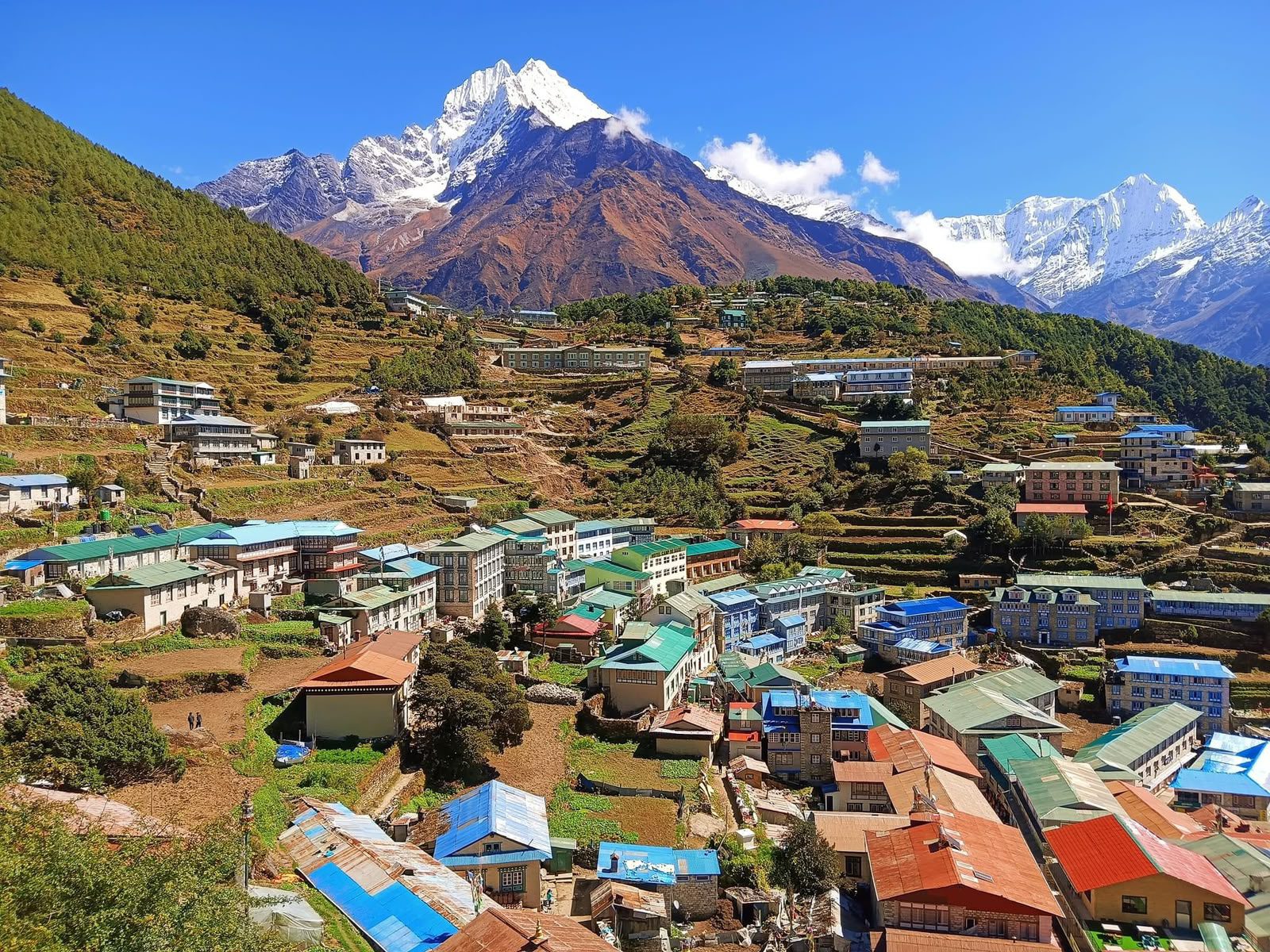
Stay in Namche Bazaar (3,440 m), the lively Sherpa capital of the Khumbu, with hot showers, Wi-Fi, bakeries and ATMs close by. You sleep here on Days 3, 4 and 11 of our 14-day Everest Base Camp Trek.

3,440 m
View stay
Phakding LodgeLodge
Phakding, Khumbu, Solukhumbu District, Nepal

Phakding Lodge

Riverside lodge stay on your first night of the Everest Base Camp Trek

Stay in Phakding (about 2,610 m) on the Dudh Koshi River, the first overnight stop after flying into Lukla. A lower, gentler first night before the climb to Namche Bazaar.

From 25 / night2,610 m
View stay

Stories and tips

Best Time to Trek to Everest Base Camp: Month-by-Month Guide (2026)Story

Best Time to Trek to Everest Base Camp: Month-by-Month Guide (2026)

The best time to trek to Everest Base Camp is October–November and March–May. A month-by-month guide to weather, temperatures, views and crowds,…

29 Oct 2026
Read story
Everest Base Camp Trek Cost 2026: Full Price Breakdown (12 & 14 Days)Story

Everest Base Camp Trek Cost 2026: Full Price Breakdown (12 & 14 Days)

How much does the Everest Base Camp trek cost in 2026? Package prices for 12 and 14 days, what's included, permits, Lukla…

23 Oct 2026
Read story
How Long Is the Hike to Everest Base Camp? Distance, Days & Hours (2026)Story

How Long Is the Hike to Everest Base Camp? Distance, Days & Hours (2026)

How long is the hike to Everest Base Camp? About 130 km round trip from Lukla, 12–14 days on the trail and…

22 Oct 2026
Read story
Can a Beginner Do the Everest Base Camp Trek? Complete First-Timer’s Guide (2026)Story

Can a Beginner Do the Everest Base Camp Trek? Complete First-Timer’s Guide (2026)

Yes, beginners can trek to Everest Base Camp. This first-timer's guide covers training from zero, altitude safety, what to pack, Lukla flights,…

17 Aug 2026
Read story
How Risky Is the Everest Base Camp Trek? Dangers & Safety Guide (2026)Story

How Risky Is the Everest Base Camp Trek? Dangers & Safety Guide (2026)

Is the Everest Base Camp trek dangerous? An honest safety guide to the real risks: altitude sickness, Lukla flights, weather, trail hazards…

4 Nov 2026
Read story
How Difficult Is It to Hike to Everest Base Camp? The Honest 2026 GuideStory

How Difficult Is It to Hike to Everest Base Camp? The Honest 2026 Guide

How hard is the Everest Base Camp trek? An honest 2026 guide: altitude, distance, daily hours, the hardest days, fitness and training,…

17 Oct 2026
Read story

More for your trip

Things to Do in NepalThings to do

Things to Do in Nepal

Compare 4 tours and activities across 2 destinations in Nepal from $ 10.00, rated 4.9/5 from 182 reviews. Top pick: Everest Base Camp…

4 trips
See all trips
Everest Base Camp Helicopter Tour Itinerary: Hour by HourTrip guide

Everest Base Camp Helicopter Tour Itinerary: Hour by Hour

Kathmandu to Everest and back in one morning, with a landing near Kala Patthar and breakfast at Hotel Everest View.

Day-by-day itinerary
Read guide
Select Your Currency
0