





The best time to trek to Everest Base Camp is autumn (late September to November) and spring (March to May). These months bring the most stable weather, the clearest mountain views and comfortable daytime temperatures.
October and November usually have the clearest skies. April and May are warmer, with rhododendrons in bloom and climbing expeditions camped at Base Camp. Winter (December to February) is clear but very cold and quiet. The monsoon (June to August) brings rain, cloud and flight delays, so it is the hardest time to go.
Everest Base Camp weather month by month
Temperatures are typical ranges and change with altitude and each year’s weather. Daytime figures are for Namche Bazaar (3,440 m). Night figures are for Gorak Shep (5,164 m), the coldest night of the trek.
| Month | Weather and views | Crowds | Day (Namche) | Night (Gorak Shep) | Rating |
|---|---|---|---|---|---|
| January | Coldest month, mostly clear and dry, snow possible higher up | Very quiet | ~0 to 7 °C | ~−15 to −25 °C | Cold |
| February | Still very cold, clear days, occasional snowfall | Quiet | ~2 to 8 °C | ~−15 to −22 °C | Cold |
| March | Warming up, spring begins, some afternoon haze | Growing | ~5 to 12 °C | ~−10 to −18 °C | Good |
| April | Stable weather, rhododendrons, expedition tents at Base Camp | Busy | ~8 to 15 °C | ~−6 to −14 °C | Best |
| May | Warmest pre-monsoon month, afternoon clouds, summit season | Busy | ~10 to 17 °C | ~−4 to −10 °C | Best |
| June | Monsoon arrives mid-month, cloud and rain, flight delays | Few trekkers | ~12 to 18 °C | ~−2 to −6 °C | Wet |
| July | Peak monsoon, frequent rain, cloudy views, leeches lower down | Very quiet | ~12 to 18 °C | ~0 to −5 °C | Wet |
| August | Monsoon continues, slippery trails, flight cancellations | Very quiet | ~12 to 18 °C | ~0 to −5 °C | Wet |
| September | Rain early in the month, clearing late September, lush valleys | Growing | ~10 to 16 °C | ~−3 to −10 °C | Mixed |
| October | Clearest skies of the year, stable weather, festival season | Busiest | ~7 to 14 °C | ~−8 to −15 °C | Best |
| November | Crisp, clear and dry, colder nights, fewer people than October | Busy | ~4 to 11 °C | ~−10 to −18 °C | Best |
| December | Clear, cold and quiet, short days | Quiet | ~1 to 8 °C | ~−14 to −22 °C | Good, cold |
Mountain weather is never guaranteed. Even in October you may get a cloudy afternoon, and even in July you may get a clear morning. Mornings are almost always the clearest time of day in every season.
Autumn (late September to November): the clearest views
🍂 Autumn at a glance
After the monsoon rains wash the air clean, autumn brings the sharpest mountain views of the year. It is the most popular season on the trail.
- Clearest skies and best photos
- Stable, dry weather
- Comfortable daytime walking
- Festival season in Kathmandu
- Busiest trails and lodges, especially October
- Book flights and trek early
- Cold nights higher up, colder in November
October is the classic month. November offers almost the same views with fewer people and colder nights. Late September can be beautiful, with green valleys, but carries a small chance of late monsoon rain.
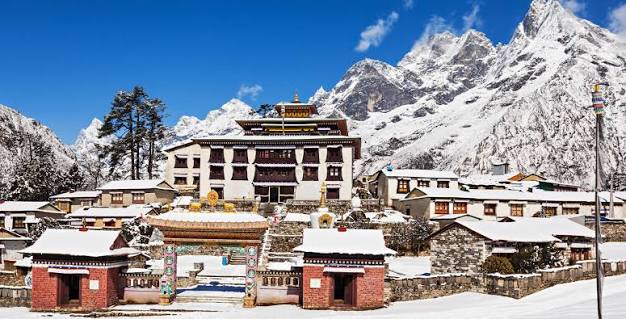
Nepal’s biggest festivals, Dashain and Tihar, usually fall in October or early November. At Tengboche Monastery, the Mani Rimdu festival is usually held in October or November, with dates set by the lunar calendar.
Spring (March to May): flowers and the climbing season
🌸 Spring at a glance
Spring is the second great season, with warmer days, flowering forests and the buzz of the Everest climbing season.
- Warmest trekking temperatures
- Rhododendrons in bloom lower down
- Expedition tents at Base Camp in April and May
- Long daylight hours
- More afternoon cloud and haze than autumn
- Busy trails in April and May
- Occasional pre-monsoon showers in late May
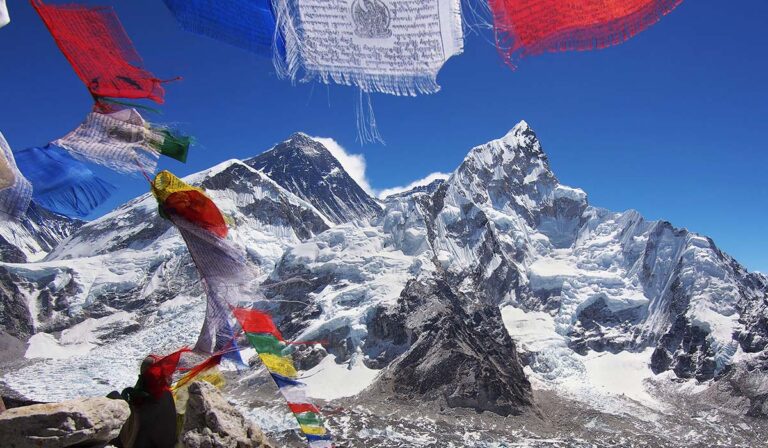
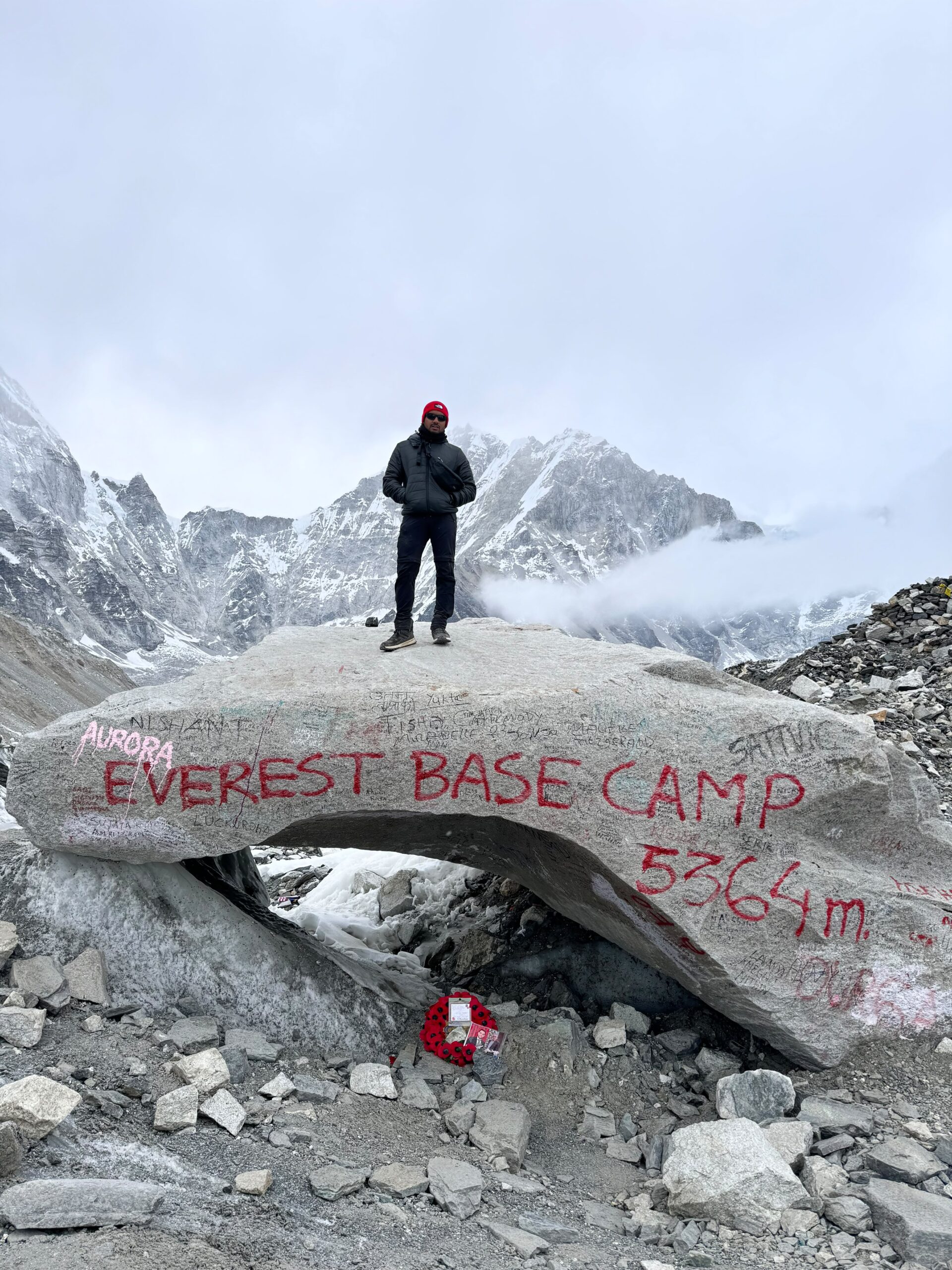
If seeing Base Camp come alive with climbing expeditions matters to you, spring is the time. In autumn, Base Camp is usually quiet, just the glacier, rocks and prayer flags.
Winter (December to February): clear, cold and quiet
❄️ Winter at a glance
For prepared trekkers, winter offers clear skies and empty trails, but it is seriously cold higher up.
- Very few trekkers
- Often clear, dry skies
- Easier to find rooms
- Nights often −15 °C or colder at Gorak Shep
- Snow and ice on the trail, microspikes needed
- Some higher lodges close
- Short days
December and late February are the most comfortable winter months. January is the coldest. Winter suits trekkers who handle cold well and have good down gear.
Monsoon (June to August): the hardest time to go
🌧️ Monsoon at a glance
Summer brings the monsoon. Higher up it rains less than lower down, but cloud often hides the mountains.
- Green, lush valleys and wildflowers
- Almost no crowds
- Milder temperatures
- Frequent Lukla flight delays and cancellations
- Slippery trails, leeches lower down
- Landslide risk on lower trails
- Mountain views often hidden by cloud
Add extra buffer days for flights, pack good rain gear and keep plans flexible. For most first-time trekkers, autumn or spring is a much better choice.
Spring vs autumn: which is better?
| Spring (Mar–May) | Autumn (late Sept–Nov) | |
|---|---|---|
| Mountain views | Very good, more afternoon haze | Excellent, clearest of the year |
| Temperatures | Warmer, especially in May | Cooler, colder by November |
| Landscape | Rhododendrons and spring flowers | Golden hillsides, crisp air |
| Base Camp | Expedition tents and climbers | Quiet glacier and prayer flags |
| Crowds | Busy in April and May | Busiest in October |
| Best for | Warmth, flowers, expedition atmosphere | Photos, clear views, festivals |
There is no wrong choice between them. If you want the very best views, choose autumn. If you want warmer weather and the climbing season atmosphere, choose spring.
The best time to go, depending on what you want
Clearest views and photos
October and November.
First-time trekkers
October, November or April: stable weather and comfortable temperatures.
Everest expedition atmosphere
Late April and May, when climbers camp at Base Camp.
Flowers and warmer days
Late March to May.
Fewer crowds
Late November, December, February and early March.
Festivals and culture
October and November for Dashain, Tihar and often Mani Rimdu at Tengboche.
Crowds and booking tips
- Book 2 to 4 months ahead for October, November, April and May, when lodges and Lukla flights fill up.
- Expect Ramechhap flights in busy seasons. Many Lukla flights leave from Manthali Airport, about 4 to 5 hours’ drive from Kathmandu. Our Kathmandu to Lukla flight guide has this season’s Ramechhap dates, fares and baggage rules.
- Keep 1 to 2 spare days in Kathmandu in every season for flight delays.
- Want peak-season views with fewer people? Try the second half of November or early March.
- Pack for the season. Our Everest Base Camp packing list covers what to bring in every month.
Planning your first trek? Read how difficult the Everest Base Camp trek is and whether beginners can do it.
Upcoming Everest Base Camp departures
Pick a date that fits your best season. These are our next scheduled Everest Base Camp departures, updated automatically.
Upcoming Everest Base Camp departures
Choose your month and join a group
4 departures
November 2026 4 departures
- 14 Days EBC Trek (Group) 12 left$ 1,485 per person
- Private 14 Days EBC Trek$ 2,150 per person
- 14 Days EBC Trek (Group) 12 left$ 1,485 per person
- Private 14 Days EBC Trek$ 2,150 per person
- 14 Days EBC Trek (Group) 12 left$ 1,485 per person
- Private 14 Days EBC Trek$ 2,150 per person
- 14 Days EBC Trek (Group) 12 left$ 1,485 per person
- Private 14 Days EBC Trek$ 2,150 per person
No departures match these filters.
Best time to trek to Everest Base Camp: FAQs
What is the best month to trek to Everest Base Camp?
October is usually the best single month, with the clearest skies and stable weather. November, April and May are also excellent.
Is spring or autumn better for Everest Base Camp?
Autumn (late September to November) usually has the clearest views. Spring (March to May) is warmer, has rhododendrons in bloom and lets you see expedition tents at Base Camp. Both are excellent.
Can you trek to Everest Base Camp in winter?
Yes. December to February is often clear and very quiet, but nights at Gorak Shep are often −15 °C or colder, there may be snow and ice, and some higher lodges close. You need warm gear and microspikes.
Is it possible to trek to Everest Base Camp in the monsoon?
It is possible but the hardest time. June to August brings rain, cloudy views, slippery trails and frequent Lukla flight delays. Add buffer days and keep plans flexible.
When can you see climbers at Everest Base Camp?
Expeditions camp at Base Camp from about April until late May, the spring climbing season. In autumn, Base Camp is usually quiet.
What is the coldest month at Everest Base Camp?
January is usually the coldest month, with nights around −20 °C or lower at Gorak Shep.
When is Everest Base Camp least crowded?
December to February and June to August are the quietest. For good weather with fewer people, try late November or early March.
How far ahead should I book an Everest Base Camp trek?
For October, November, April and May, book 2 to 4 months ahead so lodges and Lukla flights are available. In quieter months a few weeks is usually enough.
Choose Your Season and Start Planning
Join our 14-day Everest Base Camp Trek in spring or autumn, with licensed Sherpa guides, porters, permits, Lukla flights, teahouses and meals included.
Temperatures are typical ranges and vary with altitude, time of day and each year’s weather. Festival dates follow the lunar calendar and change every year. Always check the forecast and latest flight information before you travel.
Essential Reads Before You Visit
View all travel info (5)Nepal Visa on Arrival 2026: Fees, eVisa & How to Apply
Nepal visa on arrival in 2026: US$30 for 15 days, US$50 for 30 days, US$125 for 90 days. The new eVisa, who…
- 15-day visa
- US$30
- 30-day visa
- US$50
- 90-day visa
- US$125
- Entries
- Multiple
Money in Nepal: ATMs, Cards, Cash & Tipping
Nepal still runs mostly on cash. In Kathmandu and Pokhara you can pay by card in hotels, bigger restaurants and trekking shops,…
- Currency
- Nepali rupee (NPR)
- Pay with
- Mostly cash
- ATM limit
- NPR 10,000–35,000
- ATM fee
- NPR 500–800
SIM Card & Internet in Nepal for Tourists
Staying connected in Nepal is easier and cheaper than most travellers expect. In Kathmandu and Pokhara, a local SIM gives you fast…
- Main networks
- Ncell and Nepal Telecom (NTC)
- SIM cost
- About NPR 100–150 plus a data pack
- Documents needed
- Original passport, visa or entry stamp, passport photo
- Where to buy
- Kathmandu airport counters, city shops
Is Nepal Safe for Tourists?
Yes. Nepal is one of the friendliest and safest countries in Asia for travellers, and violent crime against tourists is rare. The…
- Overall
- Safe for visitors
- US advice level
- Level 2: increased caution
- Crime
- Low; mostly petty theft
- Biggest risks
- Roads, weather, altitude
Altitude Sickness on Nepal Treks: Signs & Prevention
Altitude sickness is the most common health problem on Nepal's treks, and it can affect anyone, however fit. The good news is…
- Starts from
- About 2,500–3,000 m
- Most common
- Mild AMS
- Safe pace
- +300–500 m a day
- Rest days
- Every 3–4 days