










Khumjung Monastery (Yeti Scalp)
The little monastery that keeps the Khumbu's famous yeti scalp
Khumjung Monastery (about 3,790 m) keeps the Khumbu's last 'yeti scalp', examined by Sir Edmund Hillary's 1960 expedition and found to be made from serow skin. Visit it on the Namche acclimatisation day, with the Hillary School and Hotel Everest View.
Why Khumjung Monastery (Yeti Scalp) is known
The only yeti scalp you can still see in the Khumbu
Examined in London, Paris and Chicago in 1960
Colourful Nyingma Buddhist prayer hall
Next to the Hillary School in Khumjung
On the Hotel Everest View acclimatisation loop
About Khumjung Monastery (Yeti Scalp)
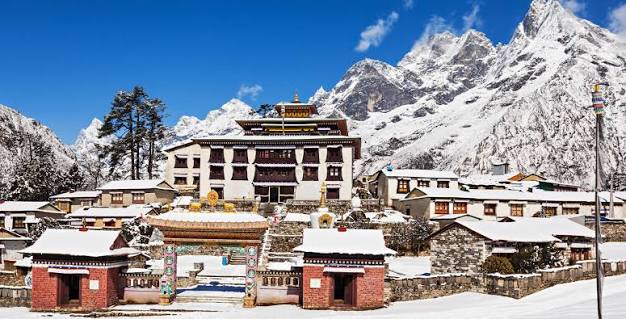
In a quiet courtyard in the Sherpa village of Khumjung, a small, colourful monastery holds one of the strangest treasures in the Himalaya: a tall, reddish, conical scalp that local tradition says came from a yeti. Khumjung Monastery is the only place in the Khumbu where you can still see a “yeti scalp”, and the walk there from Namche Bazaar is one of the best acclimatisation hikes of the trek.
Khumjung Monastery at a glance
- Altitude: about 3,790 m (12,430 ft)
- Location: Khumjung village, above Namche Bazaar
- Tradition: Nyingma school of Tibetan Buddhism
- Famous relic: the Khumjung “yeti scalp”, kept in a glass-fronted box
- Examined: by Hillary’s 1960–61 expedition; scientists concluded it was made from the skin of a serow, a Himalayan goat-antelope
- Visit: a small donation is expected to see the scalp; ask the caretaker
- Rebuilt: repaired after the 2015 earthquake
- On our trek: optional on Day 4 (acclimatisation day in Namche)
The yeti scalp
The scalp is shaped like a tall, pointed hat, about 20 cm high, covered in coarse reddish-brown hair. For the monks and villagers it is a sacred object linked to the protector spirits of the valley, and it was traditionally carried in festivals and ceremonies. When the yeti (or migoi, “wild man”, in Sherpa) became world-famous in the 1950s, scientists and adventurers came to see it.
In 1960 Sir Edmund Hillary’s World Book Encyclopedia expedition, which included a search for the yeti, was allowed to borrow the scalp. A village elder, Khunjo Chumbi, travelled with it to London, Paris and Chicago, where experts examined it. They concluded it had been moulded from the skin of a serow, a goat-antelope found in the Himalaya. In return for the loan, Hillary helped the community with the Hillary School nearby. The scalp came home to Khumjung, where it remains today.
The Pangboche Monastery once kept a similar scalp and a famous “yeti hand”, but the hand was stolen in 1991, so Khumjung’s scalp is the one visitors can still see.
Inside the monastery
The monastery’s prayer hall is decorated with bright murals of protector deities, a large statue of Guru Rinpoche (Padmasambhava), butter lamps and rows of sacred texts. A caretaker, often a local lama, keeps the key and will open the box holding the scalp. Like many Khumbu buildings, the monastery was damaged in the 2015 earthquake and has since been repaired.
Etiquette and tips
- Remove your shoes and hat before entering the prayer hall.
- Walk clockwise around the monastery, stupas and prayer wheels.
- Leave a donation in the box; this supports the monastery’s upkeep.
- Ask before taking photos inside, and never use flash.
- Dress modestly, with shoulders and knees covered.
How to get to Khumjung Monastery
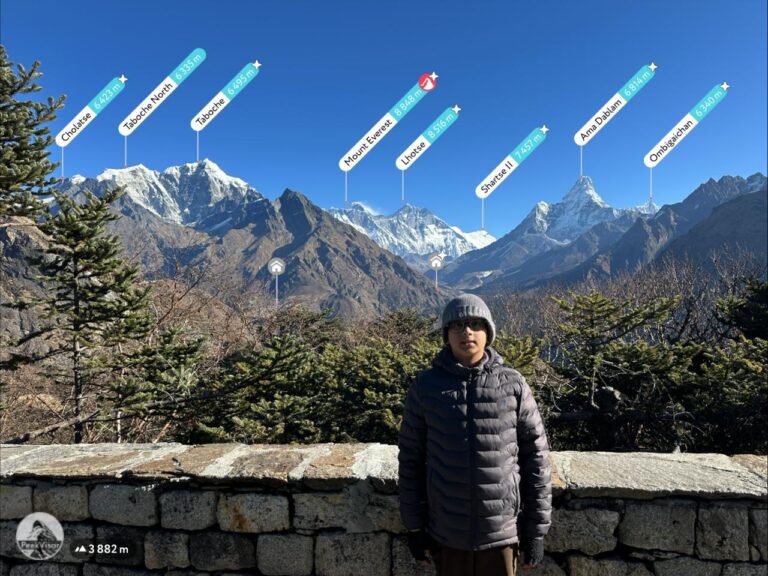
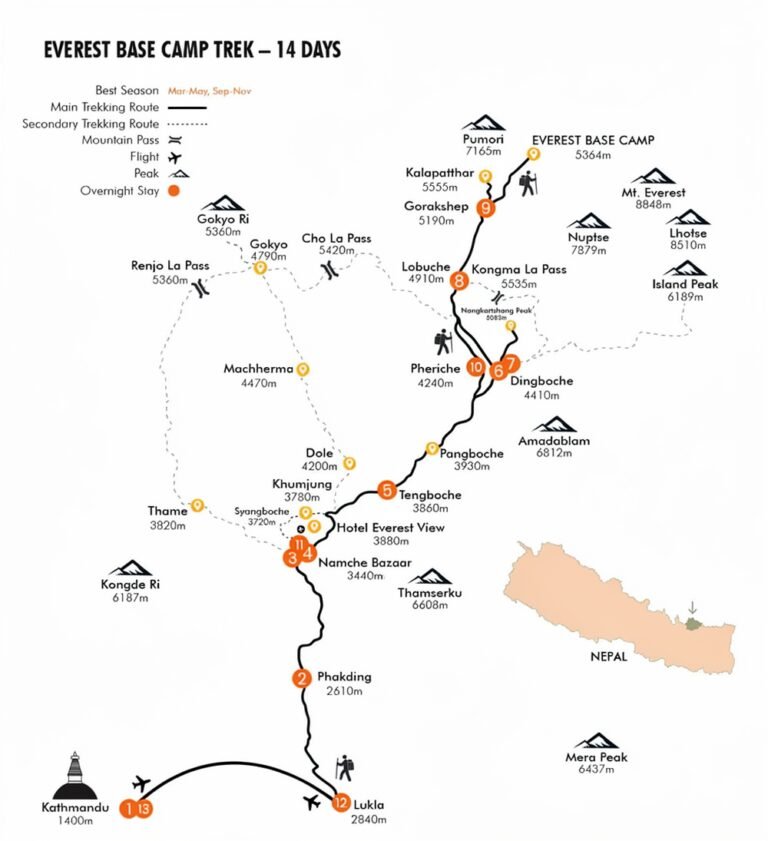
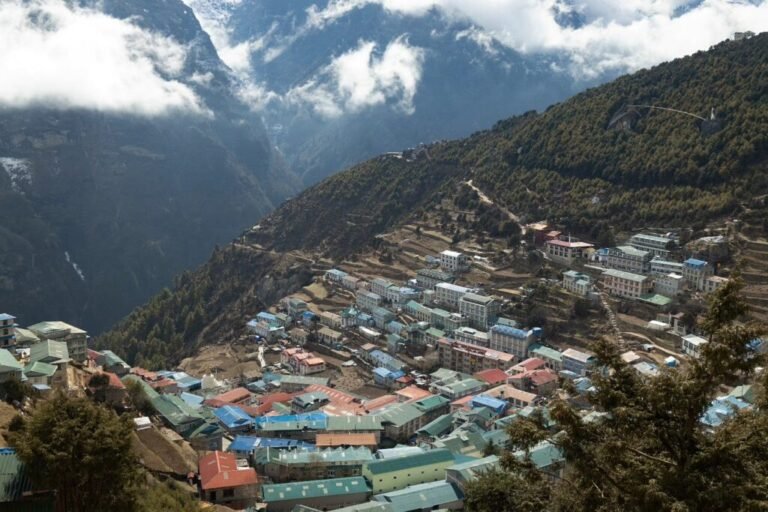
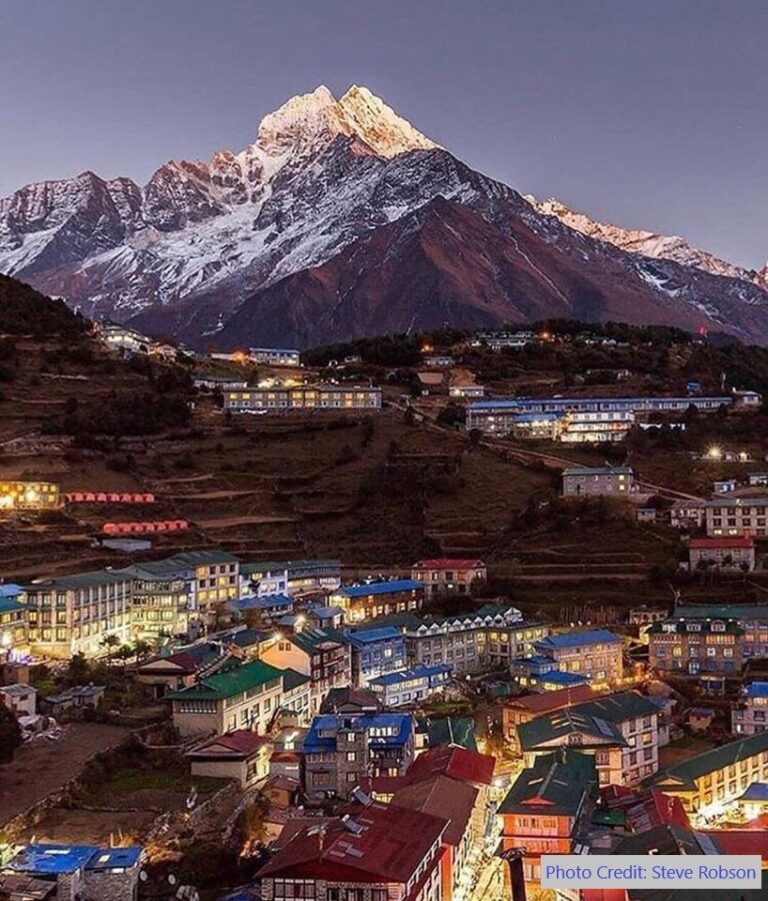
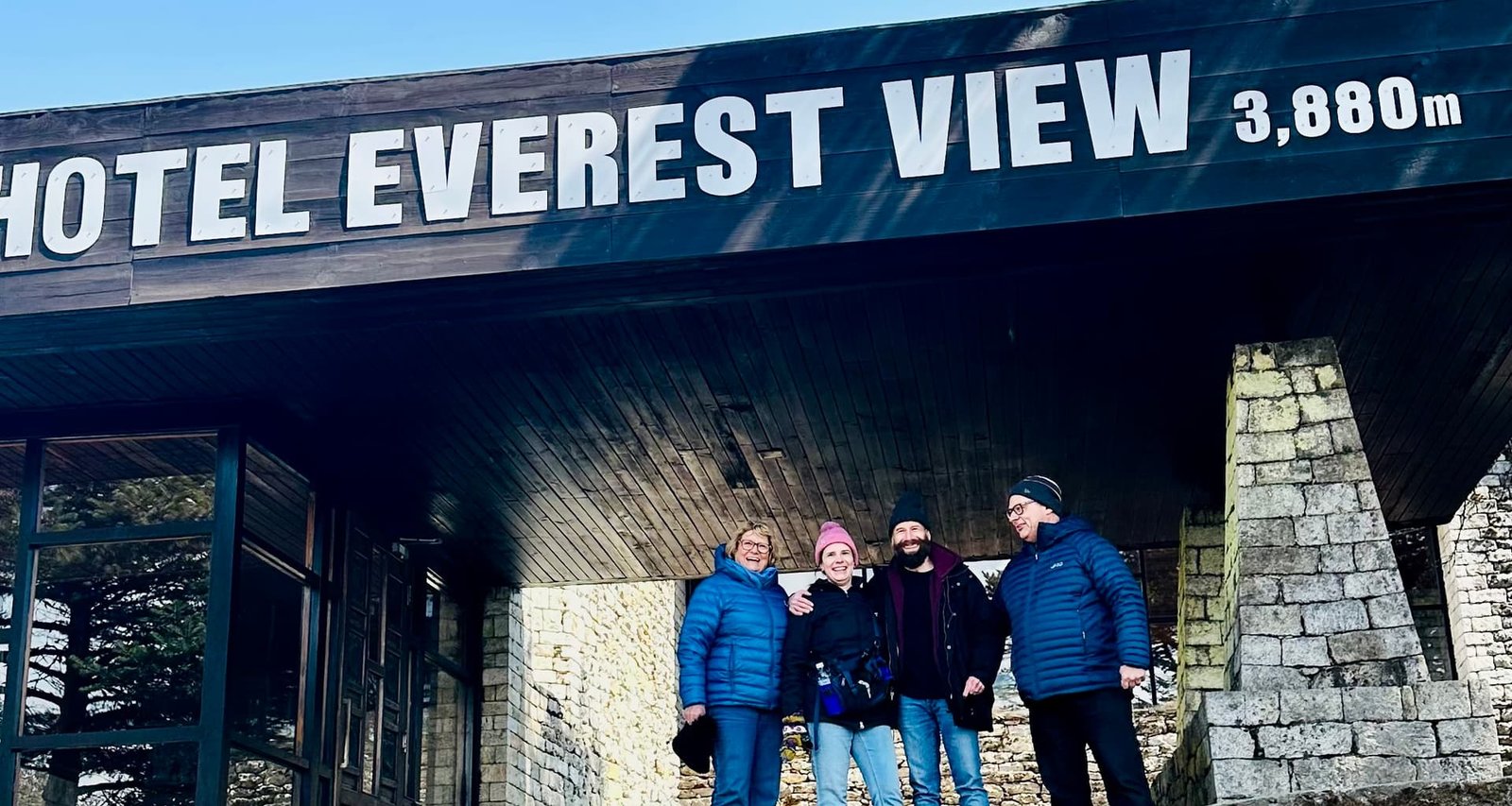
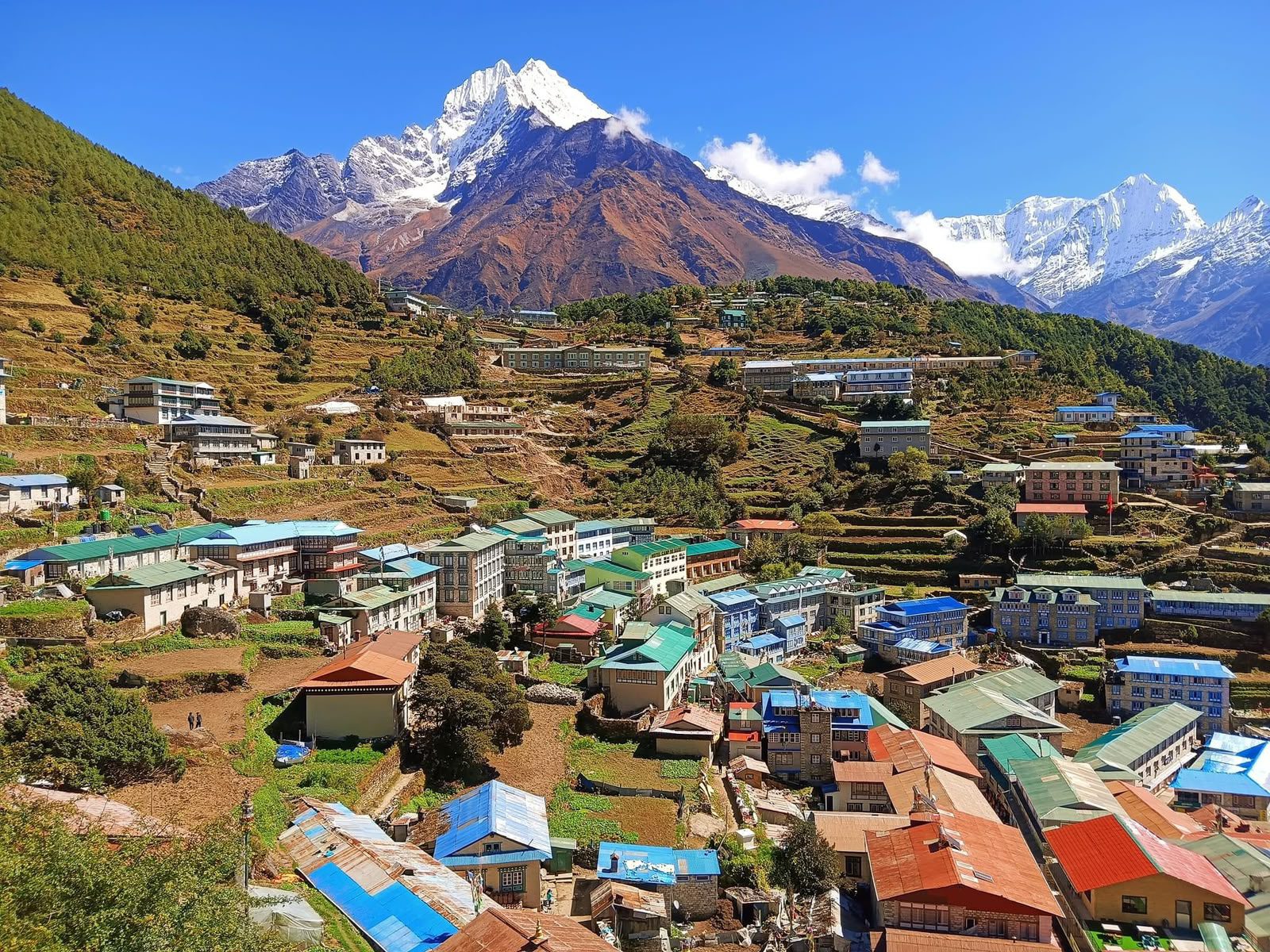
From Namche Bazaar, climb past the Syangboche airstrip to Hotel Everest View for a coffee with a view of Everest, then descend into Khumjung. The monastery is at the upper end of the village, near the Hillary School. Walk on to the twin village of Khunde if you have time, then return to Namche by the direct trail. The loop takes 4 to 5 hours with stops.
Khumjung Monastery on the 14-day Everest Base Camp Trek
On Day 4, the acclimatisation day in Namche, your guide can include Khumjung Monastery on the walk to Hotel Everest View. For the Khumbu’s other great monasteries, see Tengboche Monastery on Day 5 and Pangboche on the way to Dingboche.
Highlights
- See the Khumbu's last yeti scalp
- Hear how Hillary took it to London, Paris and Chicago
- Step inside a colourful Nyingma prayer hall
- Combine with the Hillary School and Khunde
- Walk via Hotel Everest View on the acclimatisation day
Gallery
Location
Open in Google MapsFrequently asked questions
Is the yeti scalp at Khumjung Monastery real?
Scientists who examined it in 1960, during Sir Edmund Hillary's expedition, concluded it was made from the skin of a serow, a Himalayan goat-antelope. It remains a sacred object for the monastery.
Where is Khumjung Monastery?
In Khumjung village at about 3,790 m, 1.5 to 2 hours above Namche Bazaar, near the Hillary School.
How much does it cost to see the yeti scalp?
There is no fixed ticket. Visitors leave a small donation for the monastery; your guide can advise on the usual amount.
Can I take photos of the yeti scalp?
Ask the caretaker first. Many allow photos of the scalp, but never use flash inside the monastery.
What happened to the Pangboche yeti scalp and hand?
Pangboche Monastery's yeti hand was stolen in 1991, and a replica was returned in 2011. Khumjung's scalp is the one visitors can still see.
Can I visit Khumjung Monastery on the EBC trek?
Yes, on the Namche acclimatisation day (Day 4 on our trek) as part of the Hotel Everest View and Khumjung loop.