








Gokyo Lakes
The turquoise lakes of the Khumbu, beside Nepal's longest glacier
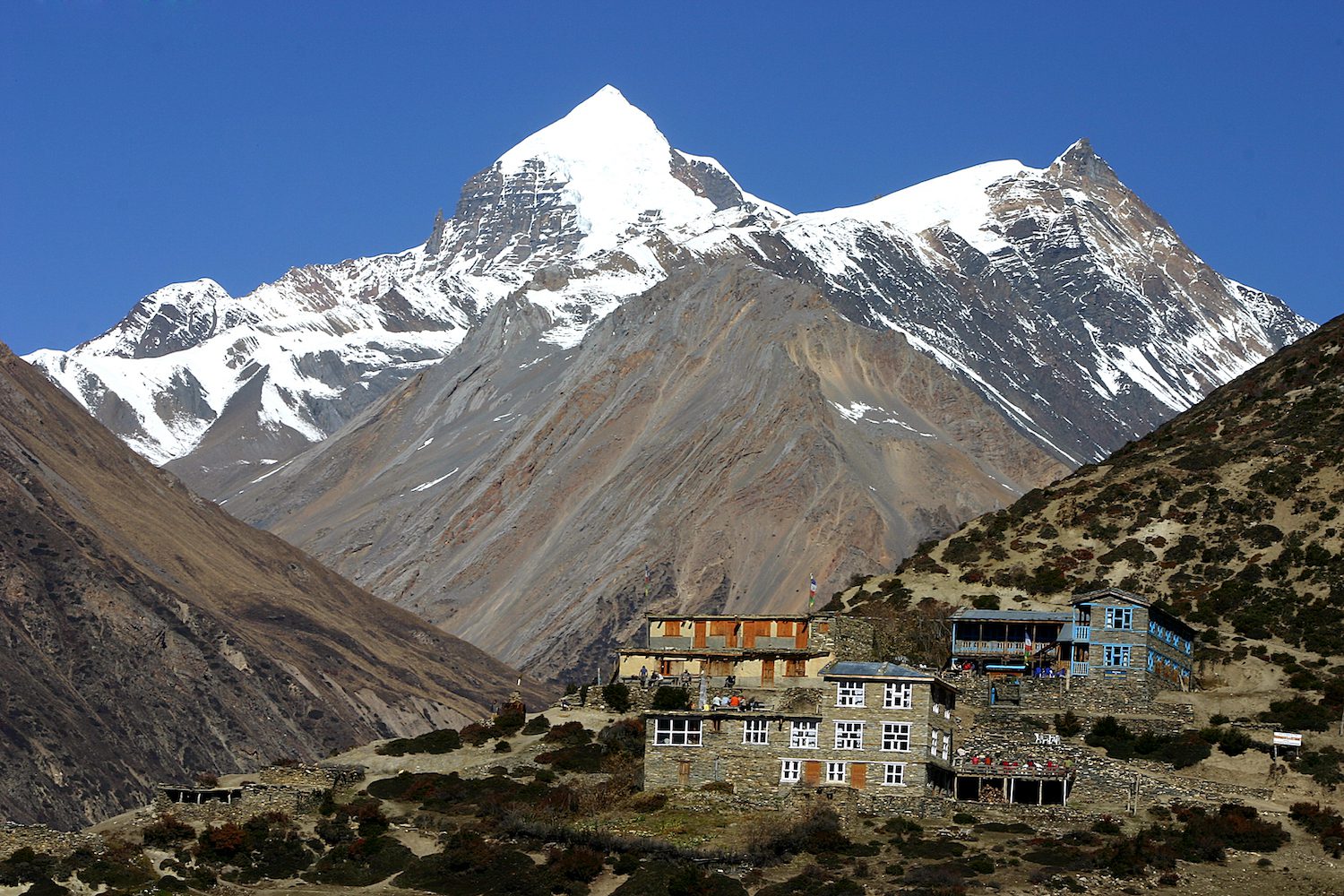
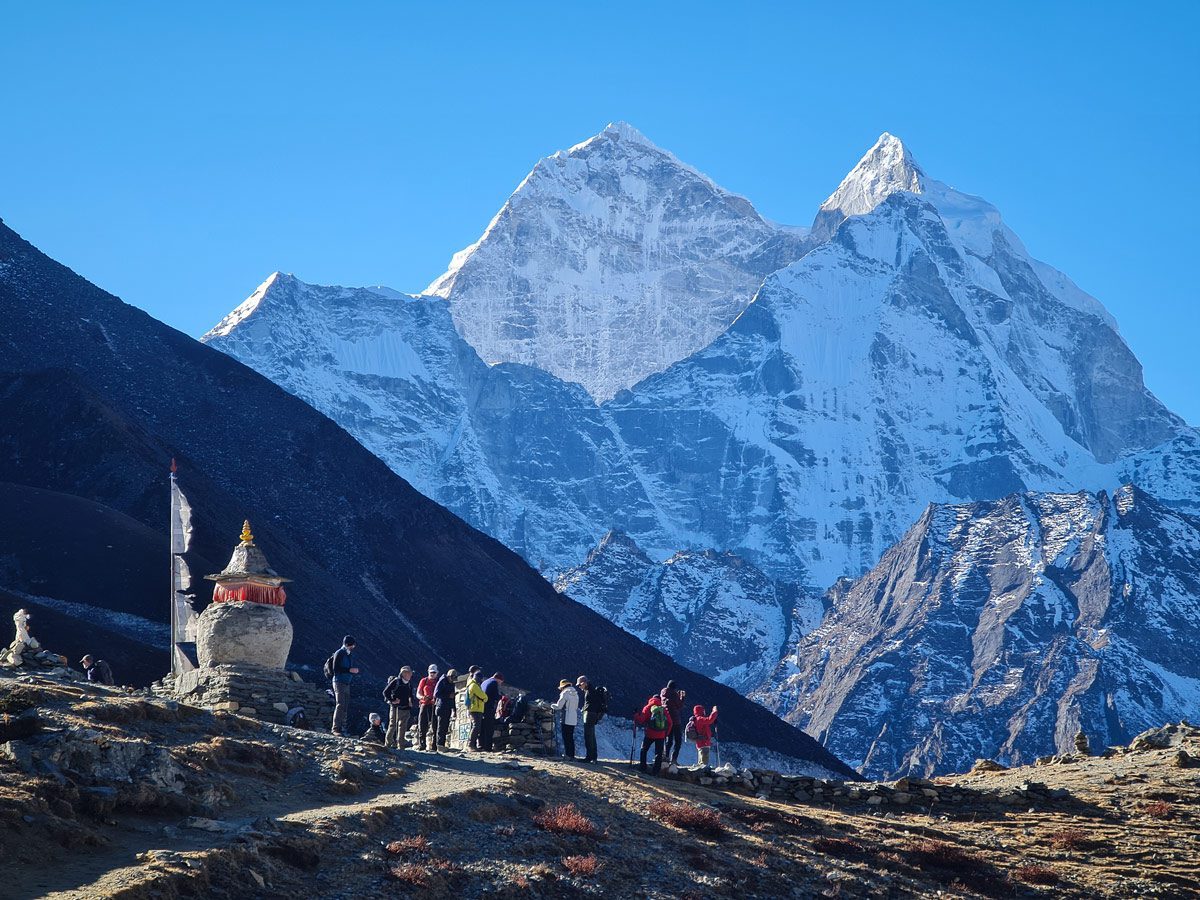
Gokyo (4,790 m) is a lakeside village on the third of the six Gokyo Lakes, beside the Ngozumpa Glacier, with Gokyo Ri above it for one of the finest Everest views in Nepal.
Why Gokyo Lakes is known
Six turquoise glacial lakes, the highest freshwater lake system in the world
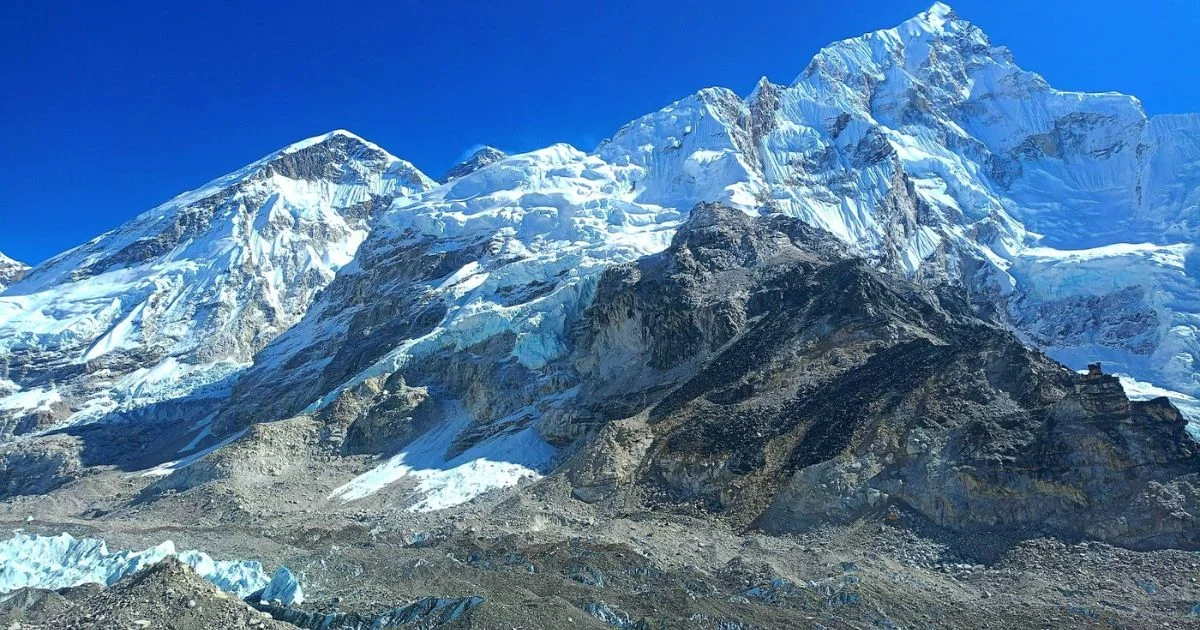
Gokyo Ri viewpoint with four 8,000 m peaks in one view
The Ngozumpa Glacier, the longest glacier in Nepal
Rest stop between Cho La and Renjo La on the Three Passes Trek
Sacred lakes protected as a Ramsar wetland
About Gokyo Lakes
Gokyo is a small teahouse village at 4,790 metres on the shore of Dudh Pokhari, the third of the six Gokyo Lakes. The lakes form the highest freshwater lake system in the world and lie in a chain beside the Ngozumpa Glacier, the longest glacier in Nepal. With Cho Oyu at the head of the valley and Everest visible from the hill above the village, Gokyo is one of the most beautiful places in the Khumbu.
The lakes
The first lake, Longpongo, appears just below Machhermo on the trail from Namche. Taboche Tsho comes next, then Dudh Pokhari at Gokyo village itself. Beyond the village, a quiet trail leads to the fourth lake, Thonak Tsho, and on to the fifth, Ngozumpa Tsho, where you can see Everest, Lhotse and Cho Oyu without climbing Gokyo Ri. The colour of the water changes from emerald to deep turquoise with the light.
Gokyo Ri
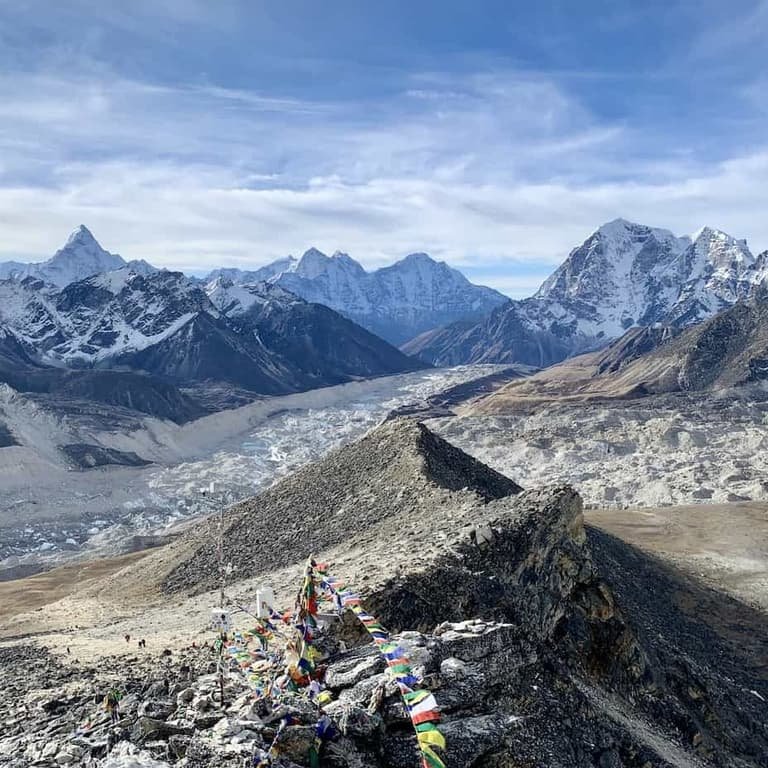
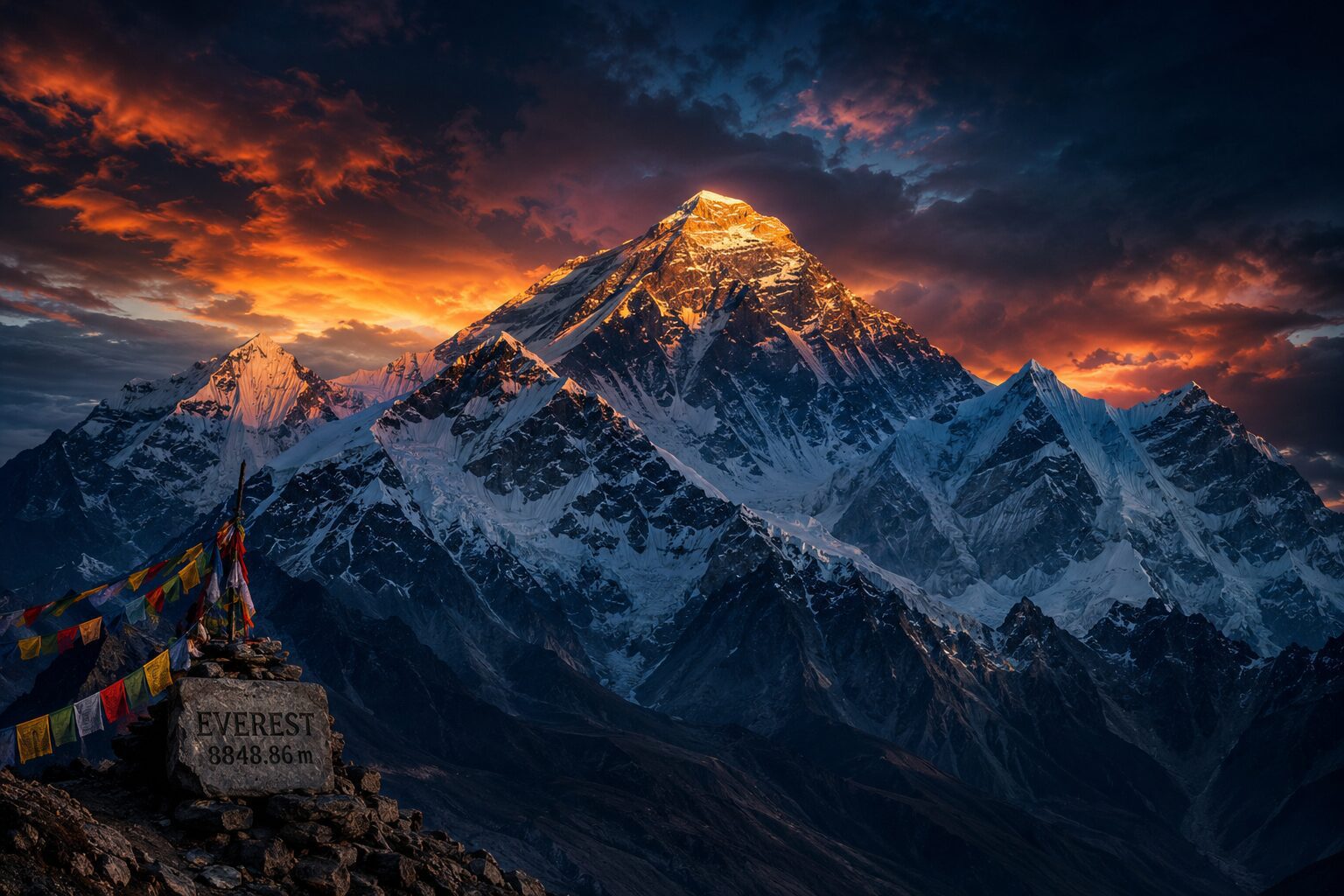
The 5,357 m hill directly above the village is the area’s famous viewpoint. A sunrise climb of about 2 to 3 hours rewards you with four 8,000 m peaks in one panorama: Everest, Lhotse, Makalu and Cho Oyu, with the lakes and the Ngozumpa Glacier spread out below.
Gokyo on the Three Passes Trek
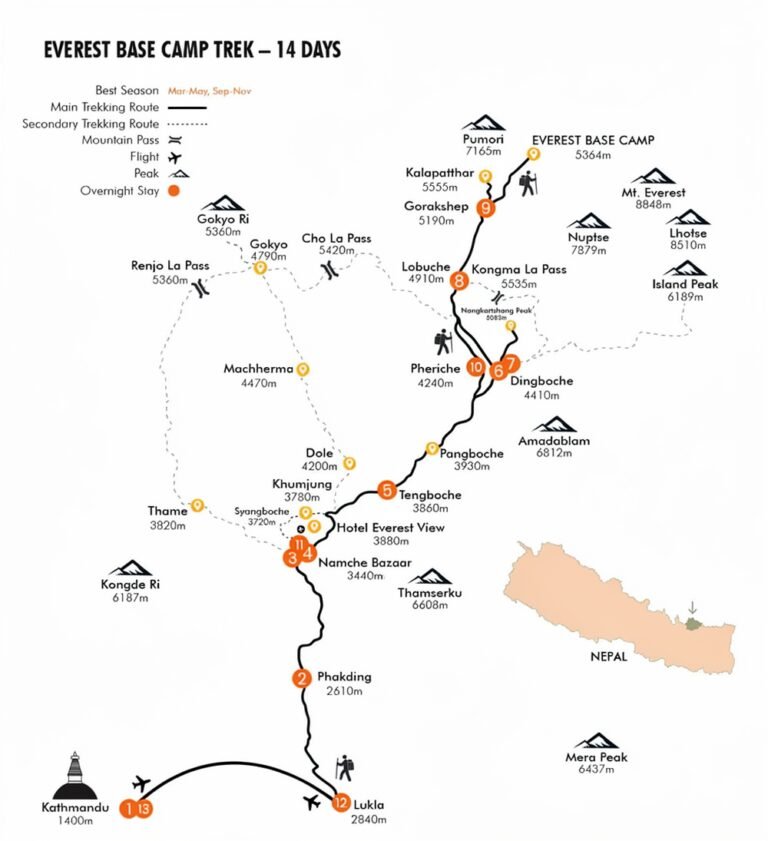
On the Everest Three Passes Trek, Gokyo sits between the second and third passes. Trekkers arrive from Cho La across the Ngozumpa Glacier, rest for a day and climb Gokyo Ri, then leave over Renjo La to the Bhote Koshi valley. On the Gokyo Lakes Trek, it is reached via Namche Bazaar, Dole and Machhermo.
Teahouses and facilities
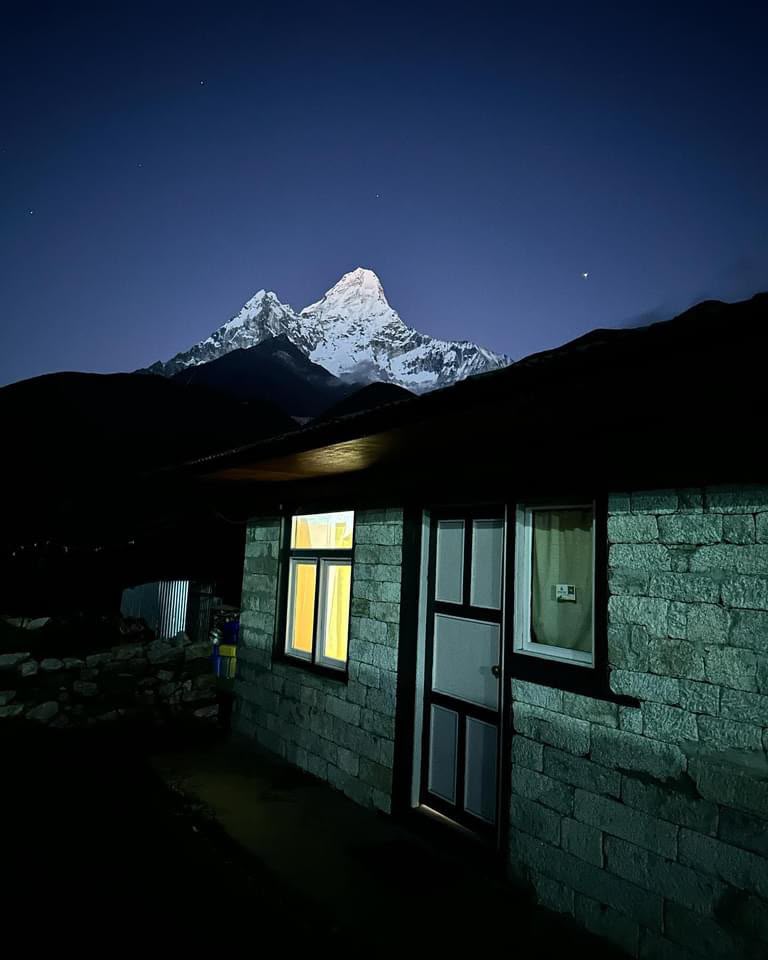
Gokyo has a handful of comfortable lakeside lodges, several with attached bathrooms and big windows over the water. Charging, Wi-Fi and hot showers are available for a fee. Nights are very cold, often well below freezing, so bring a warm sleeping bag.
Respect the lakes
The Gokyo Lakes are sacred to Hindus and Buddhists and are protected as a Ramsar wetland. Do not wash, swim or throw anything into the water, and carry your rubbish back out.
Highlights
- Climb Gokyo Ri at sunrise for Everest, Lhotse, Makalu and Cho Oyu
- Walk to the fourth and fifth lakes for quiet views of Cho Oyu
- Cross the rubble-covered Ngozumpa Glacier
- Sleep in a lodge right on the lakeshore
- Watch the colour of the lakes change through the day
- Start the climb to Renjo La, the last of the three passes
Gallery
Location
Open in Google MapsFrequently asked questions
How high are the Gokyo Lakes?
The six Gokyo Lakes lie between about 4,700 m and 5,000 m. Gokyo village, on the third lake (Dudh Pokhari), is at 4,790 m.
How many Gokyo Lakes are there?
There are six main lakes. Dudh Pokhari, the third and largest, is where Gokyo village stands. The fourth (Thonak Tsho) and fifth (Ngozumpa Tsho) are easy side trips from the village.
How do I get to Gokyo?
From Namche Bazaar it takes about 3 days via Dole and Machhermo on the Gokyo Lakes Trek. On the Everest Three Passes Trek you arrive from Cho La and Thagnak, a 2 to 3 hour walk across the Ngozumpa Glacier.
Can I see Everest from Gokyo?
Not from the village itself, but from Gokyo Ri (5,357 m) above the village you see Everest, Lhotse, Makalu and Cho Oyu at once. The fifth lake also has a fine Everest view.
Is Gokyo better than Everest Base Camp?
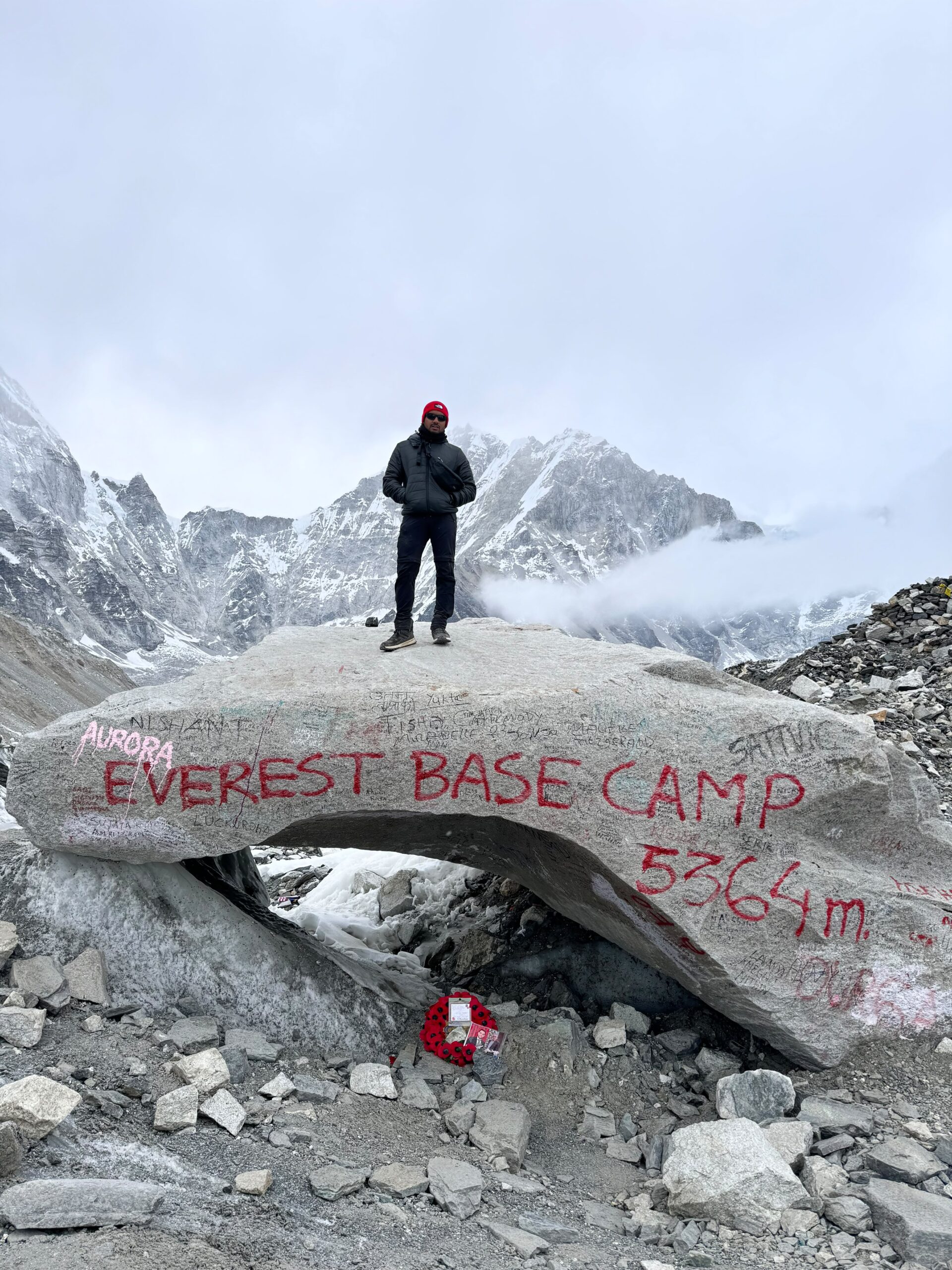
They are different. EBC puts you at the foot of Everest; Gokyo gives quieter trails, turquoise lakes and a wider view of four 8,000 m peaks from Gokyo Ri. The Three Passes Trek includes both.
When is the best time to visit Gokyo?
Late March to May and late September to November. October and November have the clearest views; in winter the lakes freeze and nights fall far below zero.
Can you swim in the Gokyo Lakes?
No. The lakes are sacred to Hindus and Buddhists and protected as a Ramsar wetland, so swimming, washing and throwing anything into the water are not allowed.
Are there good lodges in Gokyo?
Yes. Gokyo has some of the best teahouses above 4,500 m in the Khumbu, many with lake views, heated dining rooms and some attached bathrooms. Charging, Wi-Fi and hot showers cost extra.