



Drinking Water on the Trail: Refill Stations & Purifying
Safe water for every day of your trek, without buying a single plastic bottle
How to get safe drinking water on the Everest and Annapurna treks: refill stations, boiled water from lodges, purification tablets, filters and UV pens, what each costs and how much to drink at altitude.
About Drinking Water on the Trail: Refill Stations & Purifying
You will drink 3–4 litres of water a day on a Himalayan trek, and every litre has to be safe. Tap and stream water on Nepal’s trails is not safe to drink untreated, even when it looks crystal clear and comes straight off a glacier: villages, yaks and lodges sit upstream of almost every source. The good news is that clean water is easy to get once you know how, and the cheapest options are also the ones that keep plastic bottles off the mountain.
Why you can’t drink straight from the tap or stream
Water on the trail can carry bacteria (such as E. coli), protozoa (Giardia and Cryptosporidium) and, less often, viruses. A stomach bug at 4,000 m is more than an inconvenience: diarrhoea and vomiting dehydrate you fast, make altitude sickness more likely and can cost you your summit day. Treating every drop is the single easiest way to protect your trek.
Your four options
1. Refill stations and boiled water from lodges. Most lodges sell boiled or filtered water to fill your own bottle, and some villages have community safe-drinking-water stations. This is the simplest choice, much cheaper than bottled water, and the money goes to the lodge or village. The price rises with altitude because fuel is carried up by porters and yaks.
2. Purification tablets. Chlorine dioxide tablets (such as Aquatabs or Katadyn Micropur) are light, cheap and reliable. Drop one in a litre of water and wait at least 30 minutes. In very cold water, or to be sure of killing Cryptosporidium, wait up to four hours, so treat a bottle the night before. Iodine works but is less effective against Cryptosporidium and isn’t recommended for long trips.
3. Filter bottles and squeeze filters. A filter such as a Sawyer Squeeze, Katadyn BeFree or LifeStraw bottle lets you drink immediately and removes bacteria and protozoa. Most do not remove viruses, so many trekkers add a tablet as a backup. Hollow-fibre filters are ruined if water inside them freezes: above Dingboche, keep the filter in your sleeping bag at night.
4. UV pens. A UV purifier such as a SteriPEN treats a litre in about 90 seconds and kills bacteria, protozoa and viruses. It needs clear water and batteries, and batteries drain fast in the cold, so carry spares or a backup tablet.
Boiling is the most reliable method of all. Above 2,000 m, keep water at a rolling boil for three minutes. You won’t do this yourself on a teahouse trek, but boiled water from the lodge kitchen is the same thing.
Our recommendation
Carry two 1-litre bottles (one insulated or a hard Nalgene-type bottle that can take boiling water), fill them with boiled or refill-station water every morning and evening, and carry a strip of chlorine dioxide tablets as a backup. If you want water from streams and taps between villages, add a filter. This costs far less than bottled water, weighs almost nothing and works all the way to Gorak Shep.
On cold nights, ask the lodge to fill your hard bottle with boiling water, close it tightly and put it in your sleeping bag. It keeps you warm, and you wake up with water that isn’t frozen.
Bottled water and the plastic problem
Bottled water is sold on both treks, but every bottle has to be carried up and the empties carried down or burned, and there is no recycling in the mountains. The Khumbu Pasang Lhamu Rural Municipality, which covers most of the Everest trail, has banned plastic drink bottles and thin single-use plastics since 2020, so you may find bottled water hard to buy above Lukla and expensive where it is sold. A refillable bottle is the better choice on every count.
How much to drink at altitude
Aim for 3–4 litres a day, including tea, soup and garlic soup at dinner. Dry mountain air and heavy breathing take water from your body faster than you notice. Pale, clear urine means you are drinking enough; dark urine means drink more. Good hydration won’t stop altitude sickness on its own, but dehydration makes headaches worse and hides early symptoms. Read our altitude sickness guide for the full picture.
Food and hygiene tips
- Brush your teeth with treated water.
- Skip ice and raw salads washed in tap water, especially in the lower villages.
- Hot drinks and freshly cooked dal bhat are the safest choices on the menu.
- Carry hand sanitiser and use it before every meal. Most stomach bugs on the trail come from hands, not water.
- Pack oral rehydration salts in case of an upset stomach.
Need cash for water and tea on the trail? See money in Nepal. Full gear list: Everest Base Camp packing list.
Highlights
- Fill your own bottle at lodges and community refill stations
- Save money and keep plastic off the mountain
- Use a hot water bottle in your sleeping bag on cold nights
- Carry chlorine dioxide tablets as a light, cheap backup
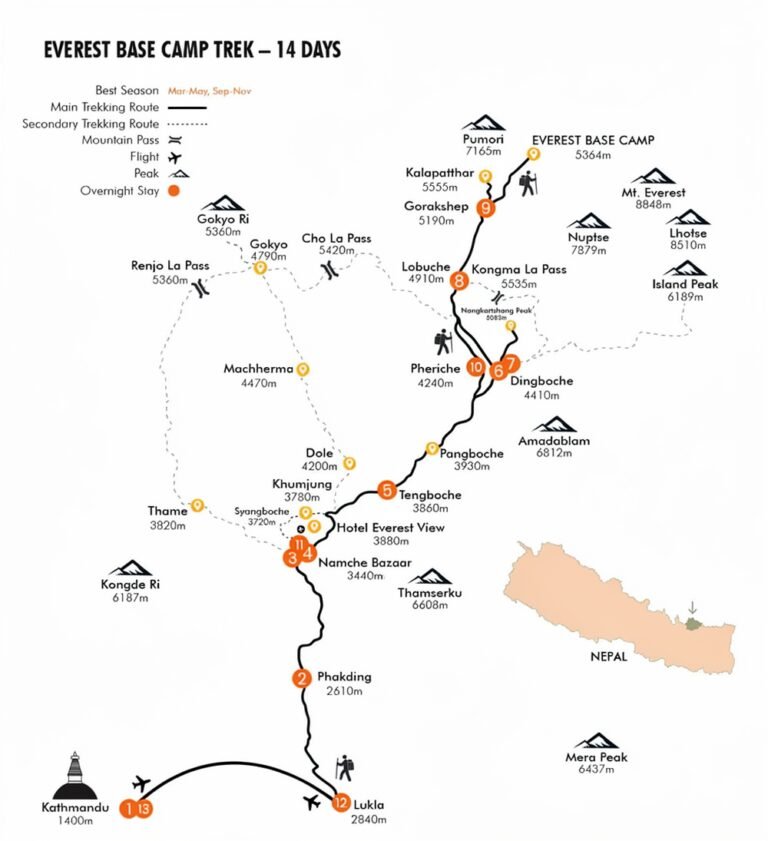
- Protect your filter from freezing above Dingboche
- Stay hydrated to make the altitude easier
Compare Your Water Options
Which method suits your trek, and what to carry.
Treatment Methods at a Glance
Pick one main method and one backup
Combine lodge refills with a light backup, and you are covered from Lukla to Gorak Shep.
| Method | Kills / removes | Time | Watch out for |
|---|---|---|---|
| Lodge refill (boiled or filtered) | Bacteria, protozoa, viruses (boiled) | Instant | Costs more at higher lodges |
| Chlorine dioxide tablets | Bacteria, viruses, protozoa | 30 min to 4 h | Slow in cold water |
| Filter bottle / squeeze filter | Bacteria, protozoa | Instant | Most don't stop viruses; freezing damages them |
| UV pen | Bacteria, protozoa, viruses | About 90 s per litre | Needs clear water and batteries |
| Boiling | Everything | 3 min above 2,000 m | Needs a stove; done by lodges |
| Bottled water | Safe if sealed | Instant | Expensive, plastic waste, restricted in the Khumbu |
Water can freeze inside filters and bottles above about 4,000 m. Keep both in your sleeping bag at night.
What to Pack
Light, cheap and enough for the whole trek
- Two 1-litre bottles, one hard and boil-proof
- Chlorine dioxide tablets (1 per litre, bring about 60 for a 14-day trek)
- Optional: filter bottle or squeeze filter, or a UV pen with spare batteries
- Insulated bottle sleeve to stop freezing
- Electrolyte or oral rehydration sachets
- Hand sanitiser
Frequently asked questions
Is tap water safe to drink on the Everest Base Camp trek?
No. Tap, stream and spring water on the trail should always be treated, by boiling, tablets, a filter or a UV pen, even when it looks clean.
Where can I refill water on the Everest and Annapurna treks?
Almost every lodge sells boiled or filtered water to fill your own bottle, and some villages have community safe-drinking-water stations. Ask your guide where the next refill point is.
How much does water cost on the trek?
Refills of boiled or filtered water are much cheaper than bottled water. Both get more expensive the higher you go, because fuel and supplies are carried up by porters and yaks. Budget a little extra for water at the highest lodges.
Can I buy bottled water on the Everest trail?
The local municipality has banned plastic drink bottles across most of the Khumbu since 2020, so bottled water can be hard to find and expensive above Lukla. A refillable bottle is the better option.
Which is better: a filter, tablets or a UV pen?
Tablets are the lightest and most reliable backup. Filters let you drink at once but can freeze and most don't remove viruses. UV pens are fast but need clear water and batteries. Many trekkers combine refills from lodges with tablets as a backup.
How long do purification tablets take?
Chlorine dioxide tablets need at least 30 minutes. In very cold water, or to deal with Cryptosporidium, wait up to four hours. Treat a bottle the night before.
How much water should I drink at high altitude?
Around 3–4 litres a day, including tea and soup. Pale urine is a good sign you are drinking enough.
What size and type of water bottle should I bring?
Two 1-litre bottles: at least one hard, leak-proof bottle that can take boiling water, which doubles as a hot water bottle in your sleeping bag at night.