









Everest Base Camp
Stand at the foot of the world's highest mountain, beneath the Khumbu Icefall
Everest Base Camp (South) lies at 5,364 m on the Khumbu Glacier in Nepal, at the foot of the Khumbu Icefall and beneath Everest, Nuptse and Khumbutse. In spring it becomes a tent city for summit expeditions; for trekkers it is the goal of an unforgettable journey through the Khumbu. You reach it on Day 9 of our 14-day trek, walking from Gorak Shep along the edge of the glacier.
Why Everest Base Camp is known
The base of Mount Everest on the Nepal side
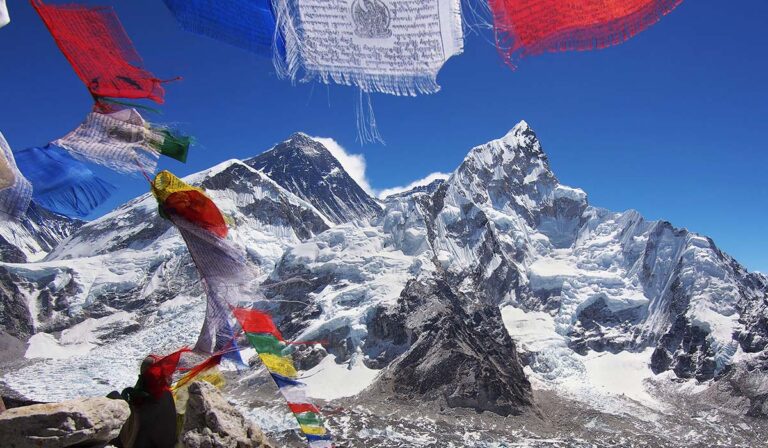
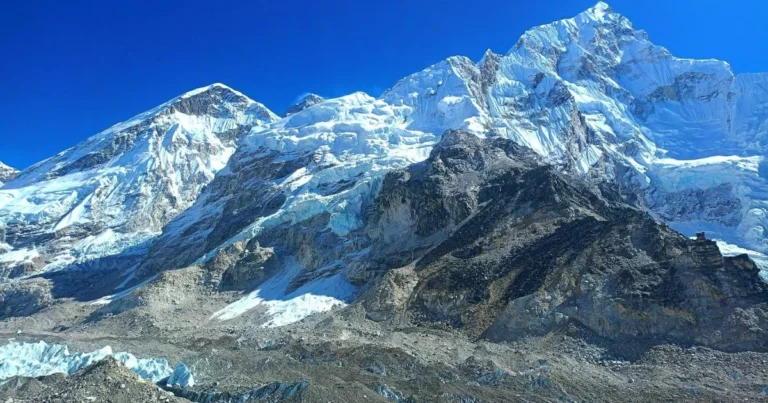
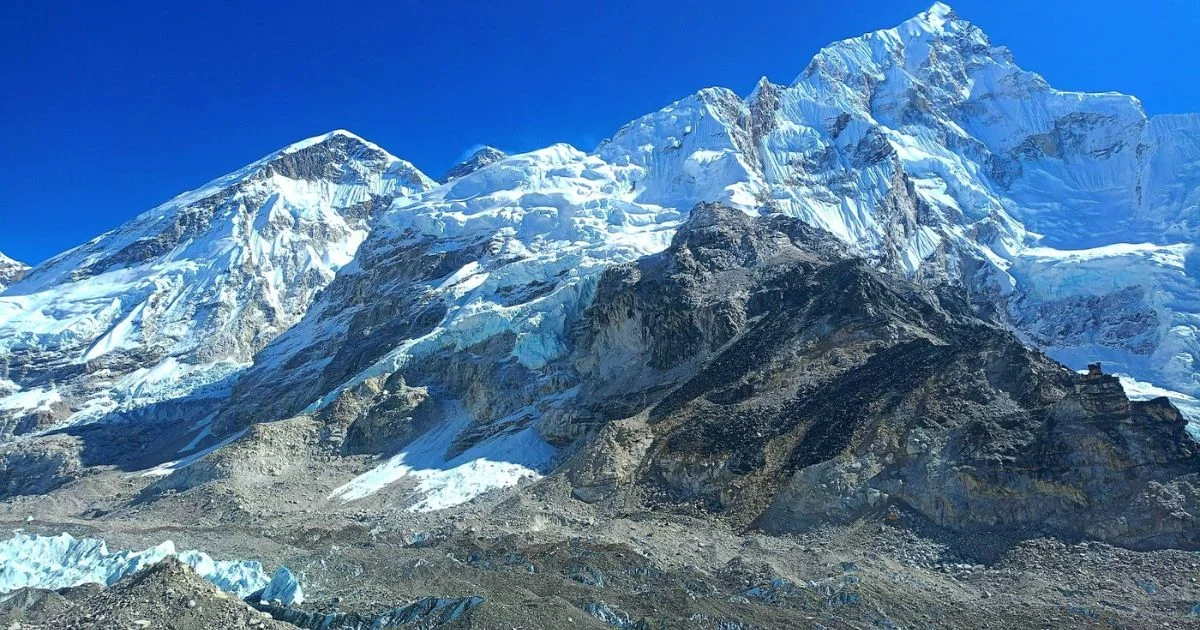
Views of the Khumbu Icefall, Nuptse, Khumbutse and Pumori
Spring expedition tent city for Everest climbers
Goal of the world's most famous trek
The famous Base Camp marker and prayer flags
Starting point of the South Col route to the summit
About Everest Base Camp
Everest Base Camp is the most famous trekking destination on Earth. At 5,364 metres (17,598 ft), on the rubble-covered ice of the Khumbu Glacier, it lies at the very foot of the world’s highest mountain, beneath the tumbling seracs of the Khumbu Icefall. Every spring it becomes a city of colourful expedition tents for climbers preparing to summit Everest. For trekkers, standing here after days of walking through the Khumbu is a once-in-a-lifetime moment.
This page is about the place itself: where it is, what you will see, how high it is and what it is like to arrive. To walk there with us, see the Everest Base Camp Trek 14 Days or browse all Everest Base Camp trips.
Everest Base Camp at a glance
- Altitude: 5,364 m / 17,598 ft (South Base Camp, Nepal)
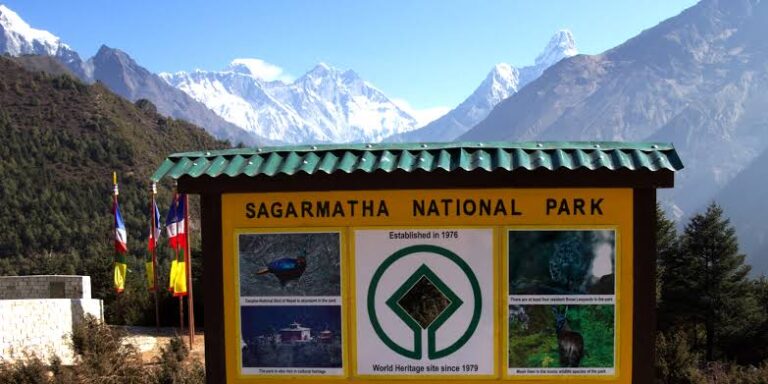
- Location: Khumbu Glacier, Khumbu Pasang Lhamu Rural Municipality, Solukhumbu, Nepal, inside Sagarmatha National Park
- Nearest lodges: Gorak Shep (5,164 m), 2 to 3 hours’ walk each way
- Oxygen: roughly half the oxygen available at sea level
- Climbing season: April to May, when the expedition tent city is set up
- Overlooks: the Khumbu Icefall, Nuptse, Khumbutse and Pumori
- Can you see the Everest summit? Not really: Nuptse blocks most of it. For the classic view, climb Kala Patthar (5,545 m).
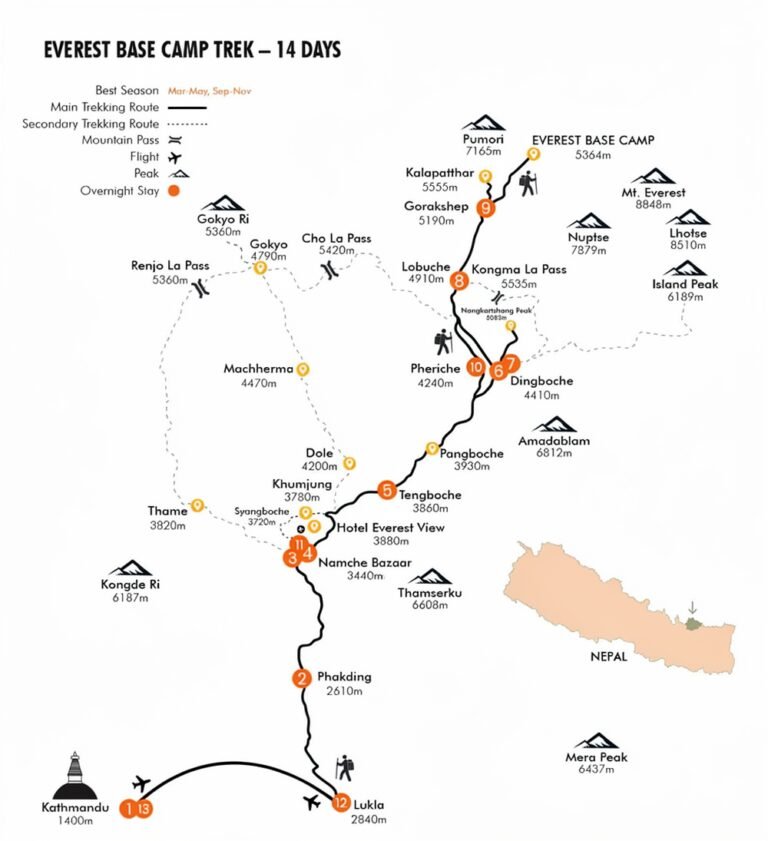
- On our trek: Day 9 of the 14-day Everest Base Camp Trek
Where is Everest Base Camp?
Mount Everest has two main base camps. South Base Camp, in Nepal, is the one trekkers walk to and the one climbers use on the South Col route, the route of Hillary and Tenzing in 1953. North Base Camp, in Tibet, is lower at about 5,150 m and can be reached by road. When people say “Everest Base Camp” they almost always mean the Nepal side.
South Base Camp sits at the head of the Khumbu valley, where the Khumbu Glacier pours out of the Western Cwm between Everest and Nuptse. There is no village here. The last settlement with lodges is Gorak Shep, which was itself the base camp for early expeditions before climbers moved closer to the mountain.
The walk from Gorak Shep
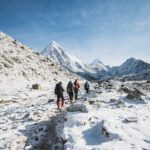
On Day 9 of our trek you walk from Lobuche to Gorak Shep, drop your bags at the lodge, have lunch and continue to Base Camp. The trail follows the lateral moraine along the edge of the glacier, a rocky up-and-down path with views of jagged ice pinnacles below. After about two to three hours you descend onto the glacier itself and reach the famous marker. It’s the longest day of the trek, about 8 to 9 hours in total, and you return to Gorak Shep to sleep. Trekking permits don’t allow trekkers to camp at Base Camp.
What you will see
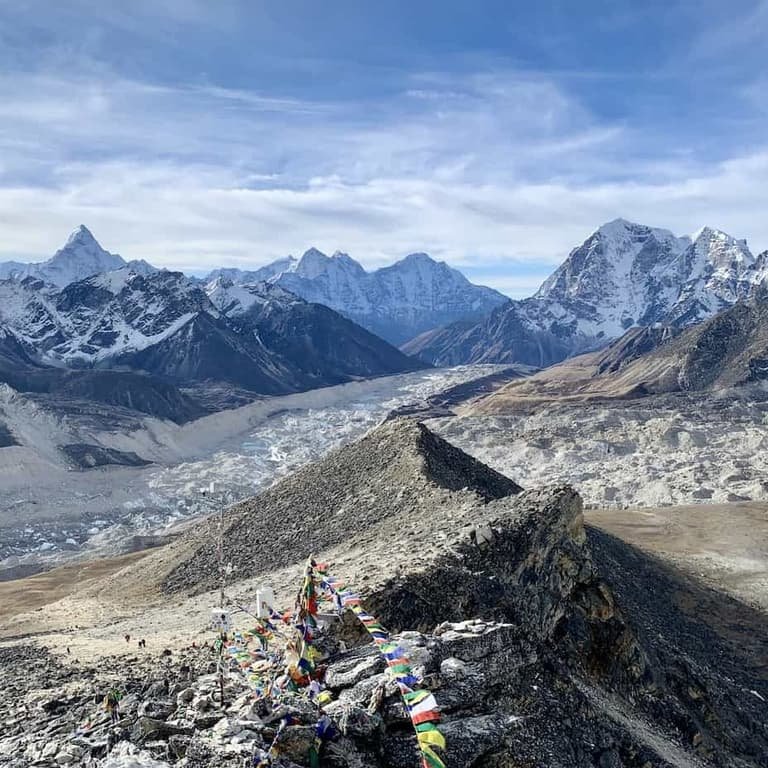
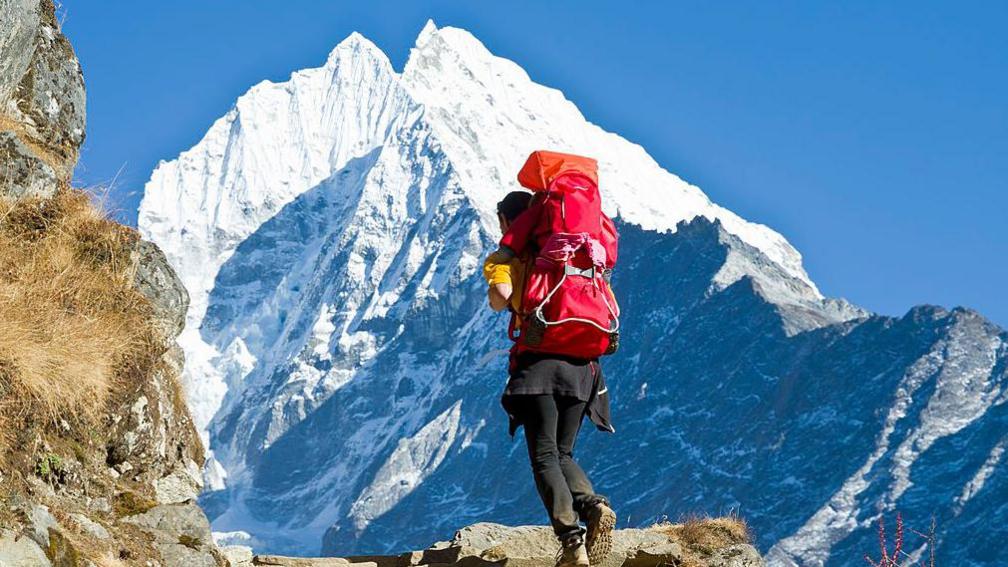
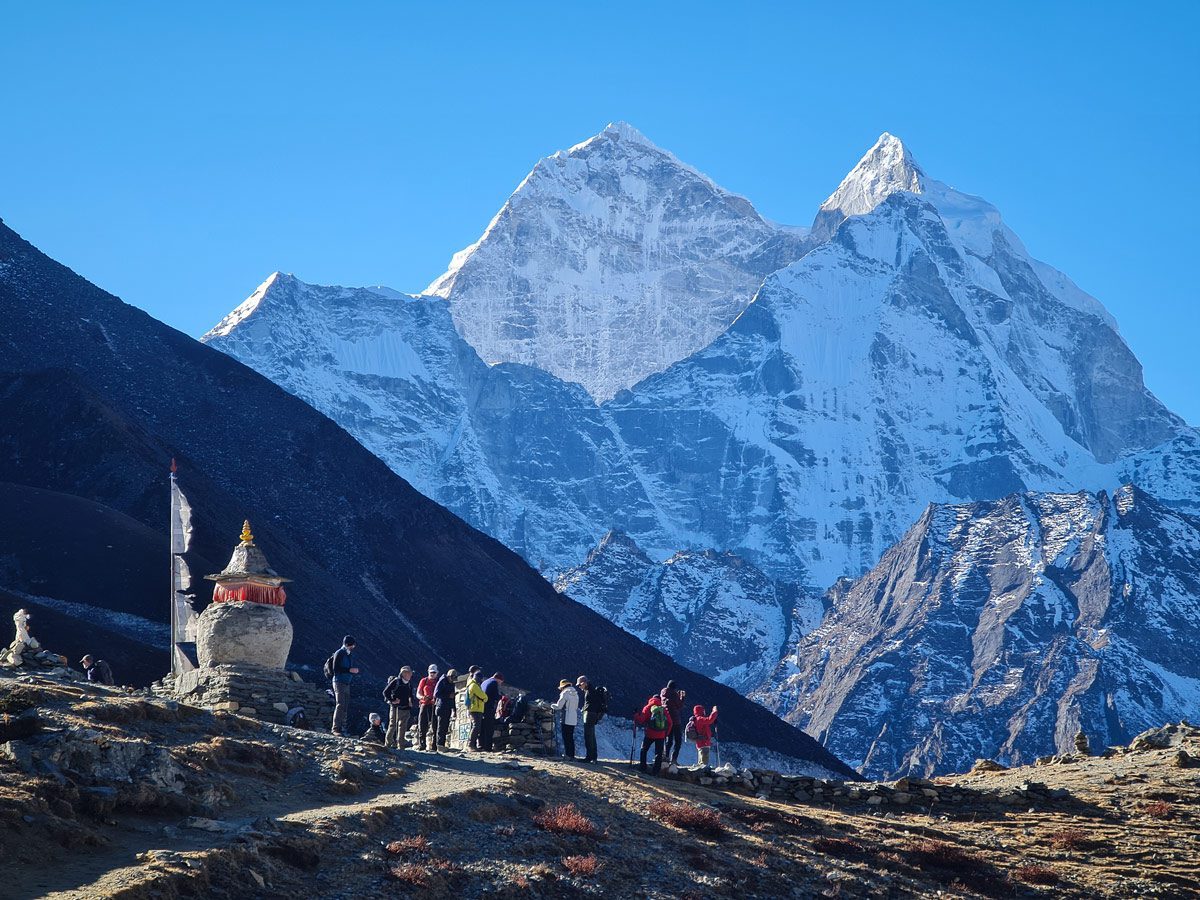
The first thing that strikes most people is the Khumbu Icefall, a frozen river of house-sized ice blocks spilling down from the Western Cwm. It is the first and most dangerous obstacle for climbers heading to the summit. Around you rise the walls of Nuptse, Khumbutse and Lingtren, with the graceful cone of Pumori behind. Underfoot is grey rubble over hundreds of metres of glacial ice, which creaks and groans as it moves.
In spring (April to May) you will see the expedition tent city spread across the glacier, with climbers, Sherpa teams, cooks and doctors preparing for summit pushes. In autumn the camp is usually quiet and empty, giving it a wild, remote feel. Both are special.
The Base Camp marker
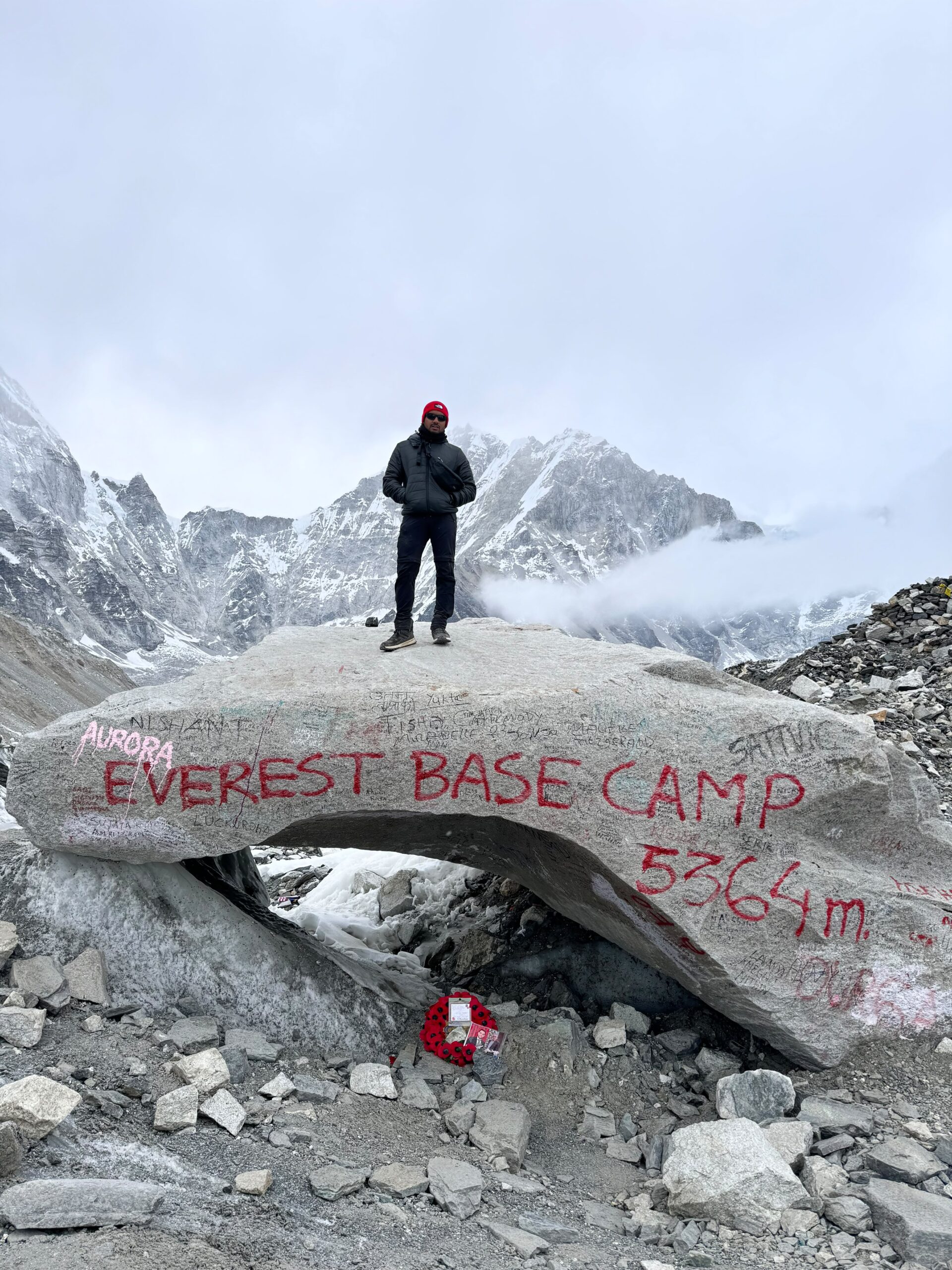
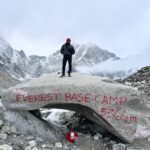
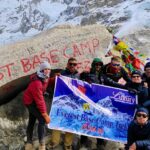
For years, trekkers took their photo on a large boulder painted with “Everest Base Camp 5364m” and covered in prayer flags. In March 2024 the local Khumbu Pasang Lhamu Rural Municipality installed a new signboard, which caused a lot of debate among trekkers and climbers. The prayer flags are still there, and the moment of arrival is just as emotional.
Can you see Everest from Base Camp?
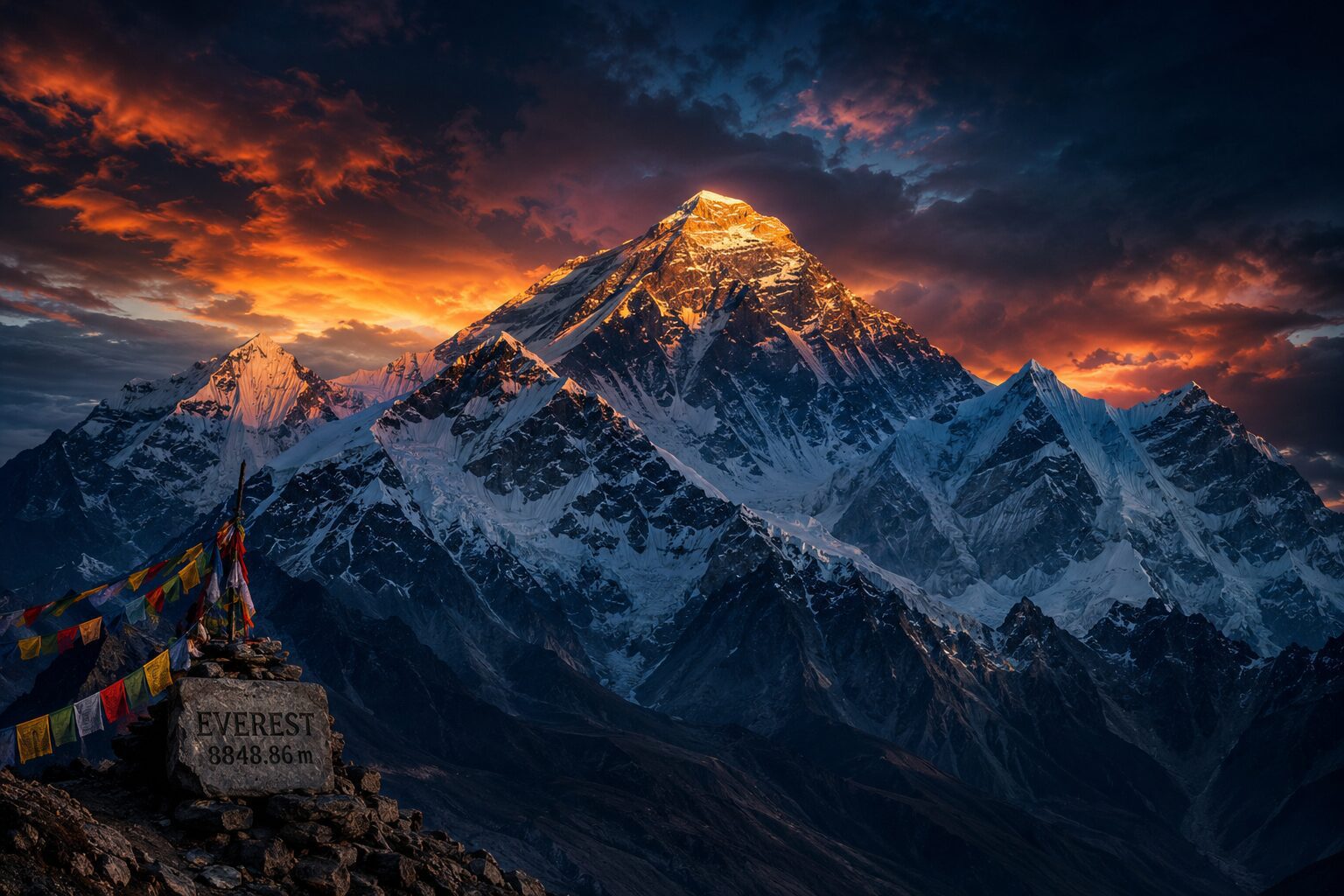
Surprisingly, not much of it. The summit is hidden behind the huge west ridge of Everest and the wall of Nuptse, so from Base Camp you see only part of the mountain. For the classic, full view of Everest’s summit pyramid, climb Kala Patthar (5,545 m) above Gorak Shep at sunrise the next morning. On our itinerary that is the first thing you do on Day 10.
Altitude and how to prepare
At 5,364 m the air contains roughly half the oxygen available at sea level. Walking is slow, nights are cold, and altitude sickness is a real risk if you go up too fast. Our itinerary climbs gradually, with acclimatisation days in Namche Bazaar and Dingboche. You don’t need climbing skills, but you should be fit enough to walk 5 to 8 hours a day for several days in a row. Read how difficult the trek is, whether a beginner can do it and how long the hike takes.
A melting glacier and a camp that may move
Base Camp sits on a glacier that is thinning and becoming less stable as the climate warms. Researchers and officials in Nepal have discussed moving the expedition camp to a lower, ice-free site nearby, but as of 2026 it remains in its traditional place. Whatever happens, the walk to the foot of the Khumbu Icefall will remain one of the world’s great journeys. Please help protect it: carry out your rubbish, use toilets at the lodges and stay on the trail.
Best time to visit
March to May and October to November are the best seasons, with clear skies and stable weather. Spring adds the buzz of the expedition season; autumn brings the crispest views. Winter is very cold but clear, and the summer monsoon brings cloud and rain. See our month-by-month guide, the trek cost breakdown and the packing list.
No time to trek?
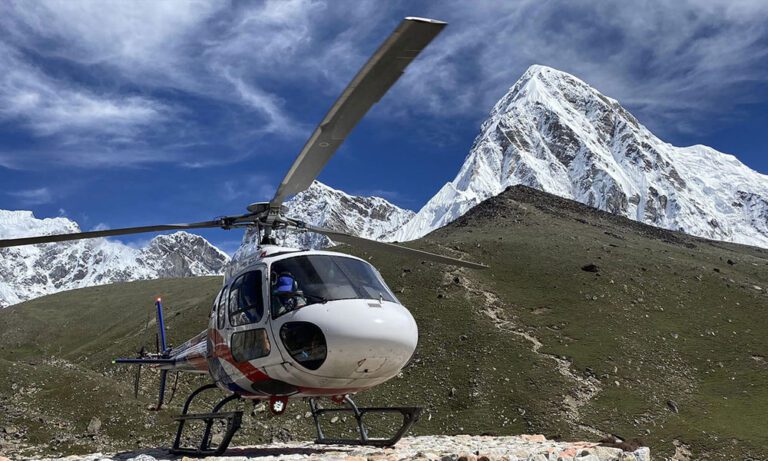
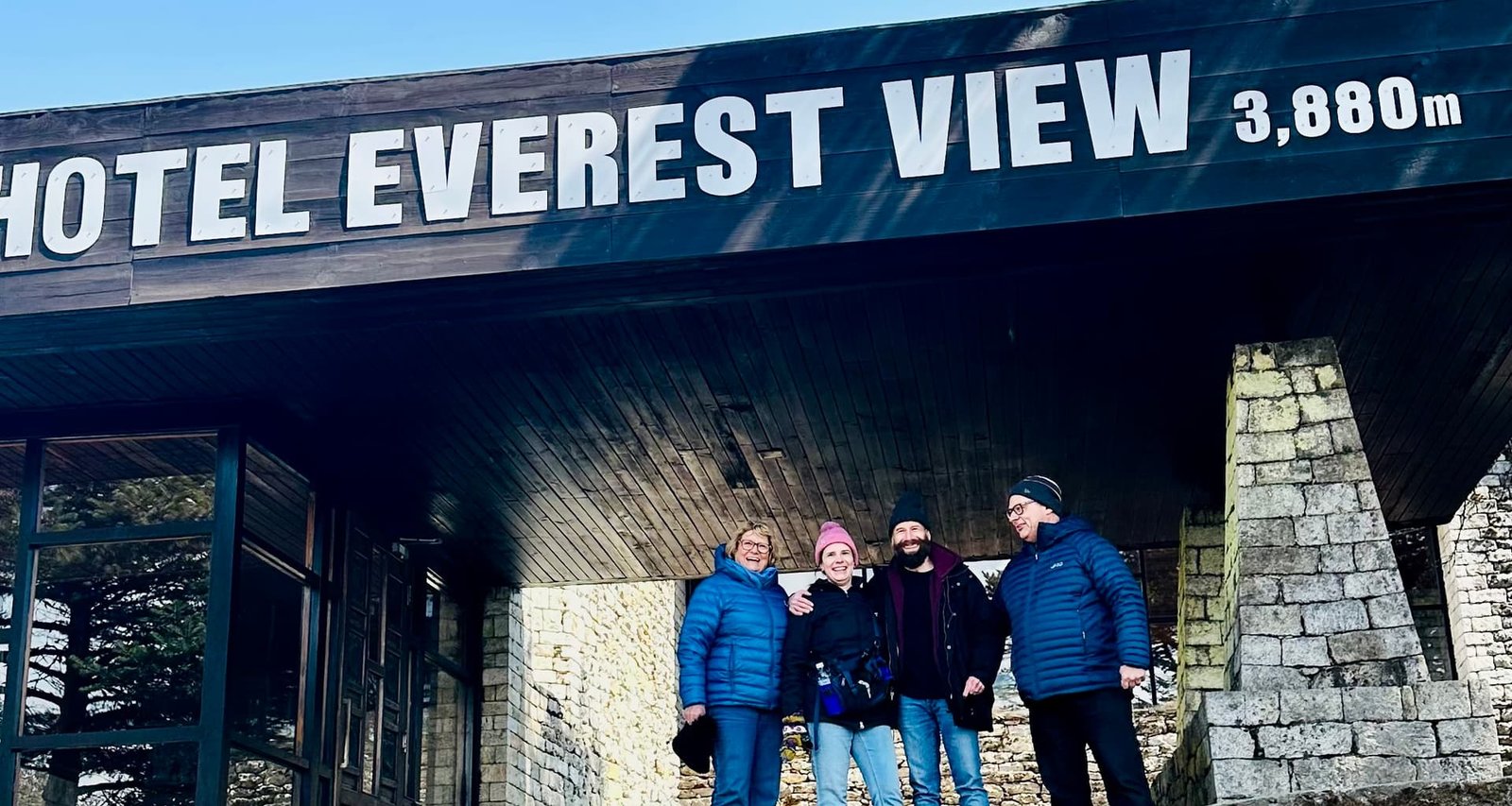
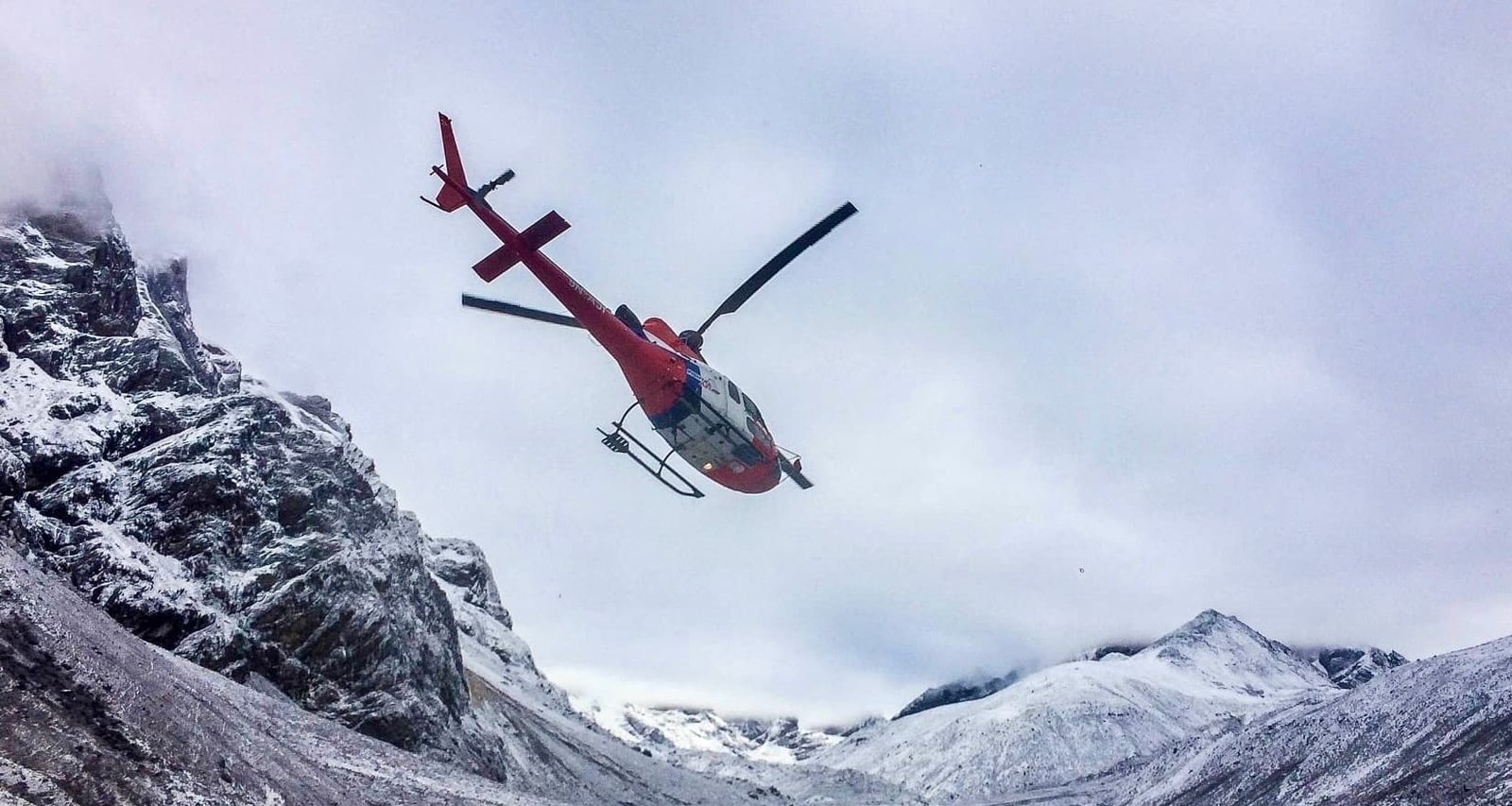
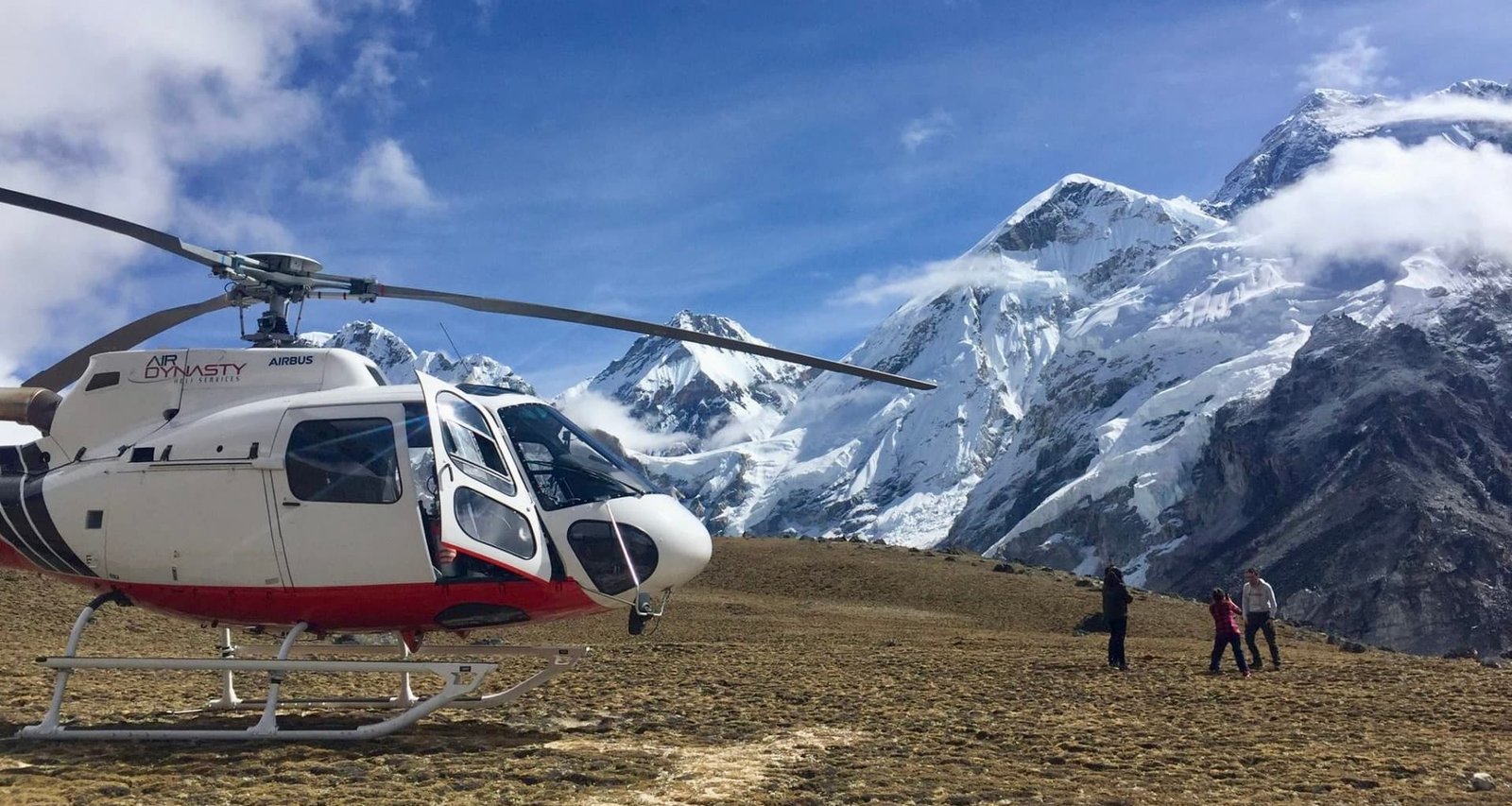
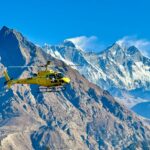
Our Everest Base Camp helicopter day tour flies over Base Camp and lands at Kala Patthar for the best view of Everest, with breakfast at Hotel Everest View on the way back, all in one morning from Kathmandu.
Highlights
- Stand at 5,364 m at the foot of Mount Everest
- Gaze up at the frozen chaos of the Khumbu Icefall
- Walk on the moving ice of the Khumbu Glacier
- See the spring tent city of Everest expeditions
- Take your photo at the Base Camp marker
- Celebrate with your Sherpa crew at the end of the trail
- Climb Kala Patthar next morning for the classic Everest view
Gallery
Location
Open in Google MapsFrequently asked questions
How high is Everest Base Camp?
South Base Camp in Nepal is at 5,364 metres (17,598 feet) above sea level.
Where is Everest Base Camp?
On the Khumbu Glacier at the foot of the Khumbu Icefall, in Solukhumbu District, north-eastern Nepal, inside Sagarmatha National Park.
Can you see Mount Everest from Base Camp?
Only partly. Nuptse and Everest's west ridge hide the summit. For the full view, climb Kala Patthar (5,545 m) above Gorak Shep.
Can trekkers sleep at Everest Base Camp?
No. Trekkers visit Base Camp on a day walk and sleep at Gorak Shep. Only climbing expeditions with permits camp at Base Camp.
How long does it take to walk to Everest Base Camp?
About 2 to 3 hours each way from Gorak Shep. The full trek from Lukla takes 8 days up with acclimatisation days, and our full trip is 14 days.
What is the difference between South and North Base Camp?
South Base Camp is in Nepal at 5,364 m and is reached on foot. North Base Camp is in Tibet at about 5,150 m and can be reached by road.
When is the Everest Base Camp tent city there?
During the spring climbing season, roughly April to May. In autumn the camp is usually empty.
Is Everest Base Camp moving?
Moving the expedition camp to a lower, more stable site has been discussed because the glacier is melting, but as of 2026 it remains in its traditional location.
Do I need climbing experience to reach Everest Base Camp?
No. It is a trek, not a climb, but you need good fitness and a gradual itinerary to cope with the altitude.
On which day of the 14-day trek do we reach Base Camp?
On Day 9, after walking from Lobuche to Gorak Shep.
You may also like
 Place · GlacierKhumbu IcefallAbout 5,400 to 6,000 m
 Place · GlacierKhumbu GlacierAbout 4,900 to 7,600 m
 Place · MountainMount Everest8,848.86 m / 29,031.7 ft
 Place · Base CampGorak Shep5,164 m
 Place · Base CampKala Patthar5,545 m
 Place · Base CampLobuche4,910 m
 Place · LandmarkThukla Pass MemorialAbout 4,830 m / 15,850 ft