



Mount Everest
The world's highest mountain, and the reason the Khumbu trail exists
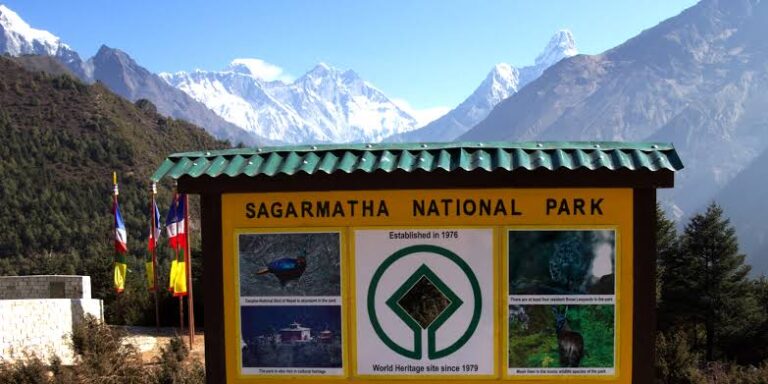
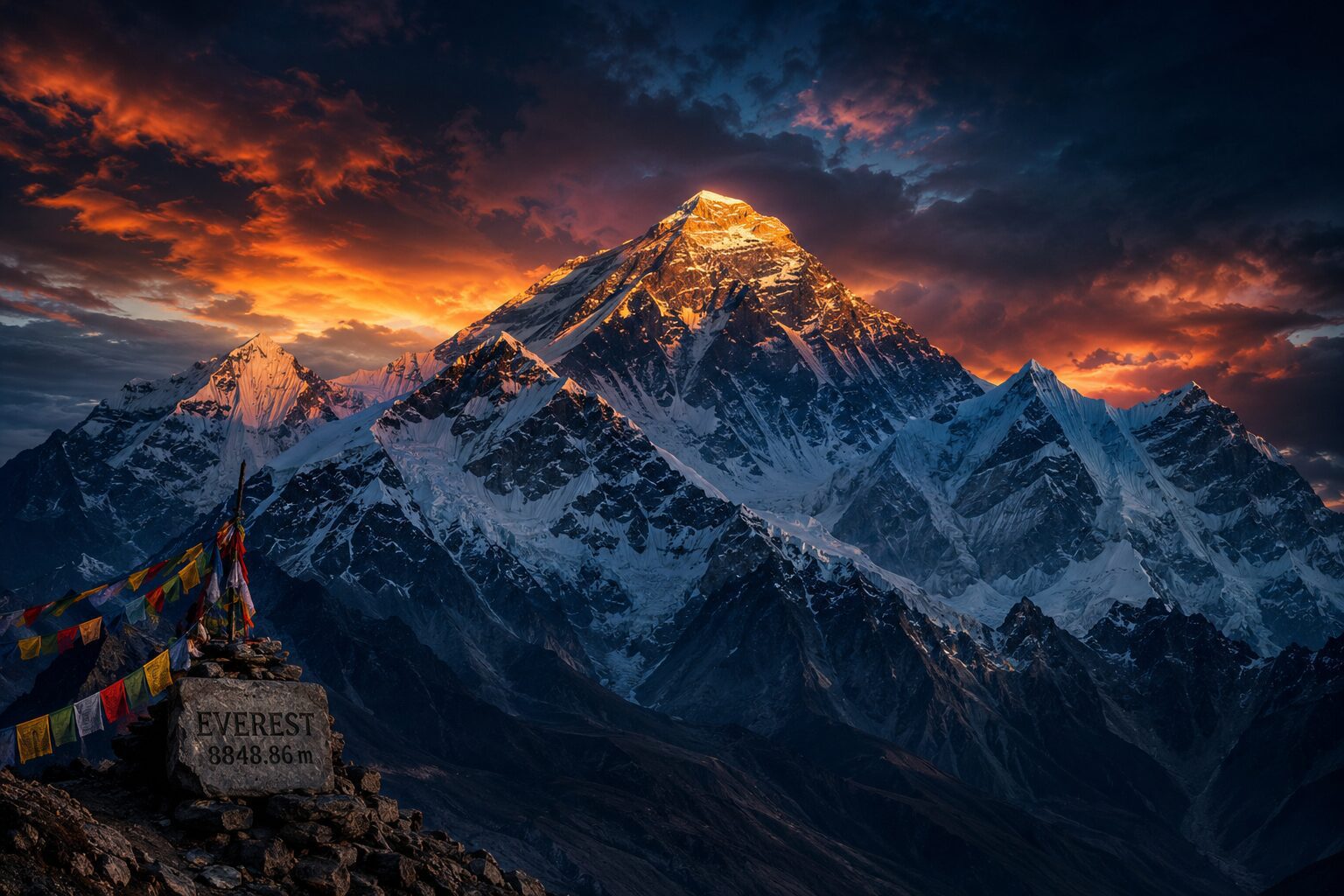
Mount Everest (8,848.86 m) is the highest mountain on Earth, on the Nepal–Tibet border in Sagarmatha National Park. Called Sagarmatha in Nepal and Chomolungma in Tibet, it was first climbed by Hillary and Tenzing Norgay in 1953. Trekkers see it best from Kala Patthar, Hotel Everest View and Tengboche on the Everest Base Camp trek.
Why Mount Everest is known
Highest mountain on Earth at 8,848.86 m
First climbed by Hillary and Tenzing Norgay on 29 May 1953
Sacred Chomolungma, home of the goddess Miyolangsangma
Classic views from Kala Patthar, Hotel Everest View and Tengboche
Goal of the world-famous Everest Base Camp trek
About Mount Everest
Mount Everest is the highest mountain on Earth, rising to 8,848.86 metres (29,031.7 ft) above sea level on the border between Nepal and Tibet (China). In Nepal it is called Sagarmatha, “the forehead of the sky”; in Tibetan it is Chomolungma, “goddess mother of the world”. Its summit was first reached on 29 May 1953 by Edmund Hillary and Tenzing Norgay Sherpa, and today it draws hundreds of climbers each spring and tens of thousands of trekkers who walk to its foot on the Everest Base Camp Trek.
You do not need to be a mountaineer to see Everest with your own eyes. This guide explains how high it is and why the number changed, where it is, the best places to see it, how it compares with its neighbours, and the different ways to experience the world’s highest mountain from Nepal.
Mount Everest at a glance
- Height: 8,848.86 m / 29,031.7 ft (official Nepal–China measurement, announced in December 2020)
- Names: Sagarmatha (Nepali), Chomolungma or Qomolangma (Tibetan), Mount Everest (English)
- Location: Mahalangur Himal, on the Nepal–China border; the Nepal side lies in Sagarmatha National Park, Solukhumbu District
- First ascent: 29 May 1953, Edmund Hillary and Tenzing Norgay Sherpa (British expedition led by John Hunt)
- Neighbours: Lhotse (8,516 m), Nuptse (7,861 m), Changtse (7,543 m)
- Main climbing routes: South Col from Nepal, North Col from Tibet
- Climbing permit (Nepal): US$15,000 per person for the spring season since September 2025
- Best place for trekkers to see it: Kala Patthar (5,644 m)
How tall is Mount Everest?
The official height is 8,848.86 metres, about 29,032 feet. Nepal and China announced it together in December 2020 after both countries sent survey teams to the summit with GPS and ground-penetrating radar. For decades before that, Nepal used 8,848 m from a 1955 Indian survey, while China used 8,844.43 m, its rock height without the summit snow. The new figure includes the snow cap and settled the difference.
Everest is still growing very slowly. The Indian plate keeps pushing north under Asia, lifting the Himalaya by a few millimetres a year, although earthquakes can lower peaks slightly. Measured from sea level, nothing on Earth is higher. (Hawaii’s Mauna Kea is taller from its base on the sea floor, and Ecuador’s Chimborazo summit is farthest from the Earth’s centre, but neither is higher above sea level.)
Where is Mount Everest?
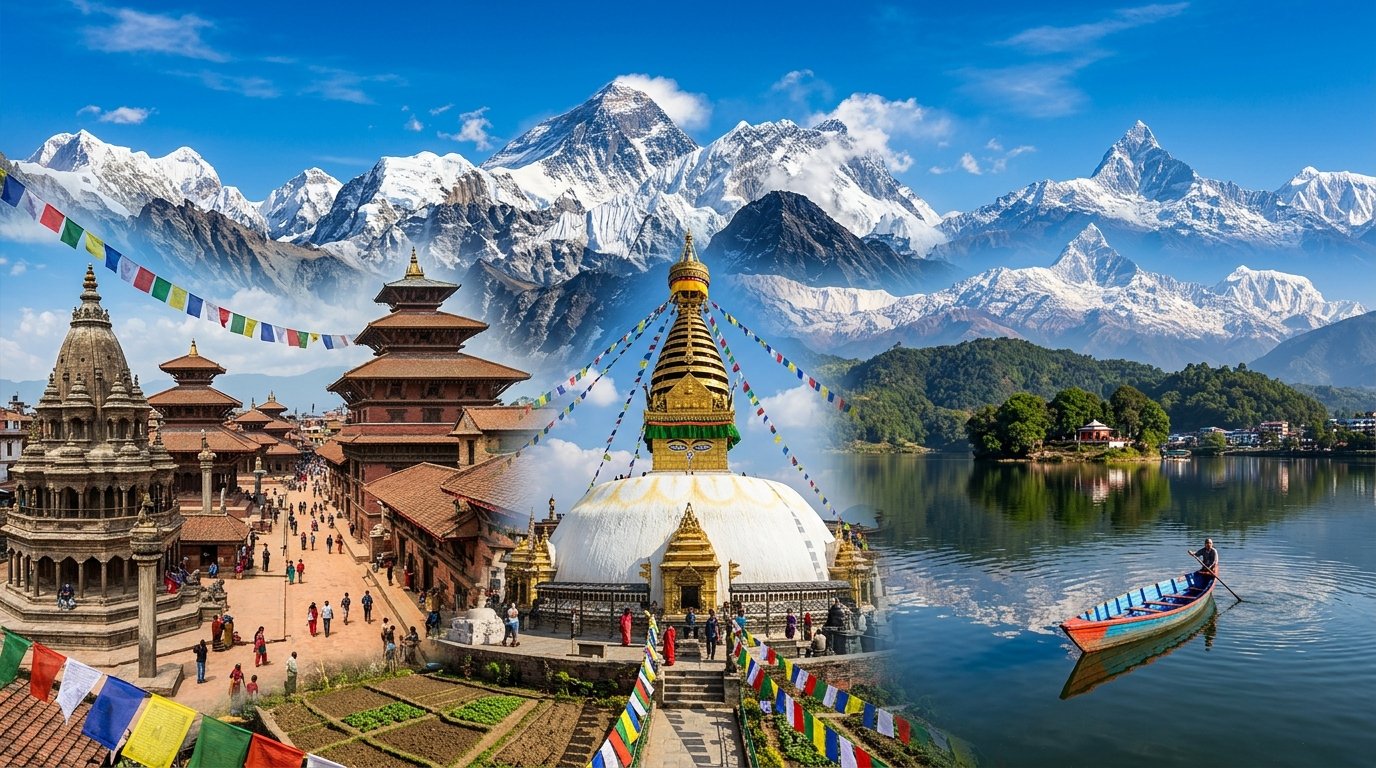
Everest stands in the Mahalangur range of the eastern Himalaya, about 160 km east-northeast of Kathmandu as the crow flies. The summit is exactly on the international border: the south side is in Nepal’s Sagarmatha National Park, a UNESCO World Heritage Site, and the north side is in the Tibet Autonomous Region of China. The Nepal side is home to the Sherpa people of the Khumbu, whose villages, monasteries and teahouses line the trail to the mountain.
Where can you see Mount Everest?
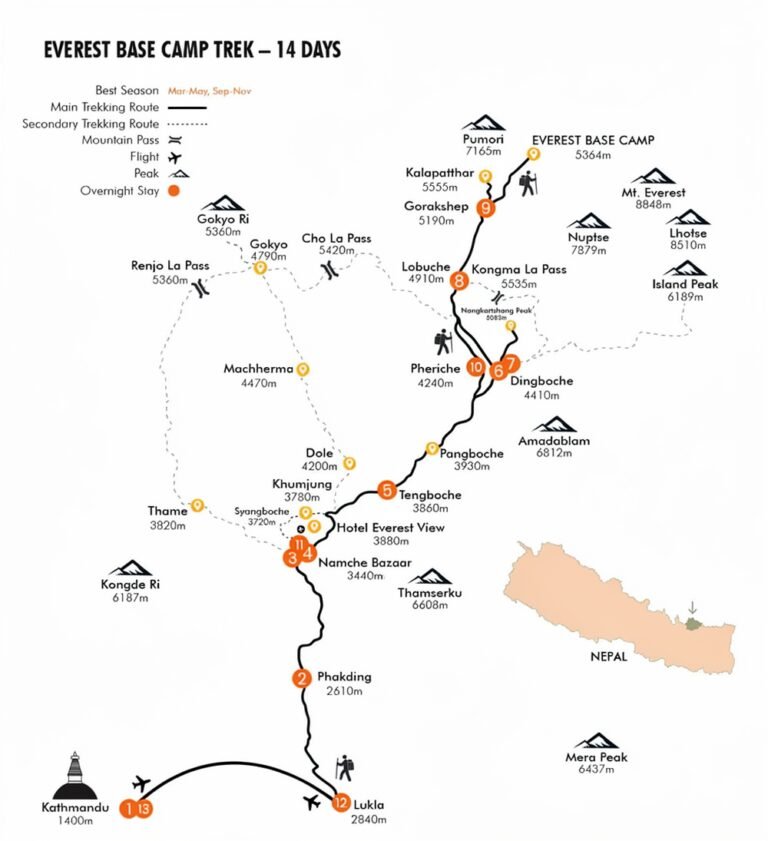
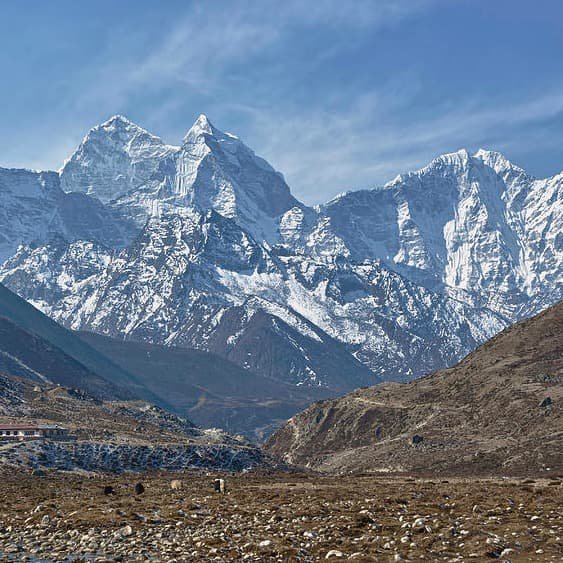
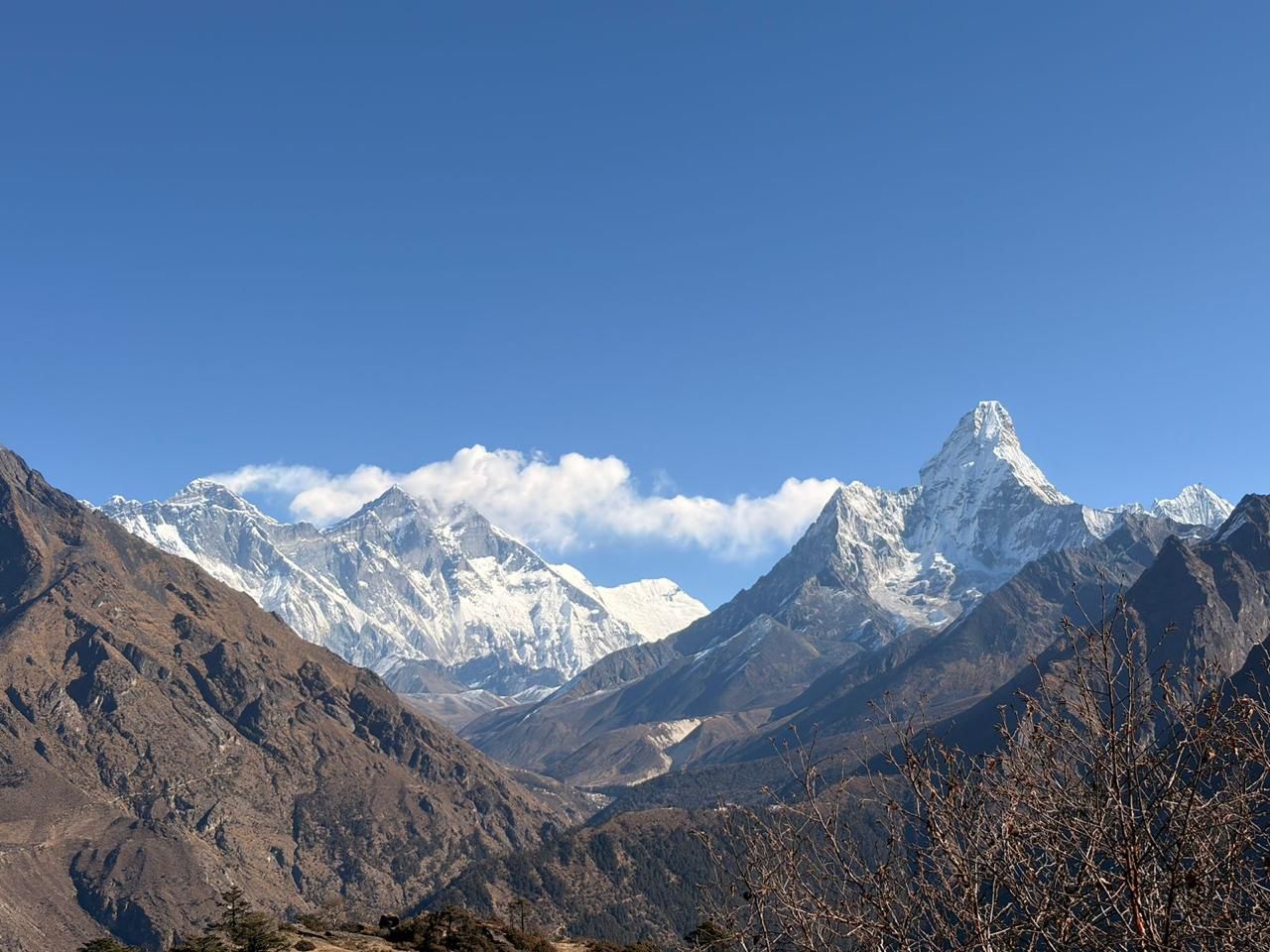
Surprisingly, Everest hides for much of the trek. Its huge neighbours, Nuptse and Lhotse, block the view from many places, and you cannot see the summit from Everest Base Camp itself. These are the classic viewpoints, in the order you reach them on our 14-day trek:
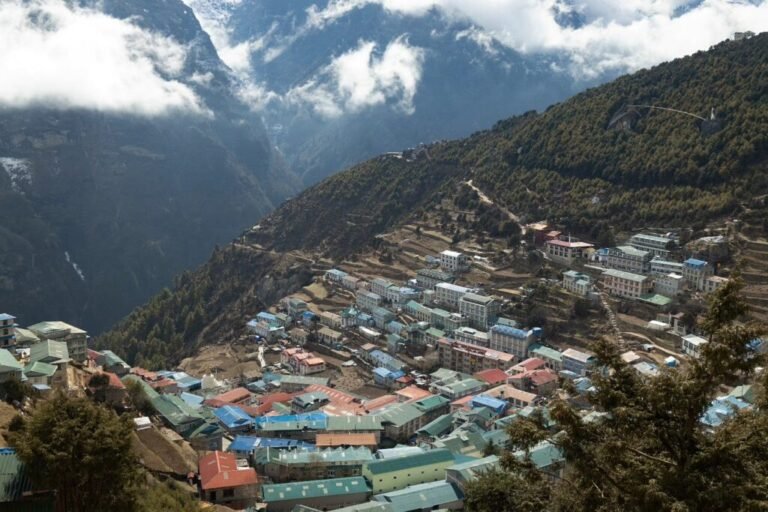
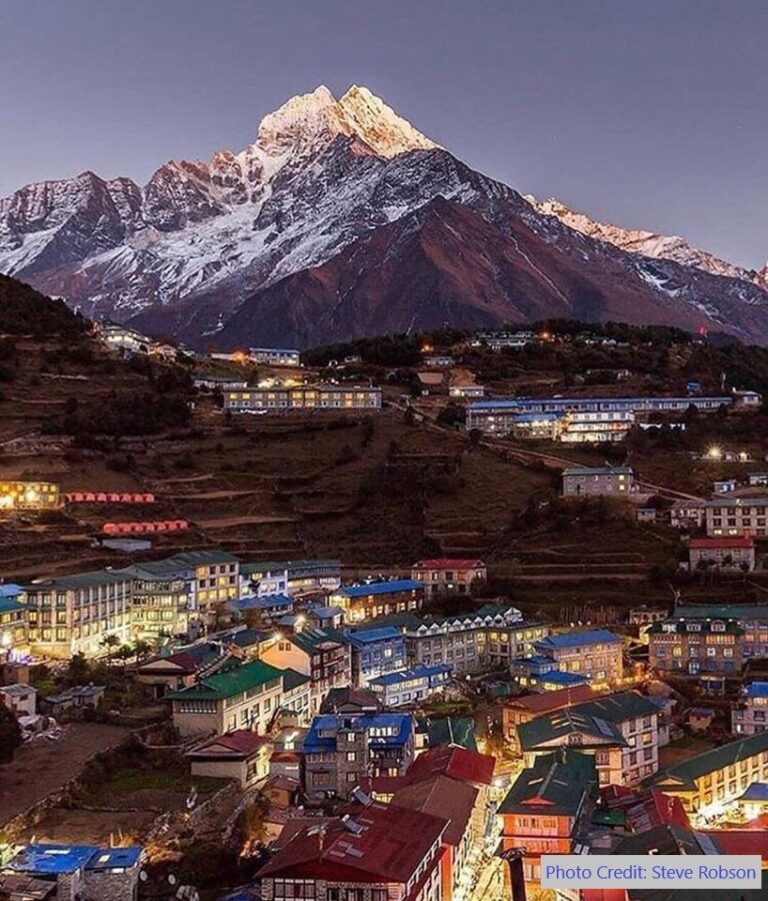
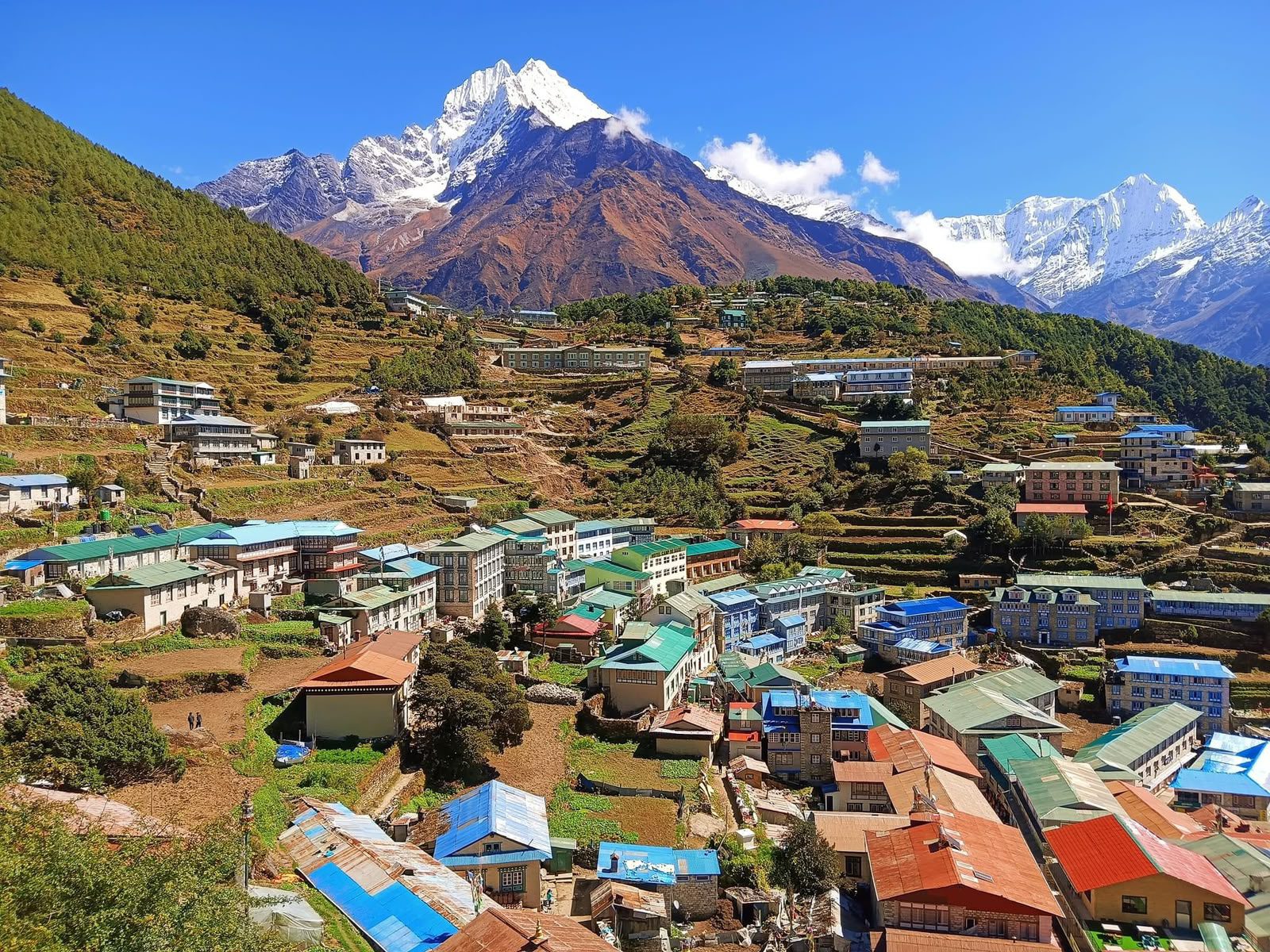
- The climb to Namche (Day 3): on a clear day, a gap in the trees above the Hillary Suspension Bridge gives the first distant glimpse of Everest’s summit pyramid.
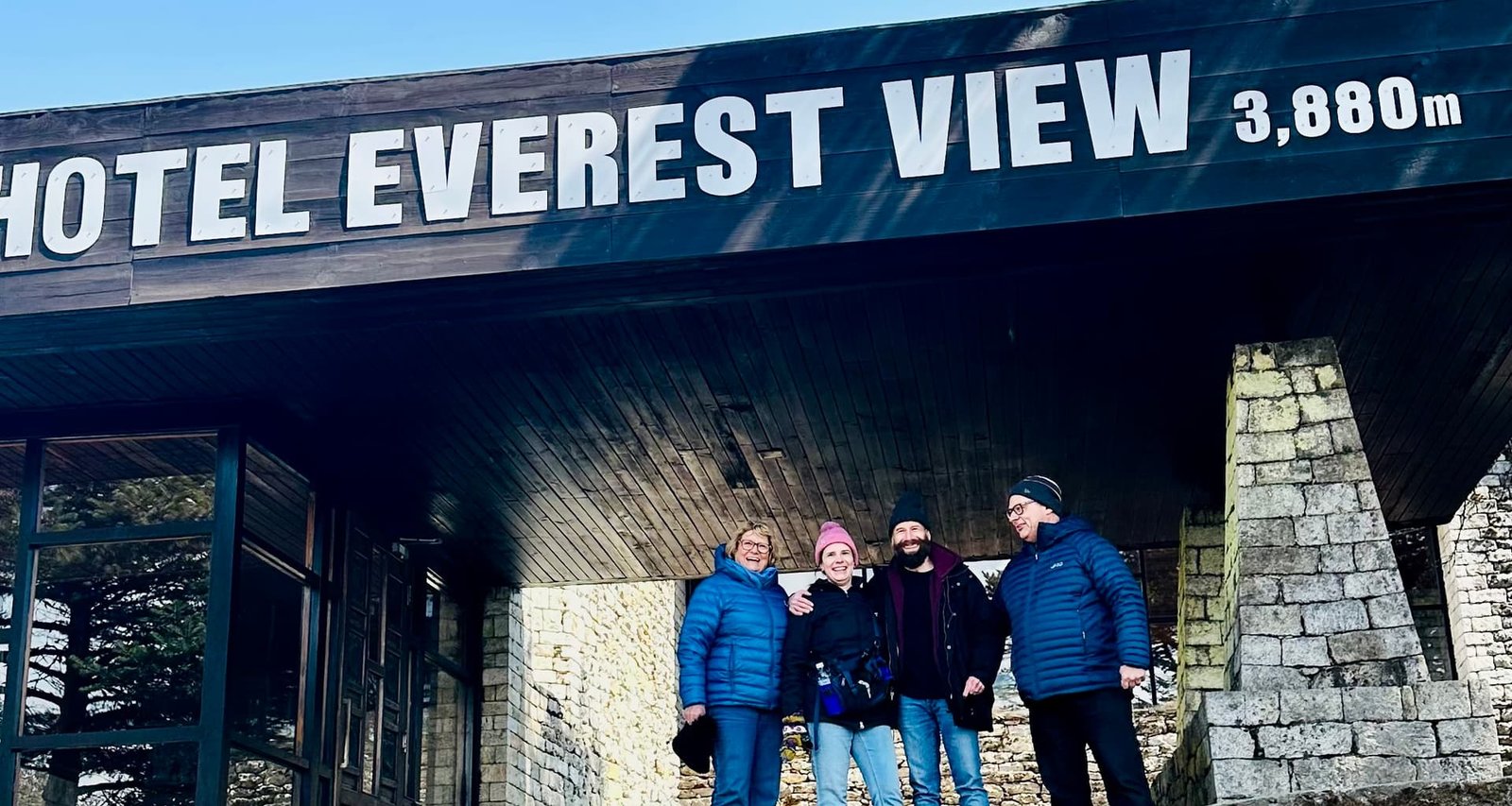
- Hotel Everest View (Day 4): on the acclimatisation hike above Namche Bazaar, the terrace looks straight up the valley to Everest, Lhotse and Ama Dablam.
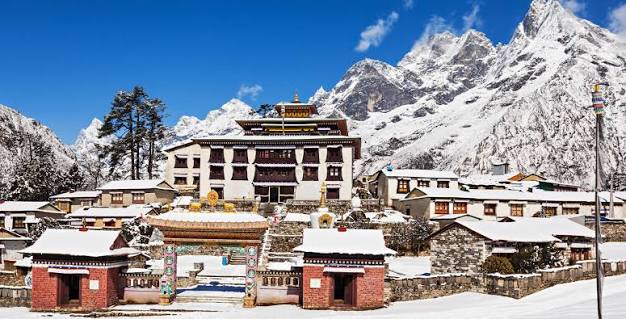
- Tengboche Monastery (Day 5): Everest peeks over the Nuptse–Lhotse wall behind the monastery, especially at sunset.
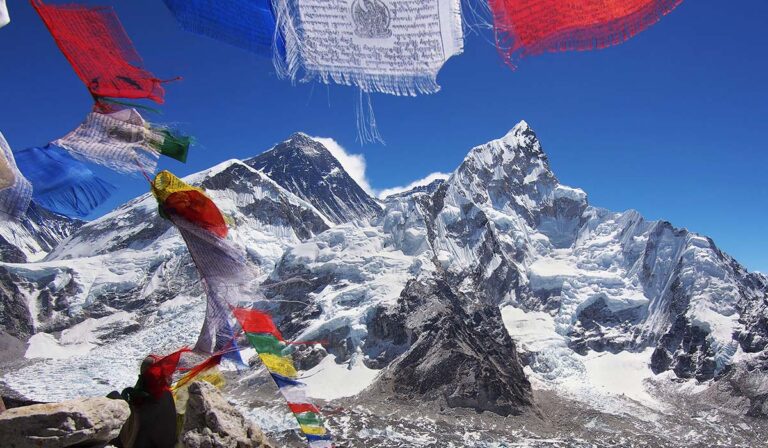
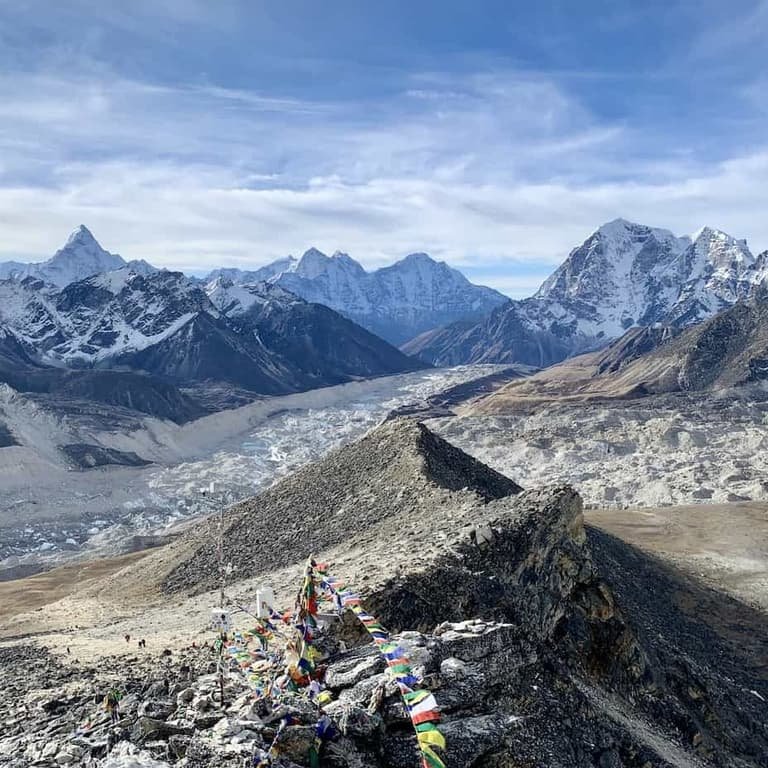
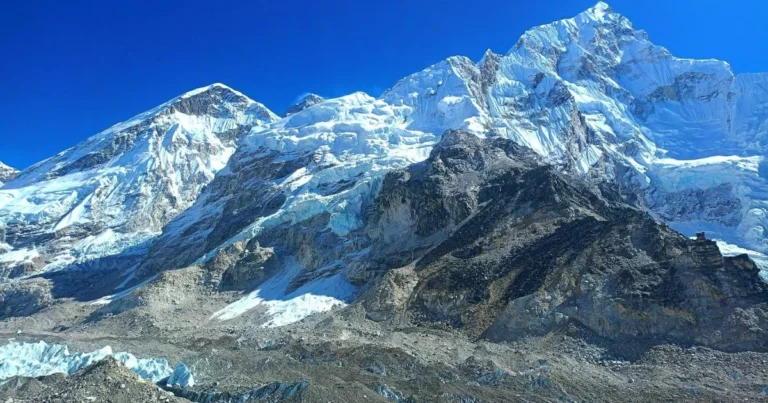
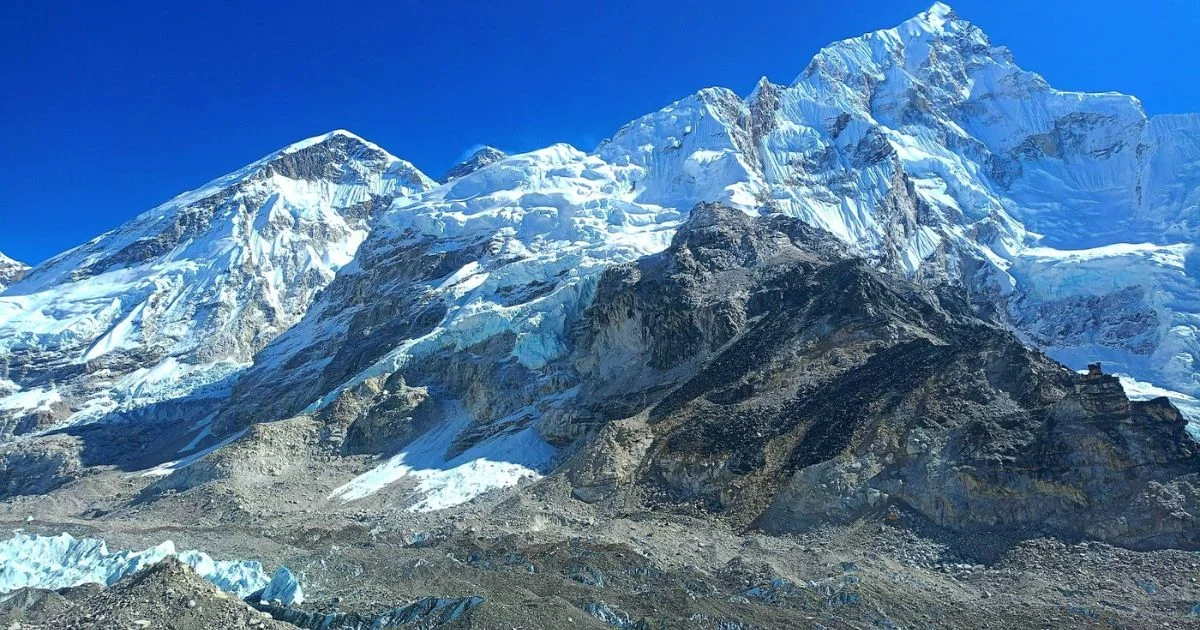
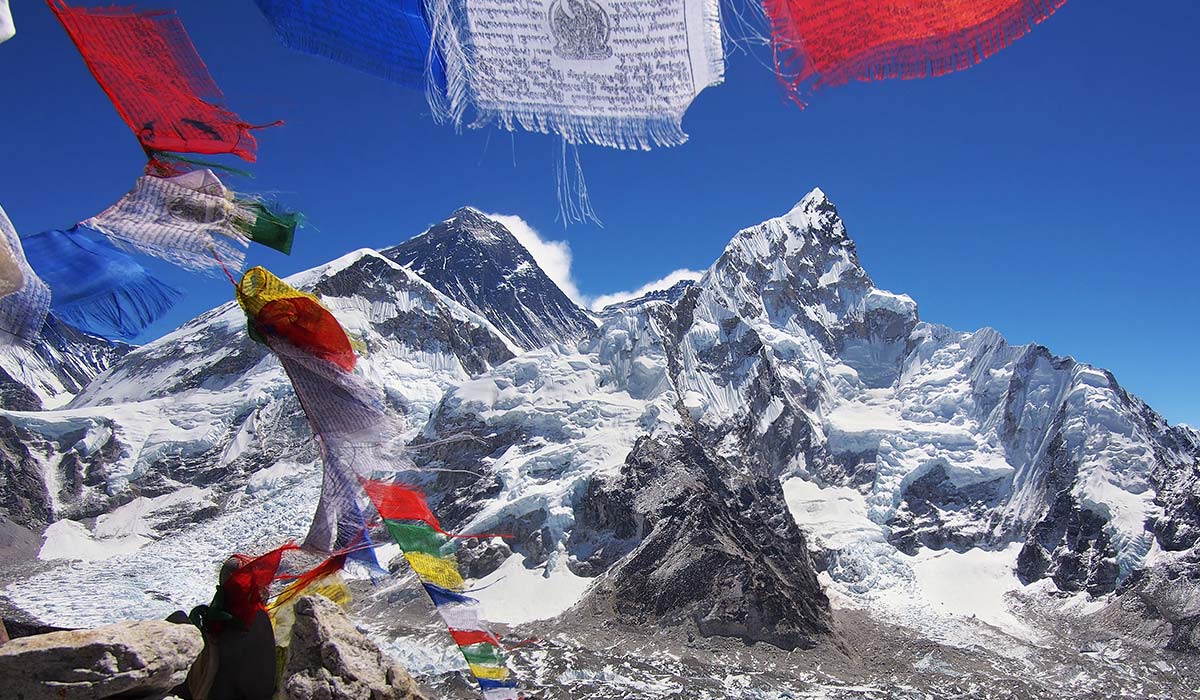
- Kala Patthar (Day 10): the best close view any trekker can get, with Everest’s whole south-west face, the South Col and the Khumbu Icefall in front of you. Go at sunrise, or at sunset on the evening before.
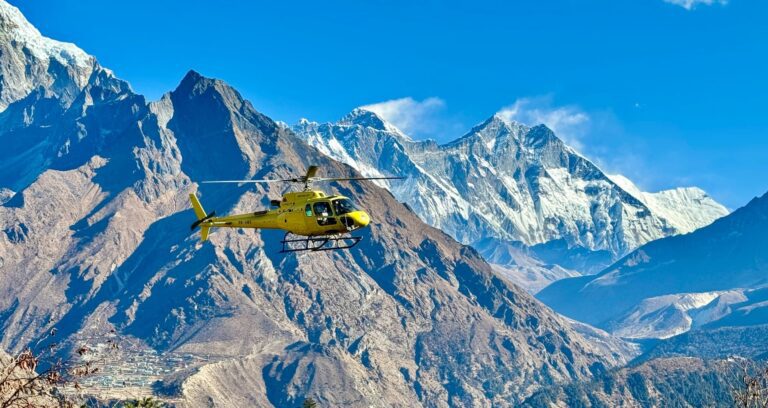
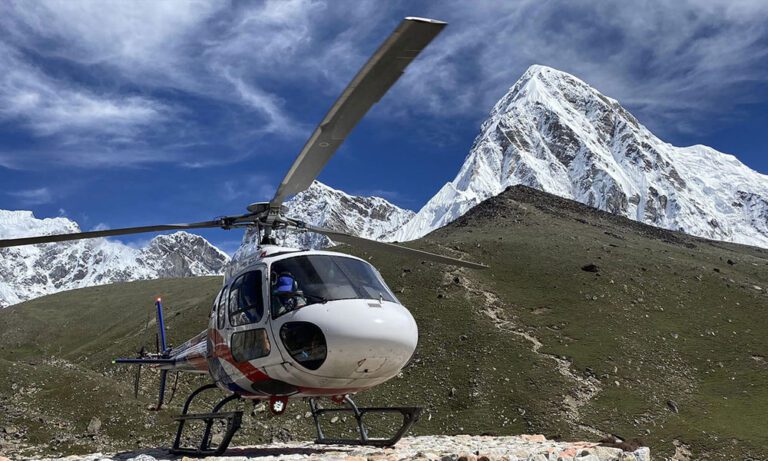
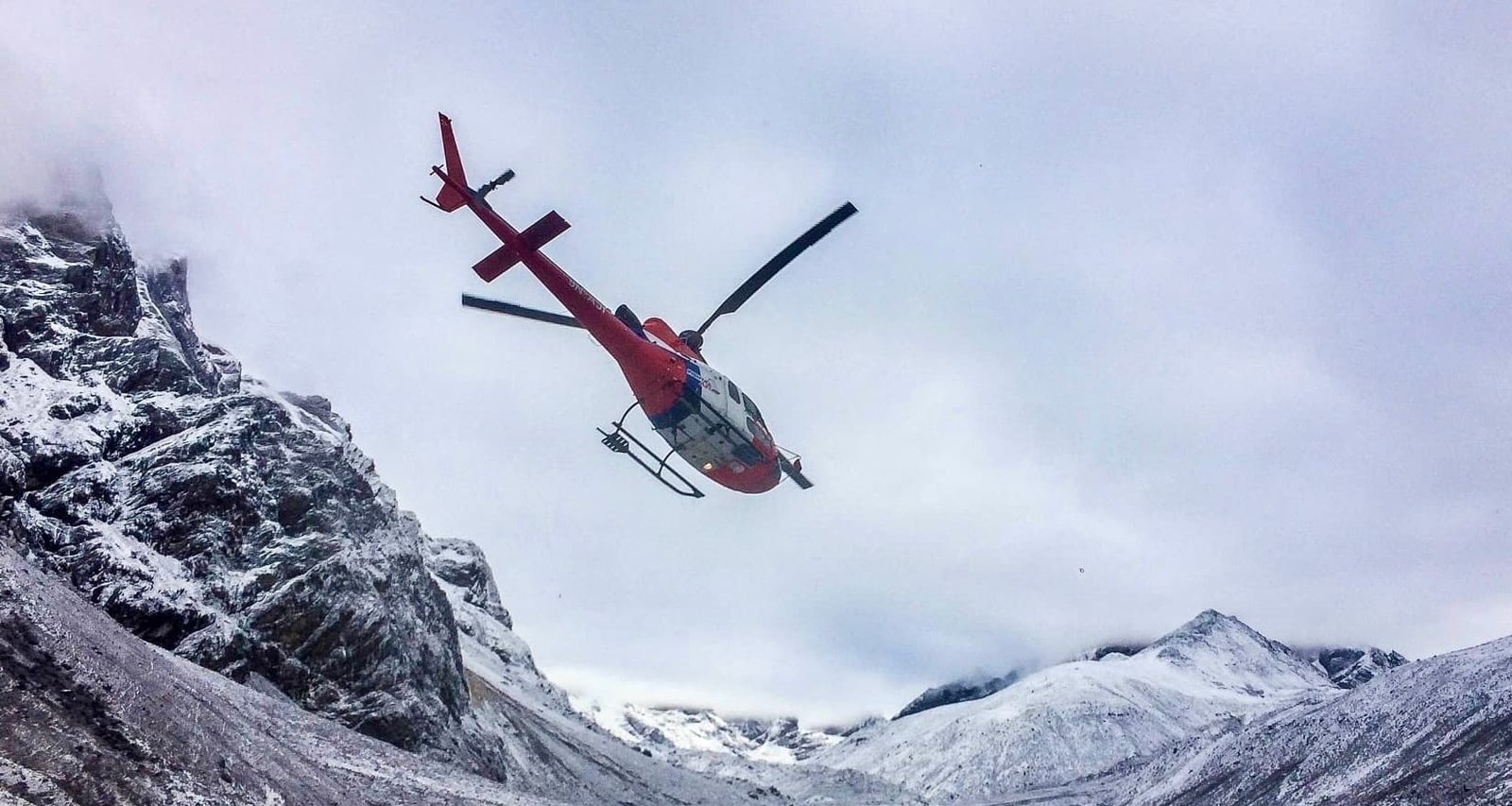
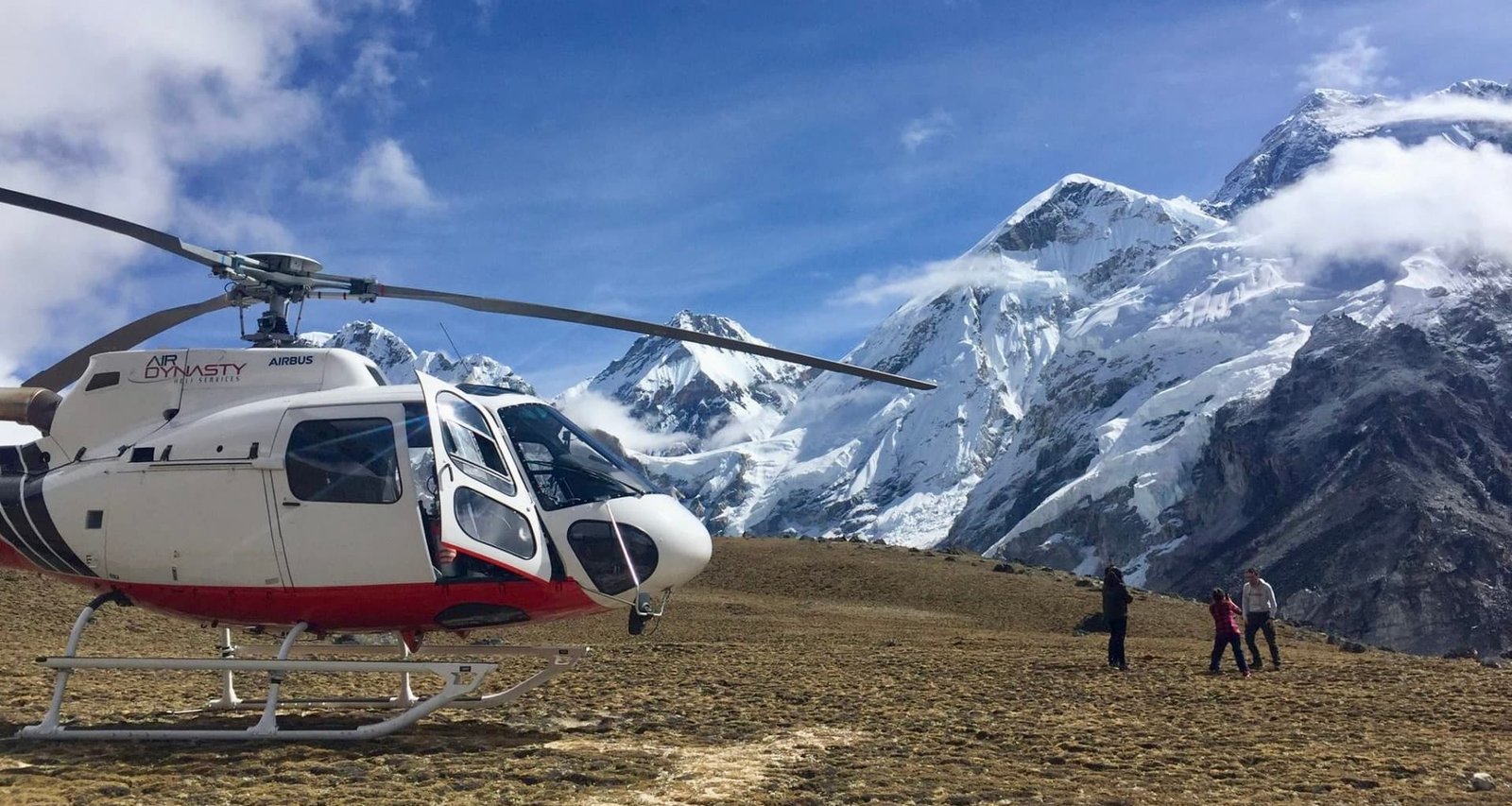
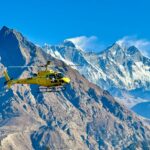
You can also see Everest from the right-hand side of a mountain flight from Kathmandu, and up close on our Everest helicopter day tour, which lands at Kala Patthar for photos.
A short history of climbing Everest
The Great Trigonometrical Survey of India identified “Peak XV” as the world’s highest mountain in 1852, and in 1865 it was named after Sir George Everest, a former Surveyor General, although he never saw it. Nepal was closed to foreigners, so the first British expeditions in the 1920s and 1930s approached from Tibet. George Mallory and Andrew Irvine disappeared high on the north-east ridge in 1924; whether they reached the summit is still debated.
After Nepal opened in 1950, the route from the south through the Khumbu became possible. On 29 May 1953, New Zealander Edmund Hillary and Tenzing Norgay Sherpa of the British expedition stood on the summit, reaching it via the Khumbu Icefall, the Western Cwm and the South Col. Later milestones include the first ascent without supplementary oxygen by Reinhold Messner and Peter Habeler in 1978, and Junko Tabei of Japan, the first woman to summit, in 1975. Sherpa climbers hold most of the records, including Kami Rita Sherpa with more summits than anyone in history.
How people climb Everest today
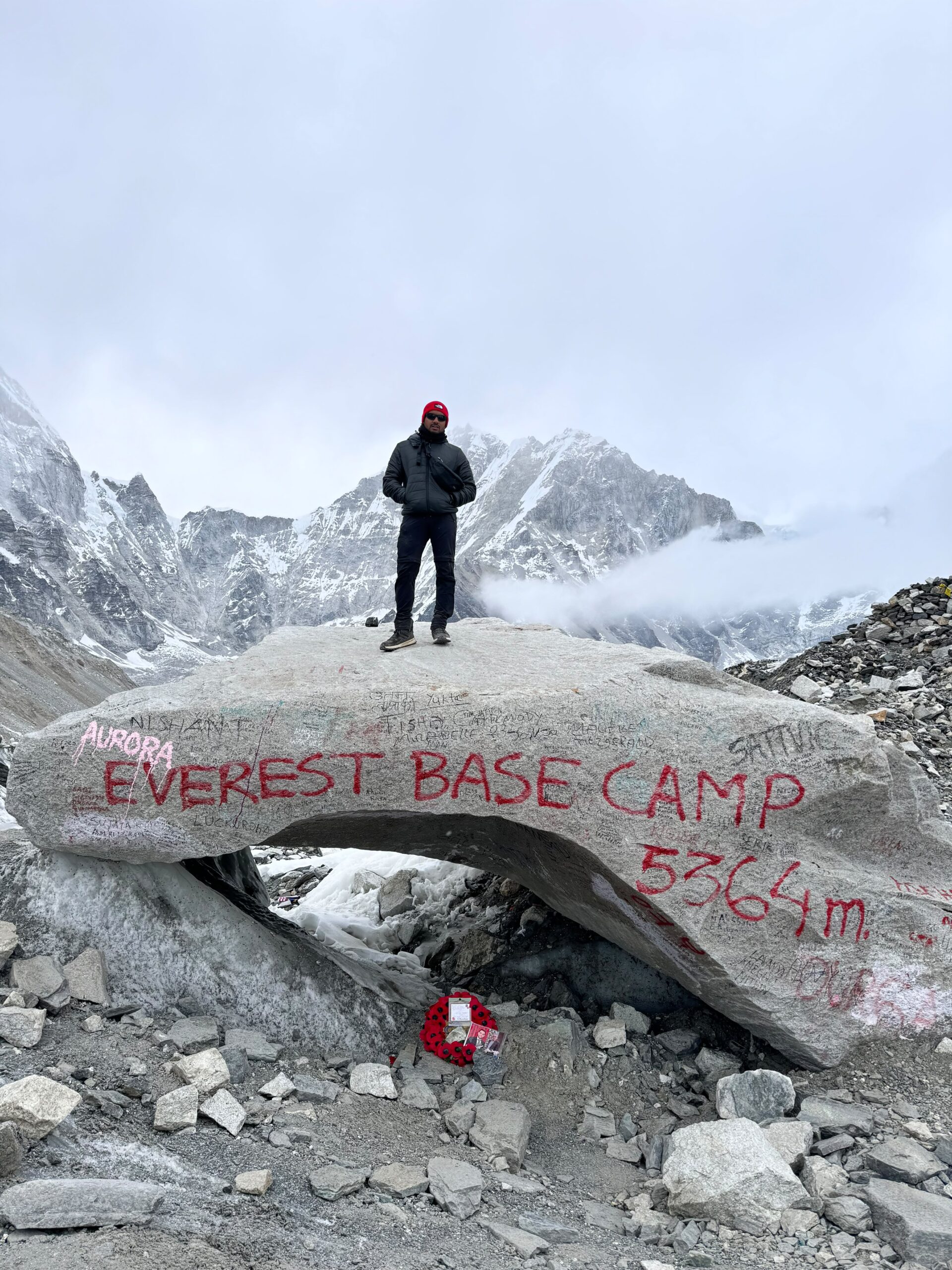
Most climbers use the South Col route from Nepal. Expeditions spend six to eight weeks on the mountain in April and May, acclimatising with rotations between Everest Base Camp (about 5,364 m) and four higher camps before waiting for a short summit window, usually in mid to late May. The route crosses the Khumbu Icefall, climbs the Western Cwm and the Lhotse Face to the South Col (7,906 m), then follows the south-east ridge past the Balcony and the South Summit to the top.
Nepal’s climbing permit for foreigners on the standard route costs US$15,000 per person in spring since September 2025, and a full guided expedition usually costs many times that. Climbers need serious high-altitude experience, typically on 6,000 m and 7,000–8,000 m peaks first.
Mount Everest and its neighbours
| Peak | Height | Where you see it best |
|---|---|---|
| Mount Everest | 8,848.86 m | Kala Patthar, Hotel Everest View, Tengboche |
| Lhotse | 8,516 m | Dingboche, Nangkartshang Peak, Hotel Everest View |
| Makalu | 8,485 m | Nangkartshang Peak above Dingboche |
| Cho Oyu | 8,188 m | Gokyo Ri, Renjo La |
| Nuptse | 7,861 m | Everest Base Camp, Gorak Shep, Kala Patthar |
| Pumori | 7,161 m | Gorak Shep and Lobuche |
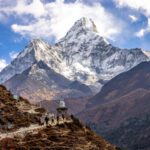
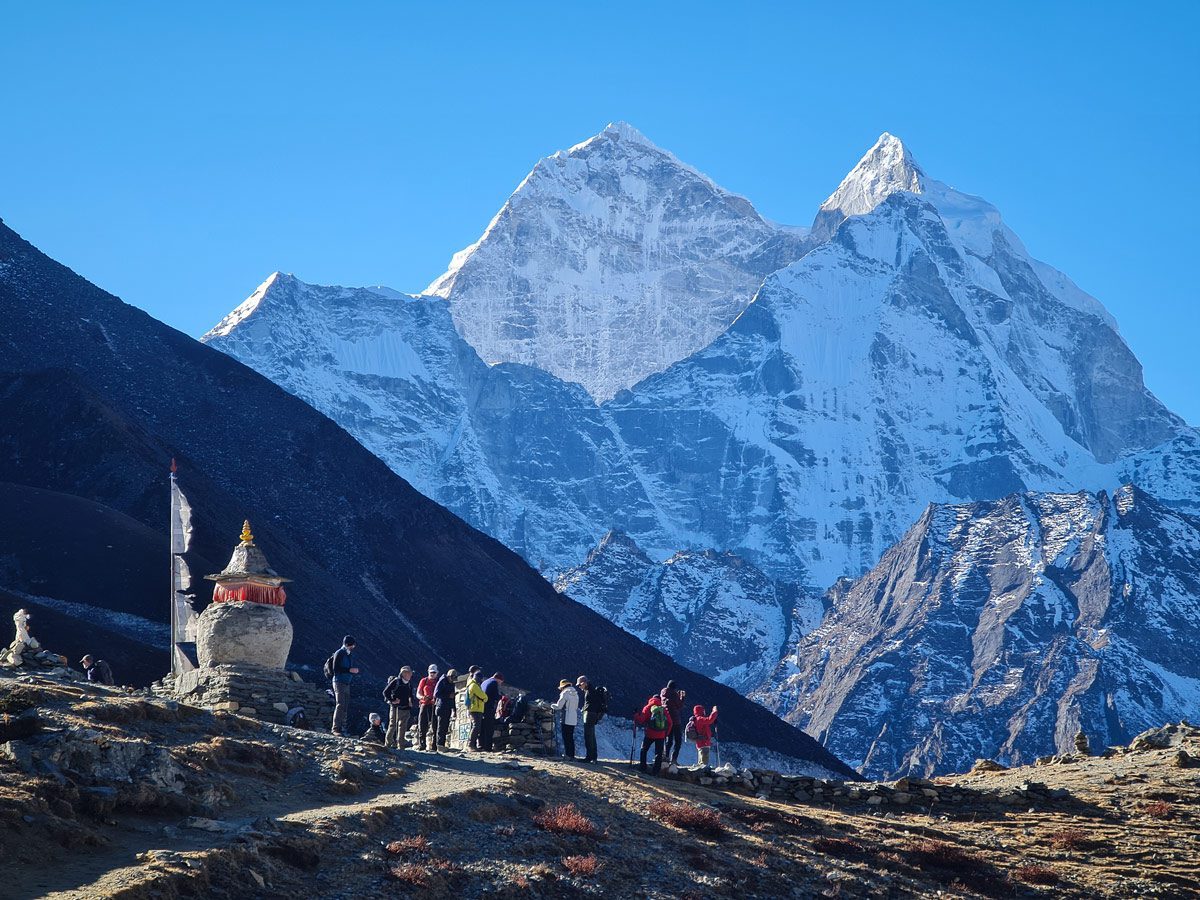
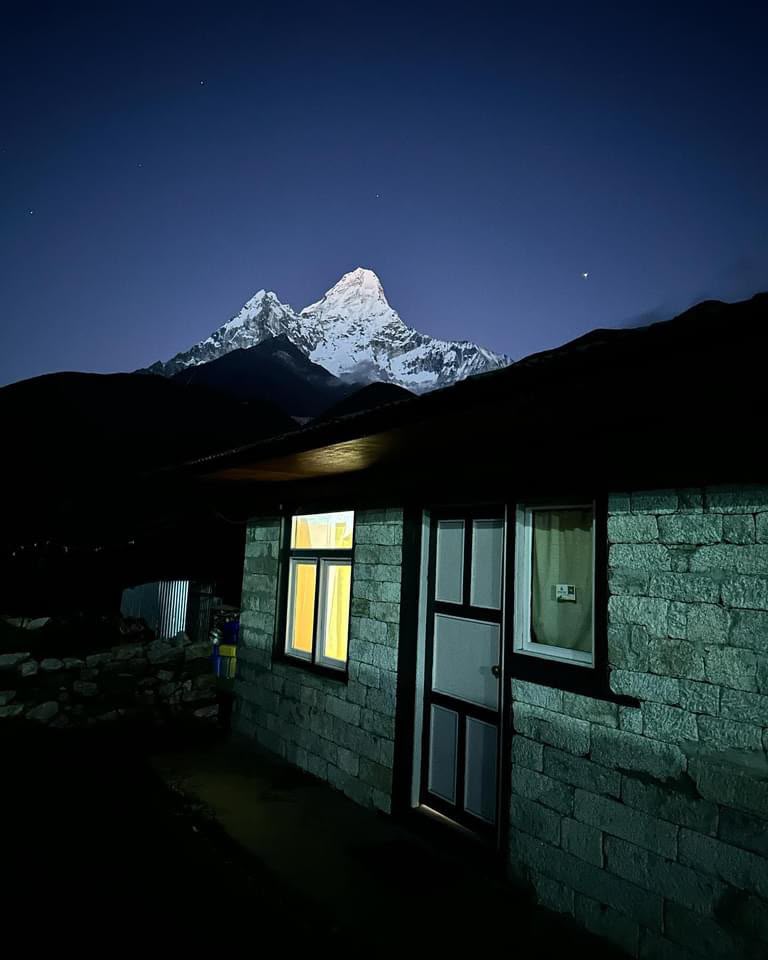
| Ama Dablam | 6,812 m | Tengboche, Pangboche, Dingboche |
Read more about Ama Dablam, the Khumbu’s most beautiful peak, and the Khumbu Glacier that flows down from Everest’s slopes.
Three ways to experience Everest from Nepal
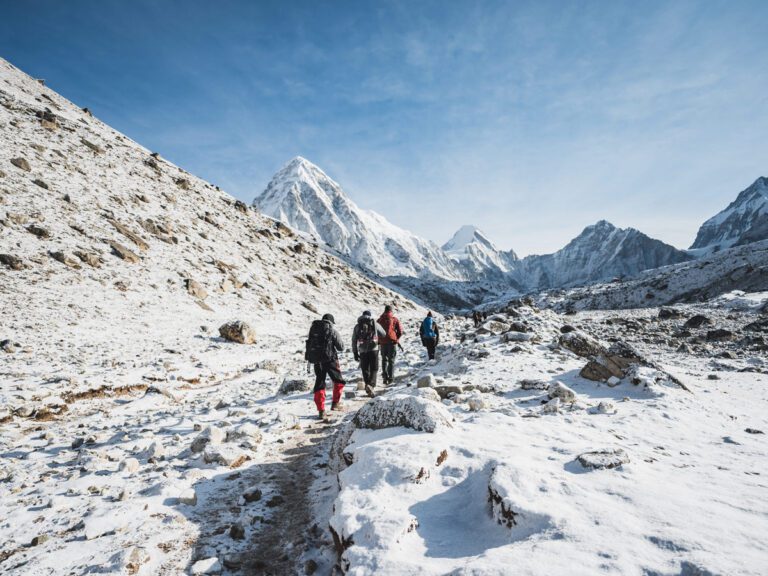
- Trek to its foot: the 14-day Everest Base Camp Trek walks through Sherpa villages to Base Camp and Kala Patthar. No climbing skills are needed, just good fitness and time to acclimatise.
- Fly in for a day: the Everest Base Camp helicopter day tour lands at Kala Patthar and stops for breakfast at Hotel Everest View, all in one morning from Kathmandu.
- Climb it: a full expedition for experienced mountaineers, usually in April and May.
Best time to see Mount Everest
For clear views, come in October and November, after the monsoon has washed the air clean. March to May is the second-best season and the only time you will see expedition tents at Base Camp. Mornings are almost always clearer than afternoons, when cloud builds around the peaks. In the monsoon (June to August), Everest can stay hidden for days. See our month-by-month guide to the best time to trek.
Respecting the mountain
For the Sherpa people, Chomolungma is a sacred mountain, home to the goddess Miyolangsangma. Expeditions hold a puja (blessing ceremony) at Base Camp before setting foot on the mountain, and you will see prayer flags, mani stones and chortens all along the trail. Walk to the left of mani walls and around chortens clockwise, carry your rubbish out, and remember the climbers and Sherpas honoured at the Thukla Pass Memorial.
Highlights
- See the world's highest mountain with your own eyes
- Watch sunrise on Everest's south-west face from Kala Patthar
- Spot your first glimpse of the summit on the climb to Namche
- Follow in the footsteps of Hillary and Tenzing Norgay
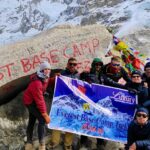
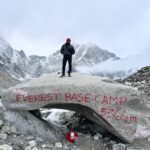
- Stand at Everest Base Camp, the start of the climbing route
- Fly up close on a helicopter tour from Kathmandu
Gallery


Location
Open in Google MapsFrequently asked questions
How tall is Mount Everest?
Mount Everest is 8,848.86 metres (29,031.7 ft) above sea level, the height announced jointly by Nepal and China in December 2020.
Where is Mount Everest located?
On the border between Nepal and Tibet (China), in the Mahalangur range of the eastern Himalaya. The Nepal side is in Sagarmatha National Park in Solukhumbu District, about 160 km east-northeast of Kathmandu.
Can you see Mount Everest from Everest Base Camp?
No. Nuptse and the West Shoulder block the summit from Base Camp. For the best close view, climb Kala Patthar (5,644 m) above Gorak Shep.
Where is the best place to see Mount Everest?
Kala Patthar gives trekkers the best close-up view. Hotel Everest View above Namche and Tengboche Monastery also have famous views, and a helicopter tour can land at Kala Patthar in a single morning.
Who first climbed Mount Everest?
Edmund Hillary and Tenzing Norgay Sherpa reached the summit on 29 May 1953 as part of a British expedition led by John Hunt.
Do I need climbing experience to trek to Everest Base Camp?
No. The Everest Base Camp trek is a walk on trails with no technical climbing. You need good fitness and enough days to acclimatise to the altitude.
How much does it cost to climb Mount Everest?
Nepal's permit alone costs US$15,000 per person in spring since September 2025, and a full guided expedition costs many times more. Trekking to Base Camp costs a fraction of that.
What does Sagarmatha mean?
Sagarmatha is the Nepali name for Everest and is usually translated as 'forehead of the sky' or 'head in the great blue sky'. The Tibetan name, Chomolungma, means 'goddess mother of the world'.
When is the best time to see Everest?
October and November usually have the clearest skies, followed by March to May. Mornings are clearer than afternoons in every season.