








Nangkartshang Peak
Climb high, sleep low: the best viewpoint above Dingboche
Nangkartshang Peak (about 5,083 m) is the classic acclimatisation hike above Dingboche, climbing about 700 m to views of Makalu, Lhotse, Ama Dablam and Island Peak. It takes 4 to 5 hours return and prepares your body for Lobuche and Everest Base Camp.
Why Nangkartshang Peak is known
Classic acclimatisation hike above Dingboche
Rare view of Makalu, the fifth-highest mountain
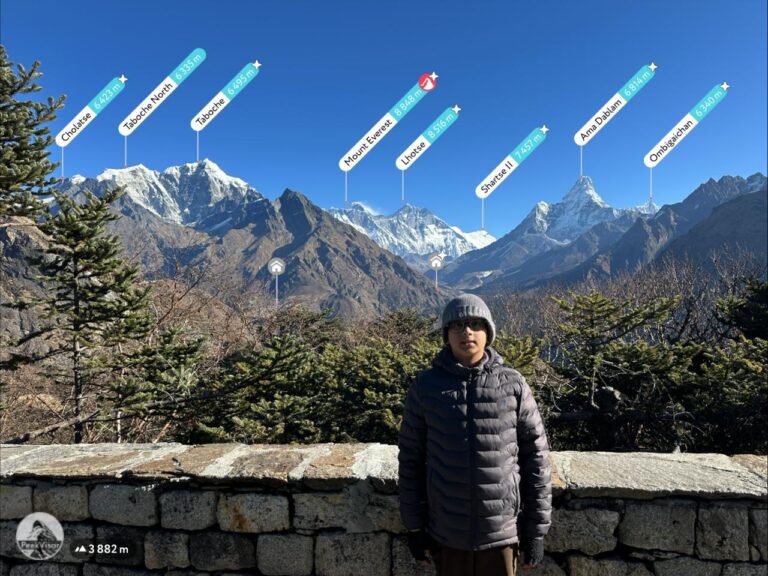
Panorama of Lhotse, Ama Dablam and Island Peak
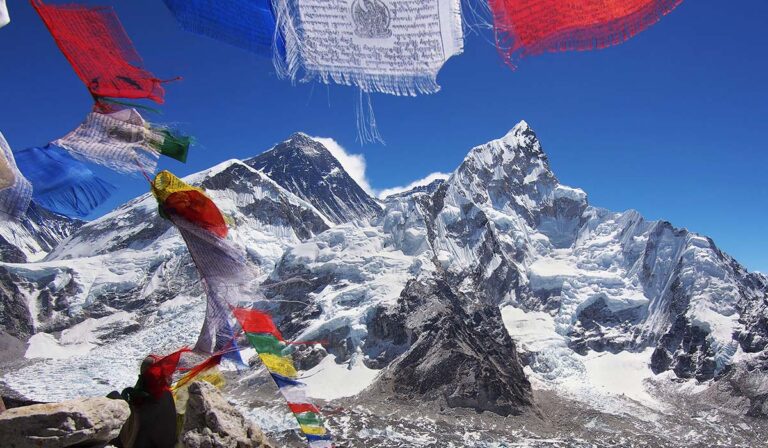
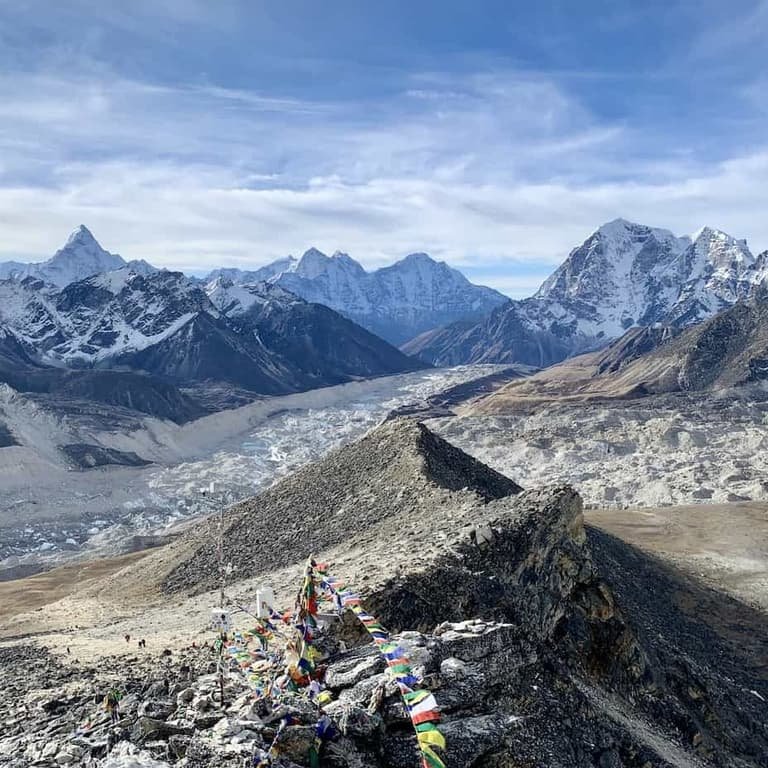
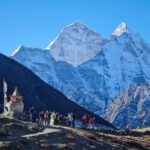
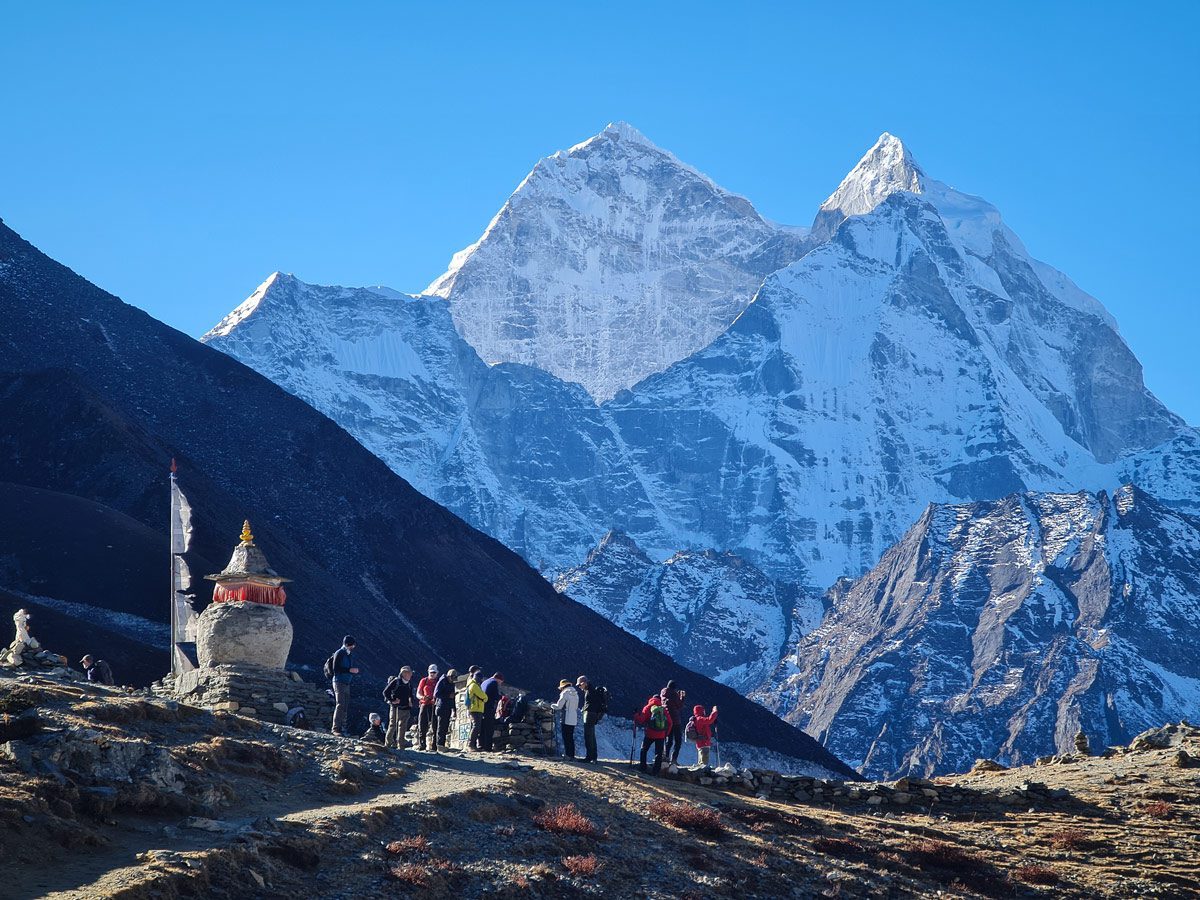
Prayer-flag stupa halfway up
First time above 5,000 m for most trekkers
About Nangkartshang Peak
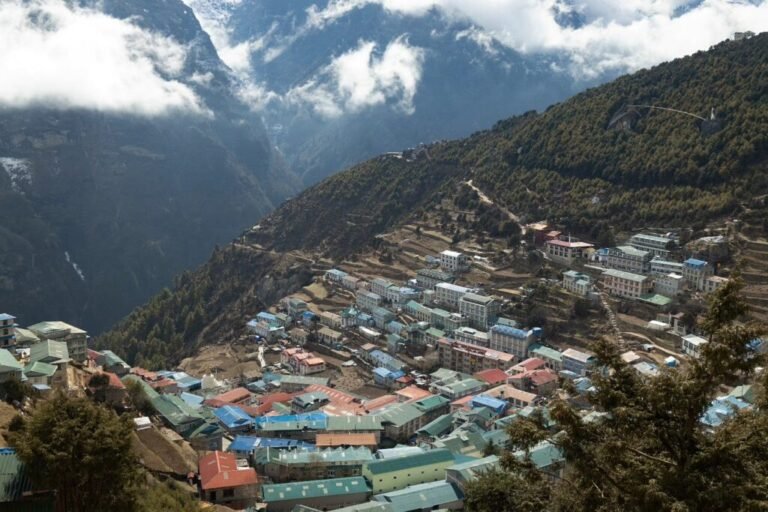
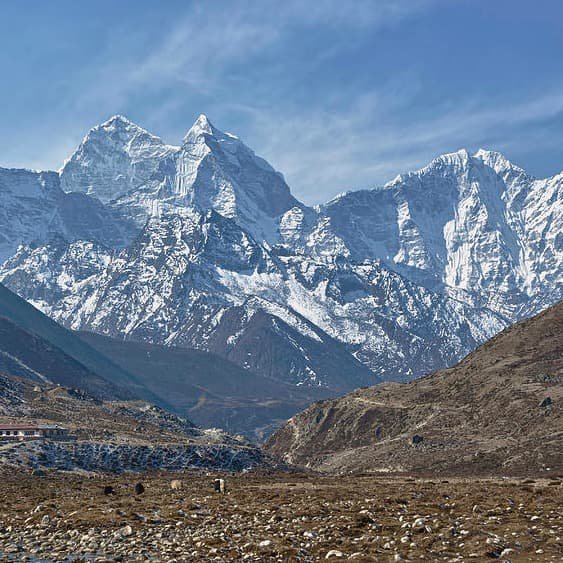
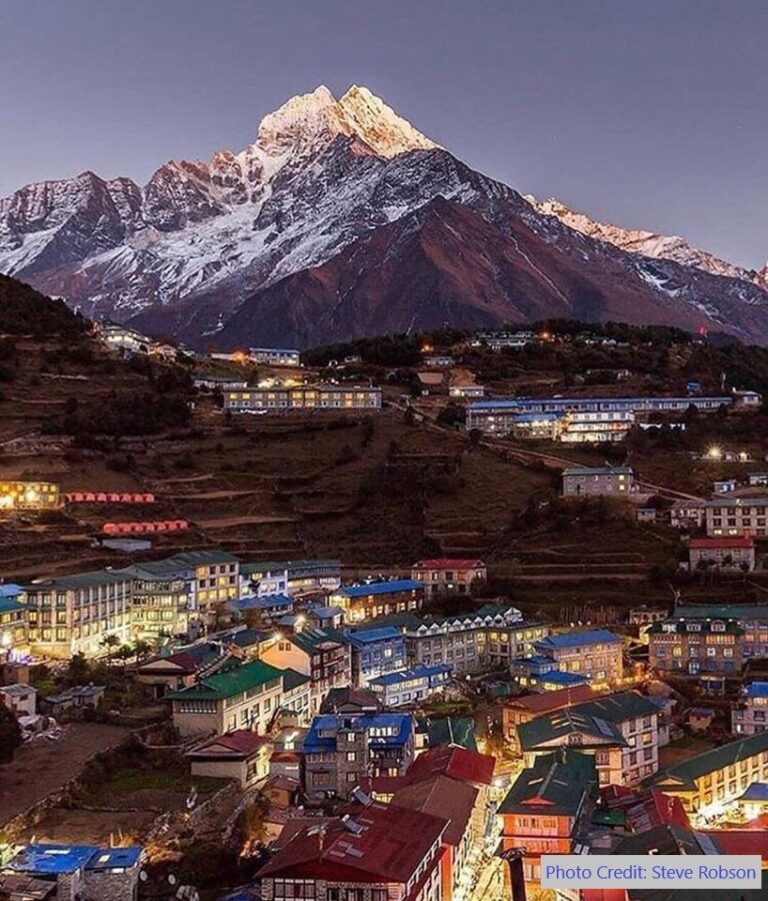
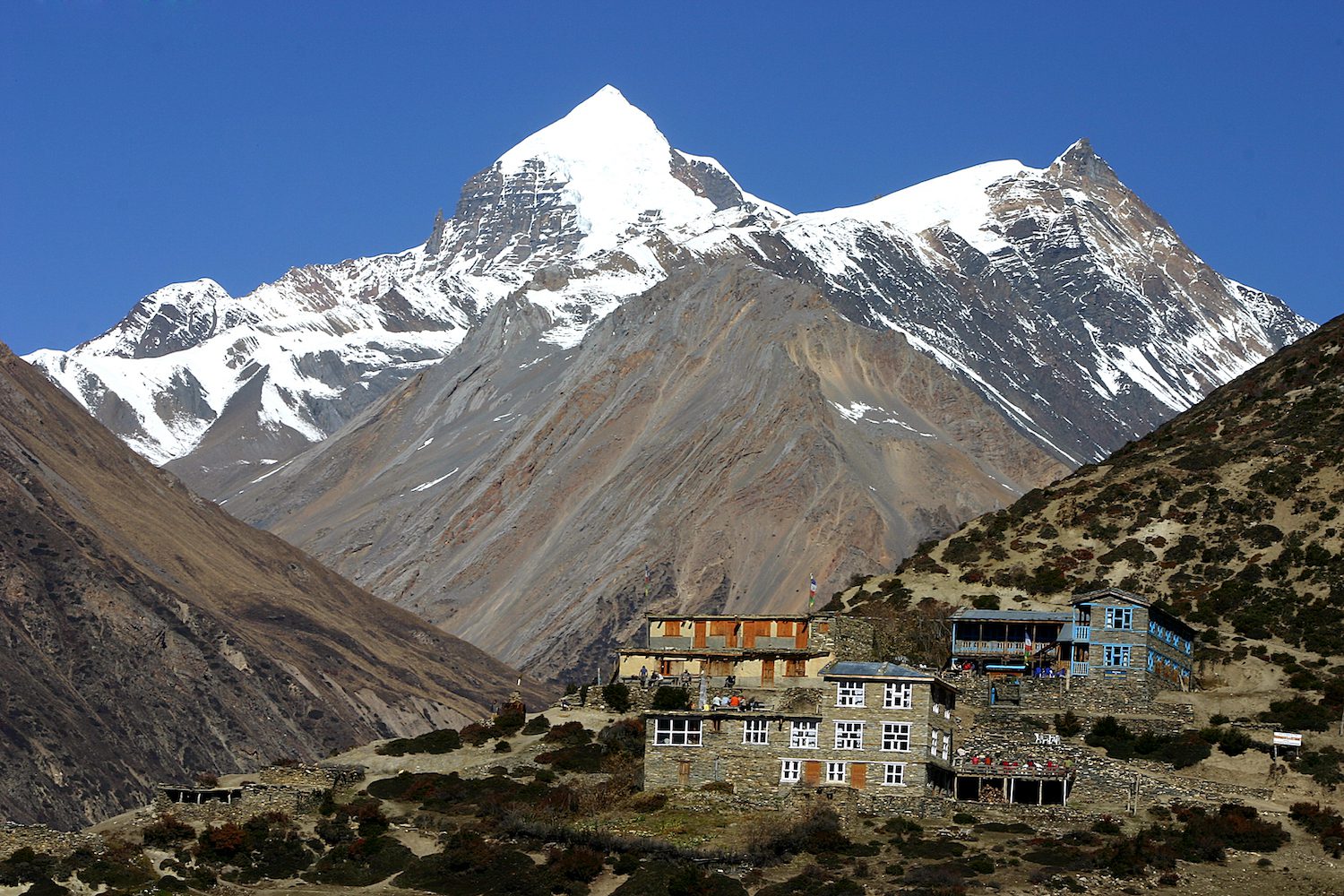
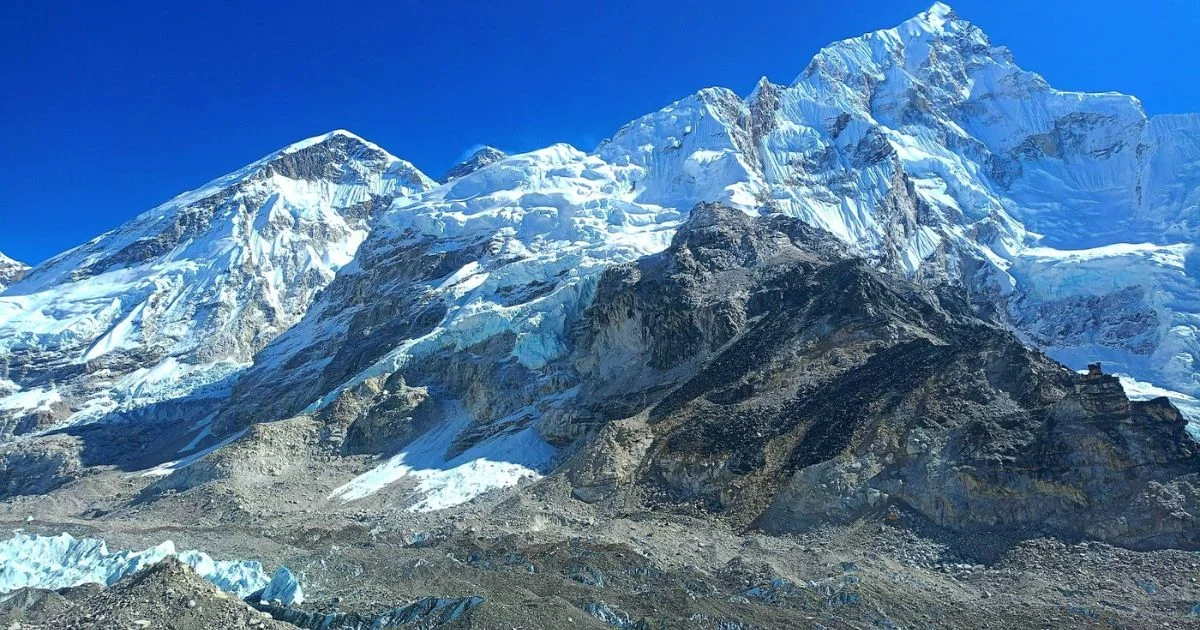
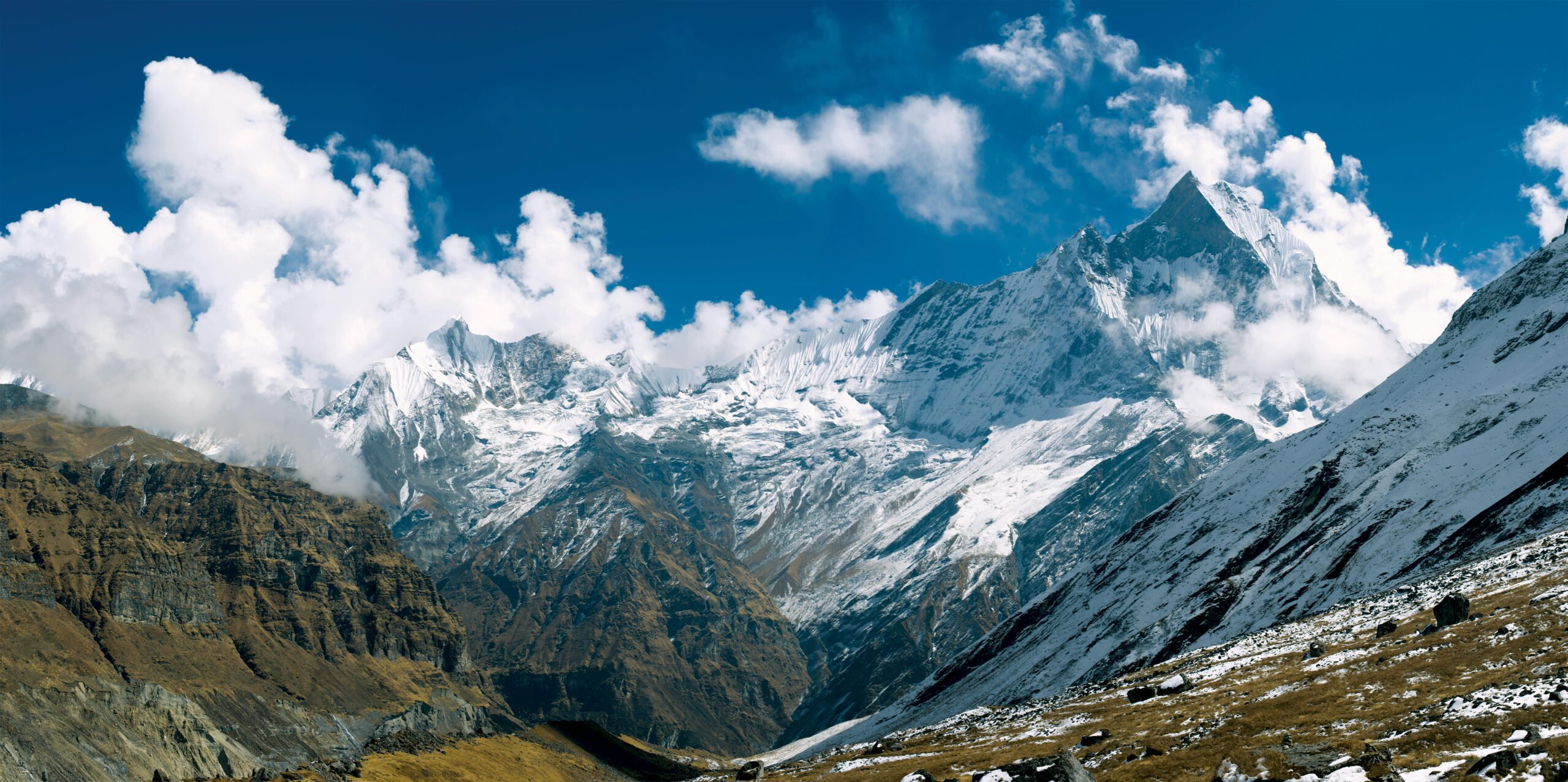
On the acclimatisation day in Dingboche, the best thing you can do for your body, and your camera, is climb Nangkartshang Peak. This rocky ridge rises straight behind the village to a viewpoint at about 5,083 metres, roughly 700 m above Dingboche. From the top you look across the Imja valley to Makalu, the world’s fifth-highest mountain, the huge south face of Lhotse, Island Peak, and down onto Ama Dablam. It is a hard morning’s walk, but it is the single best preparation for the days ahead on the Everest Base Camp Trek.
Nangkartshang Peak at a glance
- Altitude: about 5,083 m (16,677 ft) at the usual trekkers’ summit; the ridge continues higher
- Start: Dingboche (about 4,410 m)
- Height gain: about 670–700 m
- Time: 4 to 5 hours return (2.5–3 up, 1.5–2 down)
- Distance: about 5 km return
- Difficulty: strenuous walk at altitude; a little easy scrambling near the top, no technical climbing
- Views: Makalu, Lhotse, Ama Dablam, Island Peak, Taboche, Cholatse, Kangtega and Thamserku
- On our trek: Day 7 (acclimatisation day in Dingboche)
Why hike Nangkartshang?
The golden rule of altitude is “climb high, sleep low”. By walking up to around 5,000 m and returning to sleep at Dingboche, your body gets the signal to make more red blood cells without the risk of spending a night that high. The next time you reach 5,000 m, at Lobuche and Gorak Shep, you will feel the difference. It is also the first time on the trek that most people stand above 5,000 m, a big moment in itself.
The route
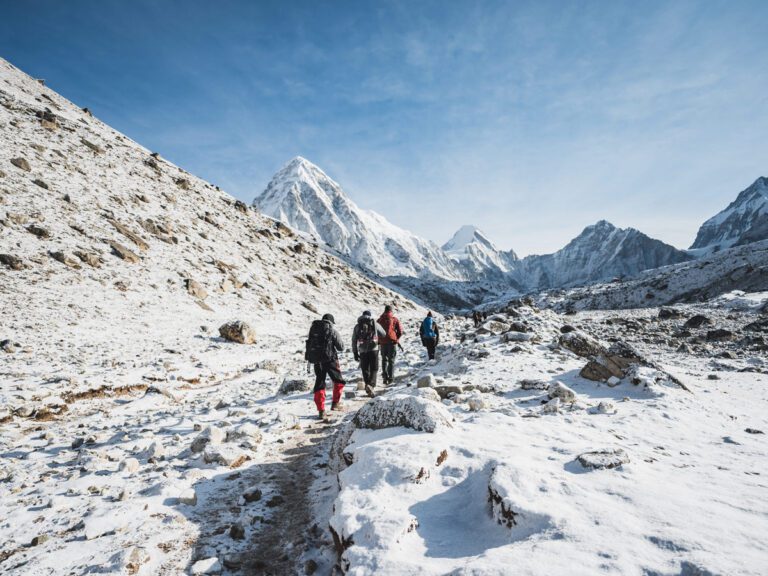
The trail starts behind the lodges at the northern edge of Dingboche and climbs straight up the grassy, then rocky, south-west ridge. After about an hour you reach a stupa covered in prayer flags, with a wonderful view over Dingboche, the Imja valley and Ama Dablam. Many trekkers turn back here if they are tired, and that is fine: you have already done good acclimatisation. Beyond the stupa the path steepens, winding up loose rock to a cairn and more prayer flags at about 5,083 m. Past this point the ridge becomes a knife-edge suitable only for climbers.
What you see from the top
- Makalu (8,485 m): the fifth-highest mountain in the world, far to the east, often only visible from up here
- Lhotse (8,516 m): its massive south face fills the head of the valley
- Island Peak (Imja Tse, 6,165 m): the popular trekking peak, rising from the Chhukung valley
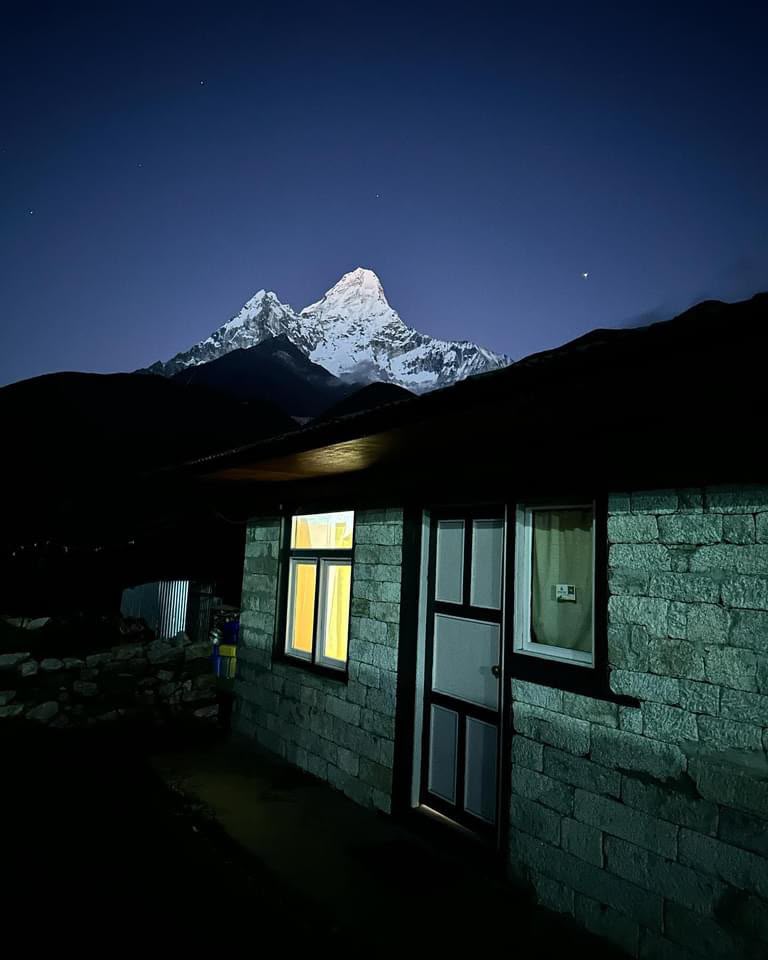
- Ama Dablam (6,812 m): its steep north side, right across the valley
- Taboche and Cholatse: across the Pheriche valley to the west
- Chhukung: the village and glaciers of the upper Imja valley below
Tips for the hike
- Start straight after breakfast; cloud and wind usually build by late morning.
- Carry at least 1.5 litres of water, snacks, sun cream, sunglasses, a warm layer and a windproof jacket.
- Walk very slowly. Breathing is hard above 4,800 m, and that is normal.
- Turn back at the stupa if you have a headache, nausea or dizziness, and tell your guide.
- Use trekking poles on the loose descent.
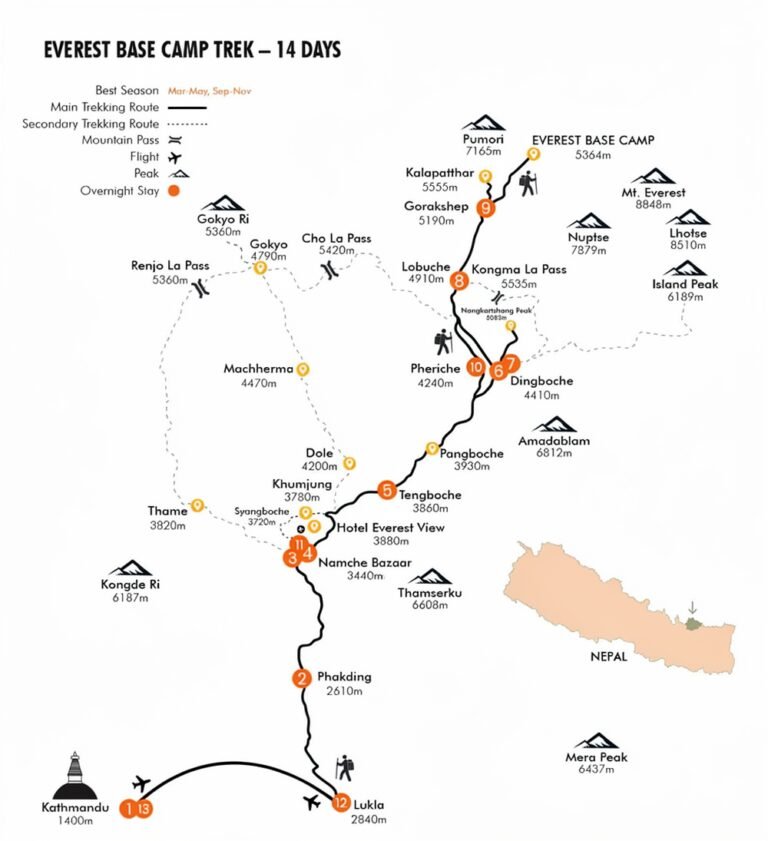
Nangkartshang Peak on the 14-day Everest Base Camp Trek
You climb Nangkartshang on Day 7, the second acclimatisation day, spending the afternoon resting in Dingboche. The next day you continue past the Thukla Pass Memorial to Lobuche. If you prefer a gentler day, your guide can lead an easier walk towards Chhukung instead. See our day-by-day itinerary.
Highlights
- Stand above 5,000 m for the first time on the trek
- See Makalu, the world's fifth-highest peak
- Look into the huge south face of Lhotse
- Gaze down on Island Peak and the Chhukung valley
- The perfect climb high, sleep low acclimatisation hike
Gallery
Location
Open in Google MapsFrequently asked questions
How high is Nangkartshang Peak?
The trekkers' summit is at about 5,083 m (16,677 ft), roughly 700 m above Dingboche. Some sources give slightly different heights.
How long does the Nangkartshang hike take?
About 4 to 5 hours return from Dingboche: 2.5 to 3 hours up and 1.5 to 2 hours down.
Is Nangkartshang Peak difficult?
It is a steep, tiring walk at high altitude with a little easy scrambling near the top. No technical skills are needed, but go slowly.
Can you see Everest from Nangkartshang?
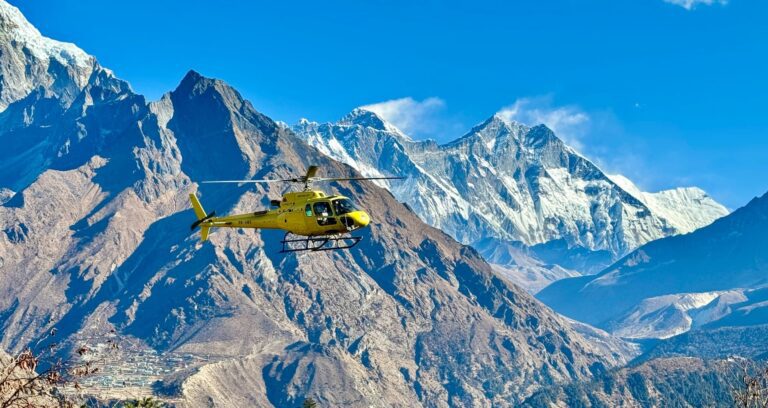
Everest's summit is mostly hidden behind Lhotse and Nuptse from here. The highlights are Makalu, Lhotse, Ama Dablam and Island Peak.
Do I have to go to the top?
No. The stupa about an hour above Dingboche already gives good acclimatisation and great views. Turn back if you feel unwell.
Why do trekkers hike Nangkartshang?
To acclimatise by climbing high and sleeping low, which prepares the body for Lobuche, Gorak Shep and Everest Base Camp.