







Tenzing-Hillary Airport (Lukla)
The famous mountain airstrip where every Everest Base Camp adventure begins
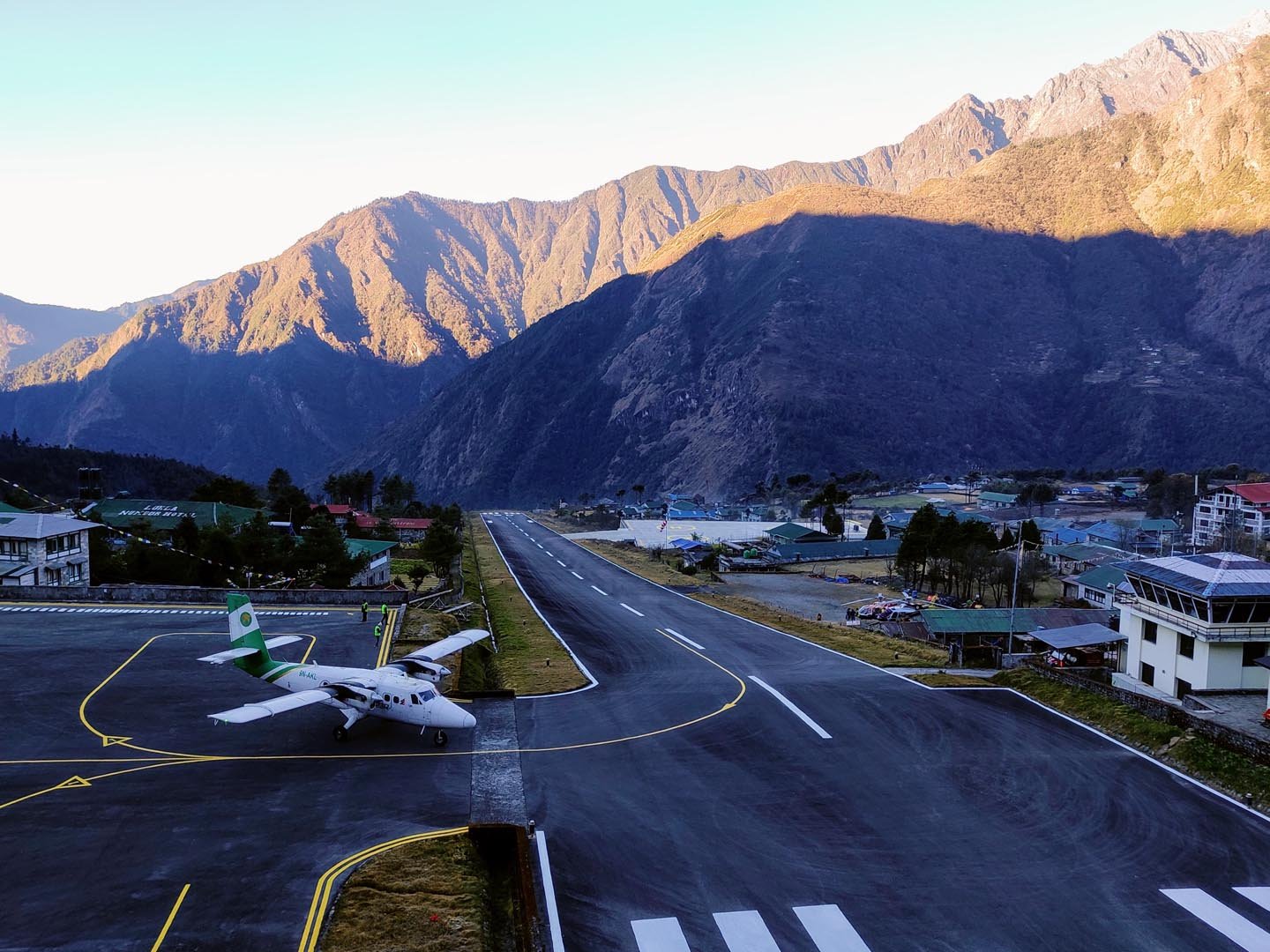
Tenzing-Hillary Airport in Lukla is the gateway to Mount Everest and one of the most extraordinary airports on Earth. Built by Sir Edmund Hillary in 1964, its 527-metre runway climbs an 11.7% slope at 2,845 m, between a mountain wall and a deep valley. A short mountain flight from Kathmandu or Ramechhap lands you here, ready to start the trek to Everest Base Camp, Gokyo and the Three Passes.
Why Tenzing-Hillary Airport (Lukla) is known
Main gateway airport for Everest Base Camp and the Khumbu
One of the shortest and steepest commercial runways in the world
Often called the most dangerous airport in the world
Built by Sir Edmund Hillary in 1964
Named after Tenzing Norgay Sherpa and Sir Edmund Hillary
Thrilling Himalayan mountain flights from Kathmandu and Ramechhap
About Tenzing-Hillary Airport (Lukla)
Tenzing-Hillary Airport, known to almost everyone as Lukla Airport, is where the Everest adventure really begins. It sits at 2,845 metres (9,334 ft) on a narrow shelf above the Dudh Koshi valley, beside the Sherpa town of Lukla. A single runway just 527 metres long climbs uphill at an 11.7% slope, with a steep valley drop at one end and a mountain wall at the other. Nearly every trekker on the Everest Base Camp Trek lands here, and nearly every one remembers the landing for the rest of their life.
This guide covers what makes the airport unique, how the flights work today (including the peak-season move to Ramechhap), why delays happen, what you can carry, and how to plan your trip so a cloudy morning never ruins your holiday.
Lukla Airport at a glance
- Official name: Tenzing-Hillary Airport (renamed in 2008)
- Codes: IATA LUA, ICAO VNLK
- Elevation: 2,845 m / 9,334 ft
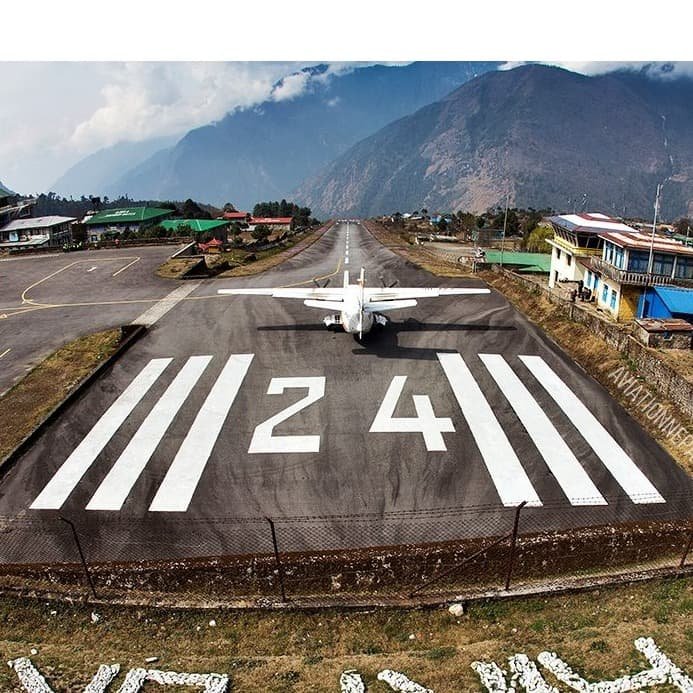
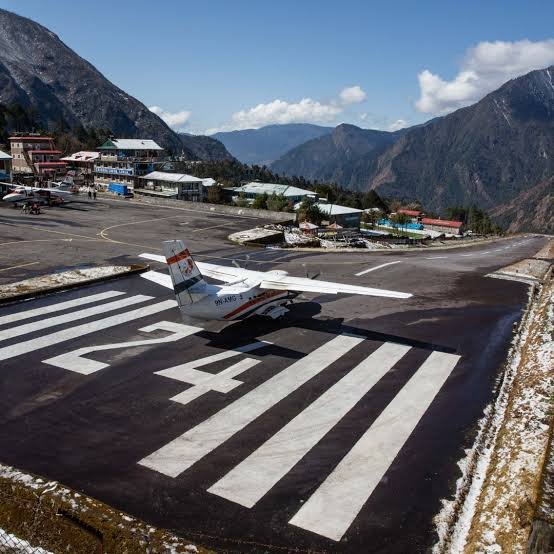
- Runway: one runway, 527 m long and 30 m wide, asphalt, 11.7% uphill gradient
- Direction: planes land uphill on runway 06 and take off downhill on runway 24
- Aircraft: small short-take-off (STOL) planes such as the Twin Otter, Dornier 228 and Let 410, plus helicopters
- Flights from: Kathmandu (25 to 35 minutes) or Manthali Airport, Ramechhap (15 to 20 minutes)
- Flying hours: mainly early morning, when the weather is calmest
Why it is called the world’s most dangerous airport
Lukla has carried the “most dangerous airport in the world” label since a History Channel series ranked it top of its list of extreme airports in 2010. The reason is geography, not neglect. The runway is less than a tenth the length of a typical international runway. The uphill slope helps planes slow down quickly on landing and pick up speed on take-off, but it also means there is no second chance: once a plane is on final approach there is no room to climb away and try again. Pilots fly by sight, so they need clear visibility to land.
That is why only experienced mountain pilots fly this route, why flights stop the moment cloud rolls in, and why delays are part of the Lukla story. Thousands of trekkers land safely every season. The accidents that have happened here have mostly been linked to poor weather, which is exactly why airlines now take a cautious approach and simply wait.
A short history: built by Hillary, named for two heroes
After climbing Everest in 1953, Sir Edmund Hillary spent much of his life helping Sherpa communities through his Himalayan Trust. In 1964 he oversaw the building of an airstrip at Lukla to bring supplies for schools and a hospital. His first choice was flat farmland, but local farmers did not want to give it up, so the strip was built on the sloping hillside where it stands today. Hillary bought the land from Sherpa families, and the work was done largely by hand.
For decades the runway was dirt and grass. It was paved in 2001. In February 2008, a month after Hillary’s death, the Government of Nepal renamed it Tenzing-Hillary Airport in honour of Tenzing Norgay Sherpa and Sir Edmund Hillary, the first people to stand on the summit of Everest. The airport turned a remote valley into the busiest trekking gateway in Nepal and changed the economy of the whole Khumbu.
Flying to Lukla: Kathmandu or Ramechhap?
Lukla flights leave from one of two airports, depending on the season.
From Kathmandu (Tribhuvan International Airport). Outside the busiest months, flights leave from the domestic terminal in Kathmandu. The flight takes about 25 to 35 minutes. Sit on the left side on the way to Lukla for the best chance of mountain views.
From Manthali Airport, Ramechhap (RHP). In the peak trekking seasons, usually parts of spring (March to May) and autumn (late September to November), Nepal’s Civil Aviation Authority moves most Lukla flights to Manthali Airport in Ramechhap to ease congestion at Kathmandu. Ramechhap is about 130 to 140 km east of Kathmandu. Expect a hotel pickup around 1:00 to 2:00 am, a 4 to 5 hour drive, and then a short 15 to 20 minute flight. The exact dates change every year and are confirmed each season, so we tell you which airport you will use before you travel. For 2026 fares, the Ramechhap dates, a step-by-step flight day and helicopter options, read our full guide to Kathmandu to Lukla flights.
Several Nepali domestic airlines fly the route, including Tara Air, Summit Air and Sita Air. On our 14-day Everest Base Camp Trek both flights are already arranged for you; see what’s included for the details.
What the landing is really like
The flight follows green terraced hills and river valleys east of Kathmandu, with the white wall of the Himalaya appearing on the horizon. As you near Lukla the plane turns into the Dudh Koshi valley and the runway appears suddenly, a short grey strip tilted up the hillside. The touchdown is firm, the engines roar as the pilot brakes uphill, and within seconds the plane swings onto the small apron in front of the terminal. Many passengers clap. You step out into thin, cool mountain air with peaks above you and the trek starting a few minutes’ walk away.
The terminal is small and simple. Bags are unloaded by hand, so wait near the building and your guide or porter will collect them. Teahouses line the edge of the airport, and from their terraces you can watch planes land and take off over a hot drink, one of the best free shows in the Himalaya.
Flight delays and cancellations: how to plan for them
Weather in the mountains changes fast. Cloud often builds by late morning, and strong winds pick up in the afternoon, so flights run early in the day. If Lukla or the route is cloudy, flights wait, and if the weather does not clear they are cancelled and passengers are moved to the next morning. Delays are most common in the monsoon (June to August) and in winter fog, and least common in the clear, stable weeks of October and November.
- Add buffer days. Keep at least one or two spare days in Kathmandu before your international flight home.
- Book a flexible international ticket if you can, in case you need to change it.
- Get travel insurance that covers delays and helicopter evacuation up to at least 6,000 m.
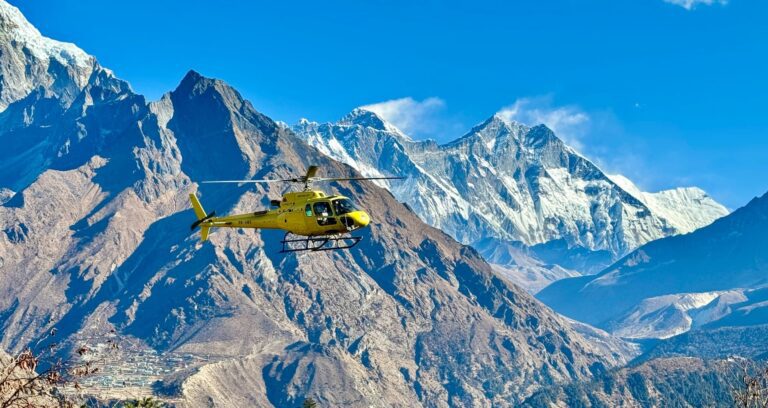
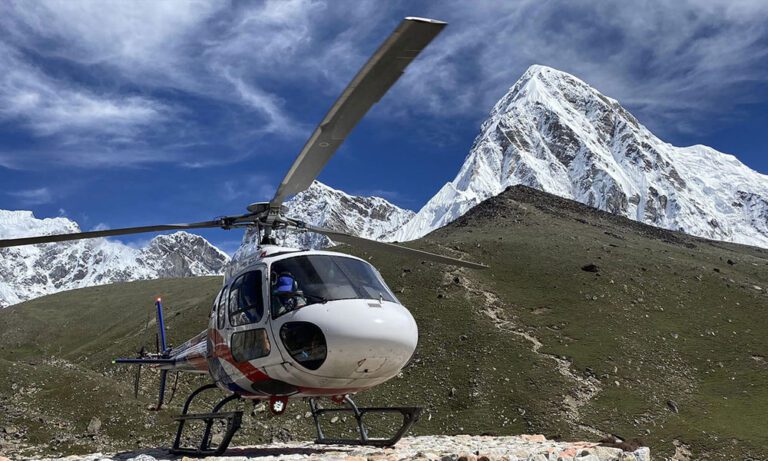
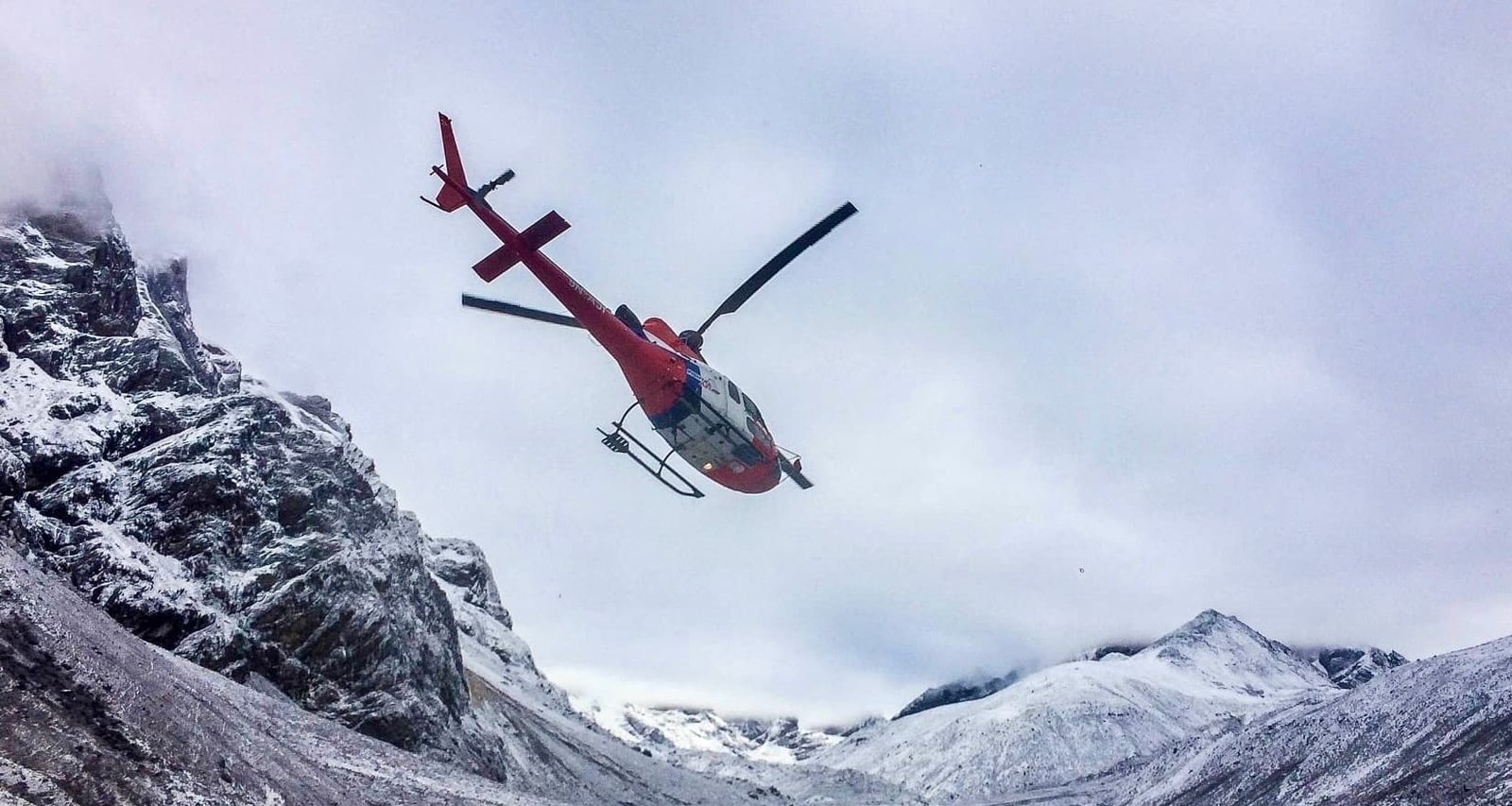
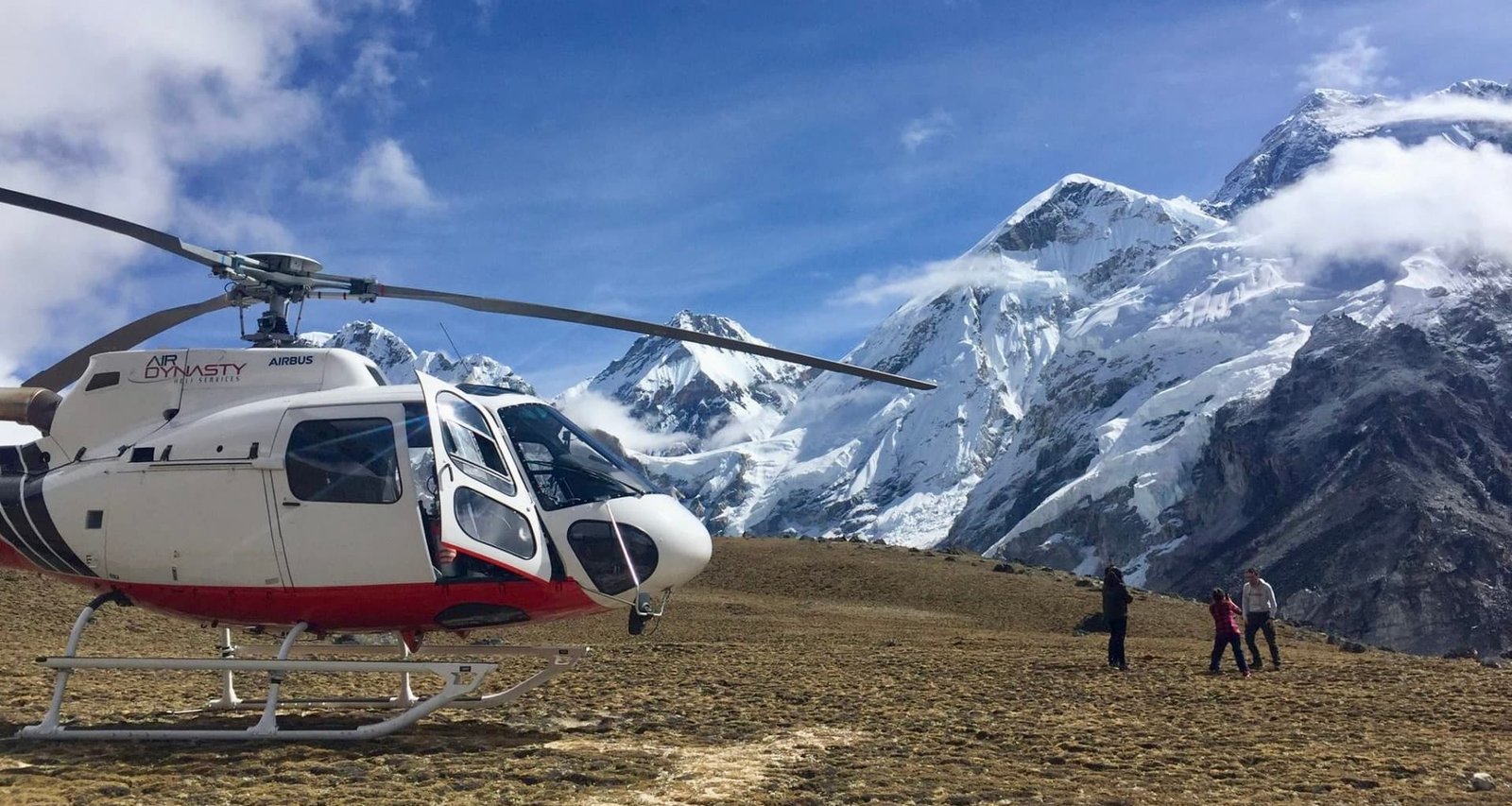
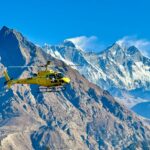
- Know the helicopter option. When planes cannot fly for several days, helicopters often can, because they need less visibility. Seats are shared to keep the cost down.
- Stay patient. Your guide will rebook you on the first available flight. Waiting a day is far better than flying in bad weather.
Baggage allowance on Lukla flights
Planes to Lukla are small, so weight limits are strict. The usual allowance is 15 kg per person in total: about 10 kg of checked baggage and 5 kg of hand luggage. Extra weight is charged per kilo and may be left behind on a full flight. Pack light, use a soft duffel bag rather than a hard suitcase, and leave anything you won’t need on the trek at your Kathmandu hotel. Our Everest Base Camp packing list is built around this limit. Keep valuables, medication, your passport and permits in your hand luggage.
Lukla Airport on the 14-day Everest Base Camp Trek
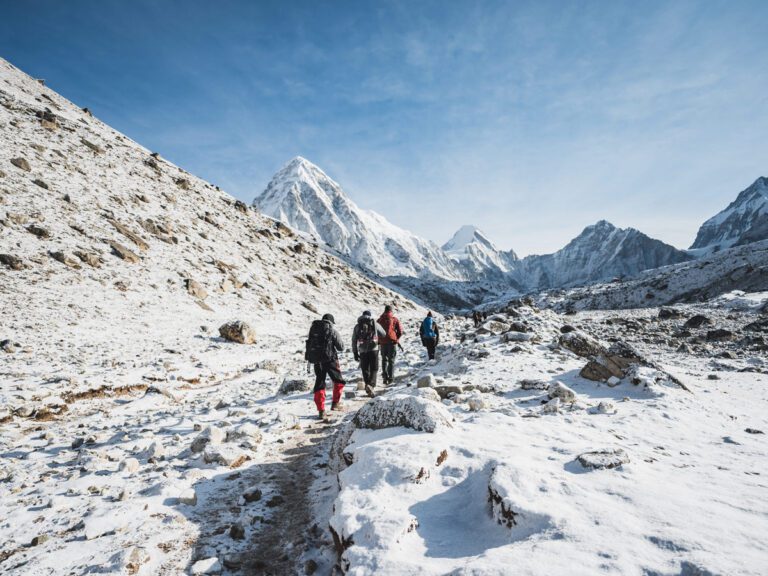
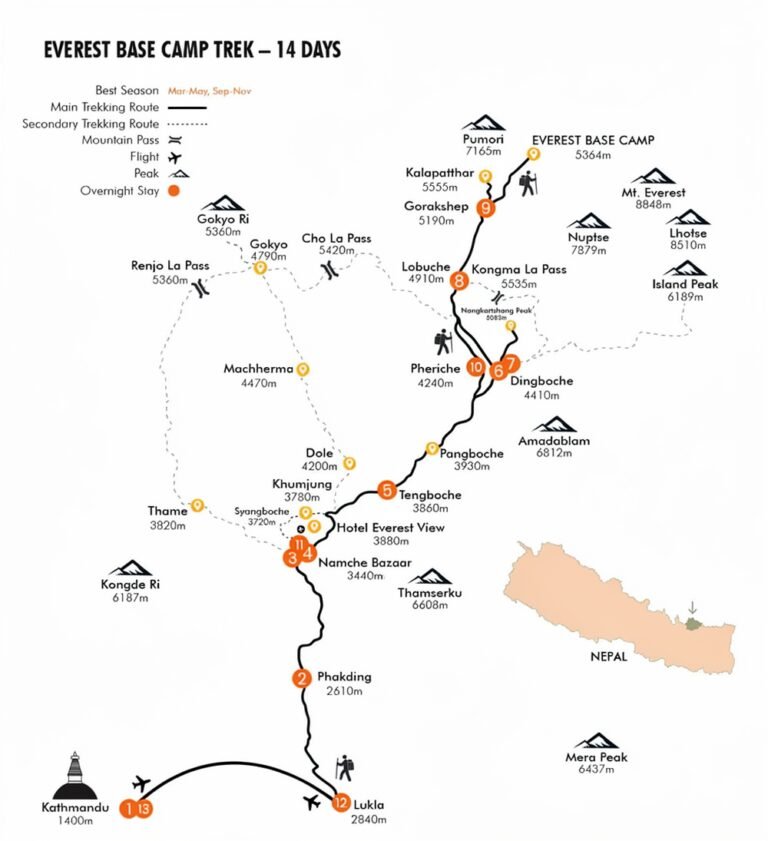
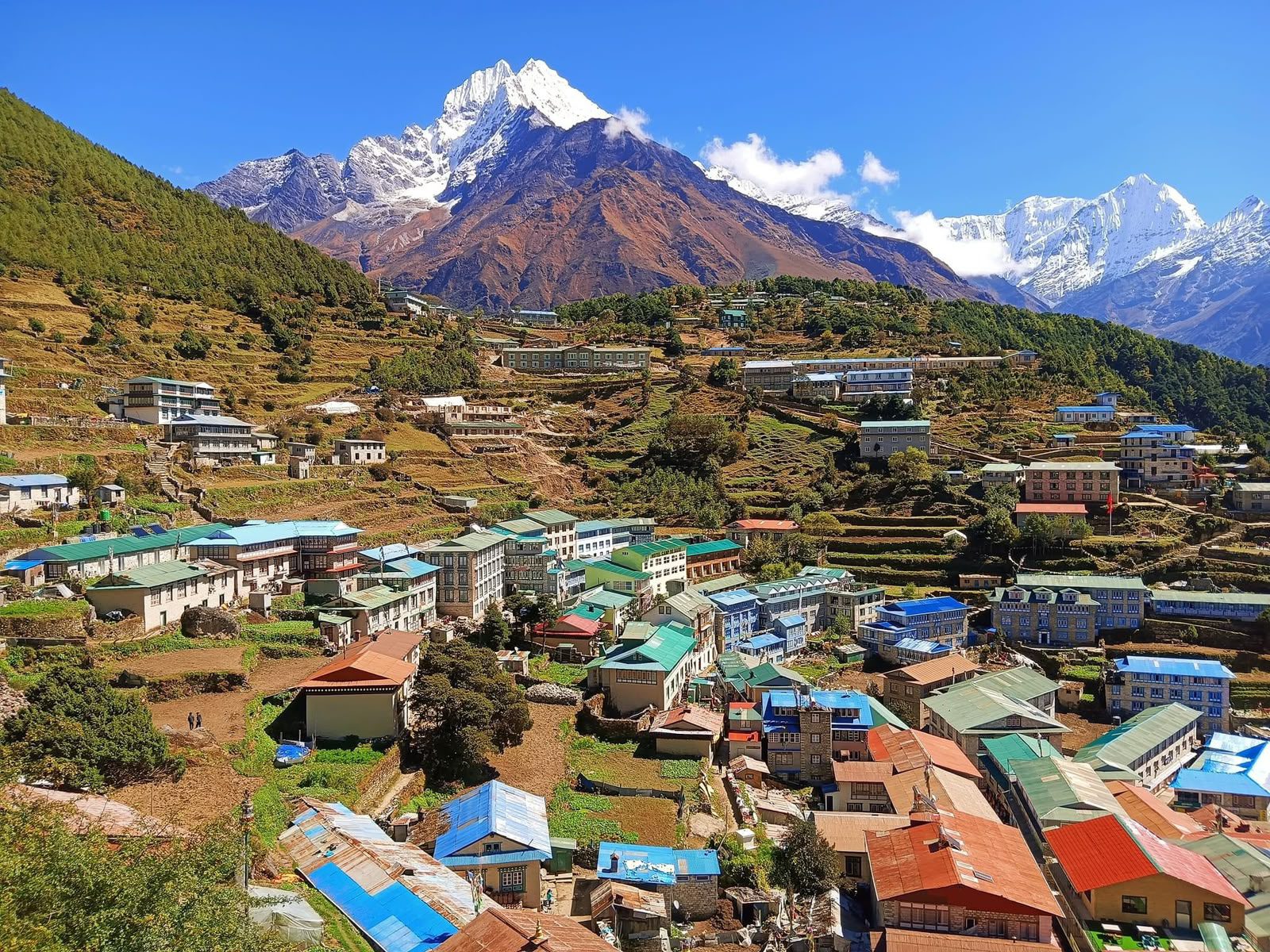
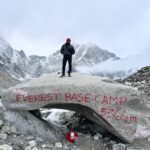
On our itinerary you fly into Lukla on Day 2, meet your porters, and walk gently downhill for about three to four hours to Phakding (2,610 m), an easy first day that helps your body adjust. The next day you continue past Monjo, the entrance to Sagarmatha National Park, and climb to Namche Bazaar. After Everest Base Camp and Kala Patthar, you walk back into Lukla on Day 12 for a farewell evening with your crew, then fly back to Kathmandu on Day 13. See the full day-by-day itinerary and the trek map.
Can I reach Everest without flying to Lukla?
Yes. You can drive to Salleri or Phaplu in the Solu region and trek north for several days to join the main trail near Lukla, or take a jeep part of the way along newer roads. These routes add days but are quieter and help acclimatisation. If you would rather see Everest without trekking at all, our Everest Base Camp helicopter day tour flies past Lukla to Kala Patthar and back to Kathmandu in a single morning.
Best time to fly to Lukla
The most reliable flying weather is in October and November, followed by March to May. These are also the best months for the trek itself, with clear mountain views and comfortable temperatures. December to February brings cold but often clear mornings, while June to August is the monsoon, when cloud causes the most cancellations. Read our month-by-month guide to the best time to trek and the full Everest Base Camp trek cost breakdown.
Practical tips for Lukla Airport
- Carry your passport and trekking permits in your daypack, as they are checked on the trail.
- Wear warm layers on the flight; Lukla mornings are cold even in spring and autumn.
- Bring some Nepali rupees in cash. Lukla has a few ATMs, but they can run out or go offline.
- Pay the local Khumbu Pasang Lhamu Rural Municipality fee at the checkpoint just outside town if it is not already included in your package.
- Drink water and walk slowly on day one. You are already at 2,845 m.
- Ask before photographing airport staff or security, and follow instructions near the runway.
Highlights
- Land on one of the shortest, steepest runways in the world
- See the Himalaya from the window of a small mountain plane
- Watch planes land from a teahouse terrace beside the runway
- Stand where Sir Edmund Hillary built the gateway to Everest
- Meet your Sherpa crew and start the trek minutes after landing
- Walk out of town under prayer flags toward Phakding and Namche
- Celebrate the end of your trek with a farewell night in Lukla
Gallery
Location
Open in Google MapsFrequently asked questions
Where is Tenzing-Hillary Airport?
In the town of Lukla in the Khumbu region of Solukhumbu District, north-eastern Nepal, about 140 km east of Kathmandu. It is the main gateway to Mount Everest and Sagarmatha National Park.
Is Lukla Airport the same as Tenzing-Hillary Airport?
Yes. Lukla Airport was officially renamed Tenzing-Hillary Airport in February 2008 in honour of Tenzing Norgay Sherpa and Sir Edmund Hillary. Most people still call it Lukla Airport.
How long is the runway at Lukla?
The single runway is 527 metres (1,729 ft) long and 30 metres wide, with an 11.7% uphill gradient. Planes land uphill and take off downhill.
What is the altitude of Lukla Airport?
2,845 metres (9,334 feet) above sea level.
Why is Lukla called the most dangerous airport in the world?
Because of its very short, sloping runway, a valley drop at one end and a mountain wall at the other, no chance to go around once on final approach, and fast-changing mountain weather. Flights only operate in good visibility with experienced mountain pilots.
Is it safe to fly to Lukla?
Thousands of trekkers fly to Lukla safely every season. Airlines use specialised short take-off aircraft and experienced pilots, and flights are held or cancelled whenever the weather is not clear enough.
How long is the flight from Kathmandu to Lukla?
About 25 to 35 minutes from Kathmandu. In peak season, when flights leave from Manthali Airport in Ramechhap, the flight takes only 15 to 20 minutes after a 4 to 5 hour drive.
Why do Lukla flights leave from Ramechhap?
In the busy spring and autumn seasons, Nepal's Civil Aviation Authority moves most Lukla flights to Manthali Airport in Ramechhap to ease congestion at Kathmandu airport. Dates are confirmed each season.
How often are Lukla flights delayed or cancelled?
Delays are common because pilots need clear visibility. They happen most in the monsoon and least in October and November. Always keep one or two buffer days before your international flight.
What is the baggage limit on Lukla flights?
Usually 15 kg per person in total, about 10 kg checked and 5 kg hand luggage. Extra weight is charged and may not fly on a full plane.
Which side of the plane is best for views?
Sit on the left side when flying to Lukla for the best chance of Himalayan views, and on the right side when flying back.
On which days of the 14-day Everest Base Camp trek do I use Lukla Airport?
You fly into Lukla on Day 2 and trek to Phakding, then fly back to Kathmandu on Day 13 after returning to Lukla on Day 12.