










Khumbu Icefall
The shifting maze of ice that guards the way to Everest's summit
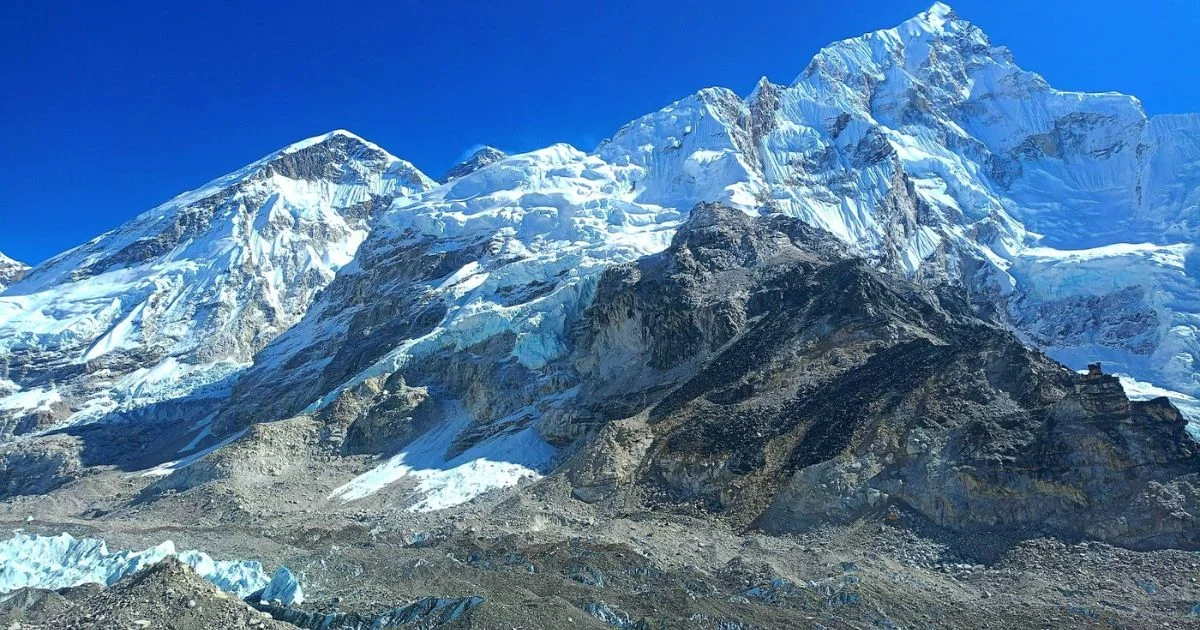
The Khumbu Icefall is the chaotic river of ice above Everest Base Camp, where the Khumbu Glacier drops out of the Western Cwm. It is the first and most dangerous section of the South Col route to the summit. Trekkers see it up close from Base Camp and Kala Patthar.
Why Khumbu Icefall is known
First and most dangerous section of the South Col route
Ladders and ropes fixed by the Icefall Doctors
House-sized seracs and deep crevasses
Directly above Everest Base Camp
The 2014 avalanche tragedy
About Khumbu Icefall
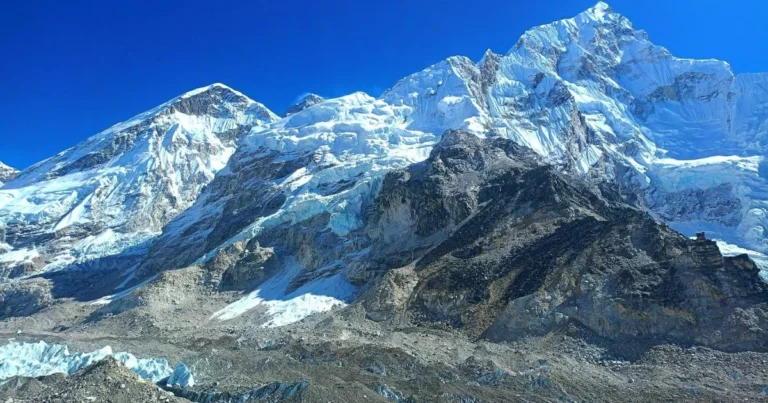
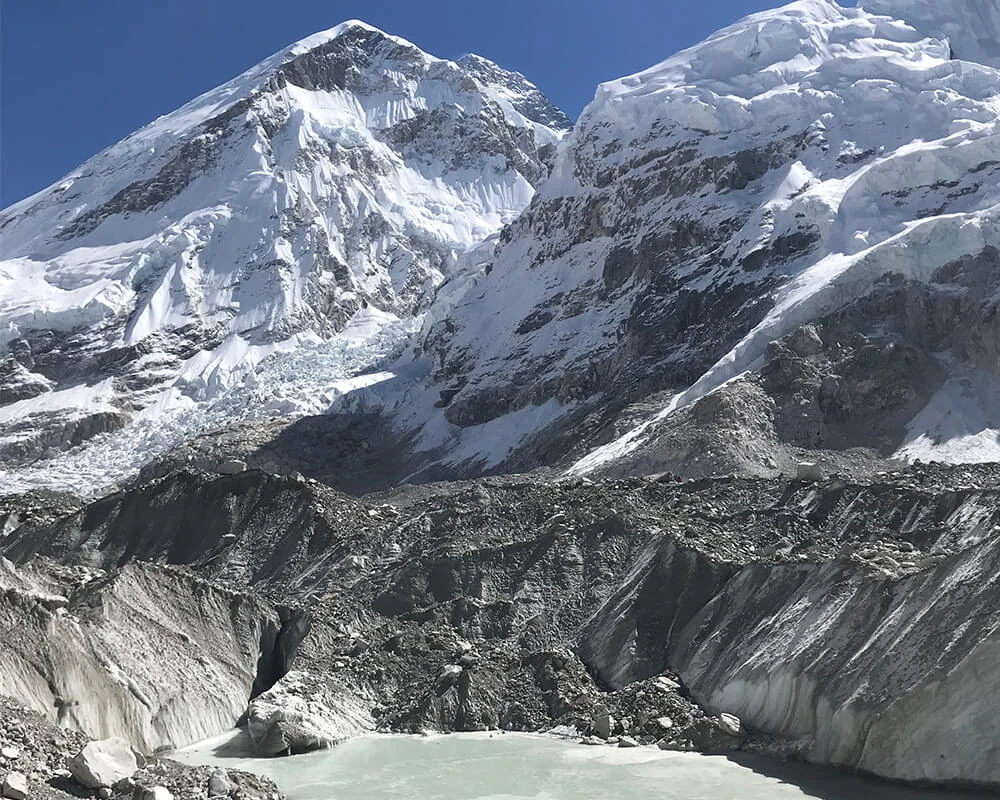
Right above Everest Base Camp, the Khumbu Glacier pours over a steep drop between Everest’s West Shoulder and Nuptse and breaks into a maze of ice towers, blocks and crevasses. This is the Khumbu Icefall, the first obstacle on the South Col route to the summit of Mount Everest and one of the most famous, and feared, places in mountaineering.
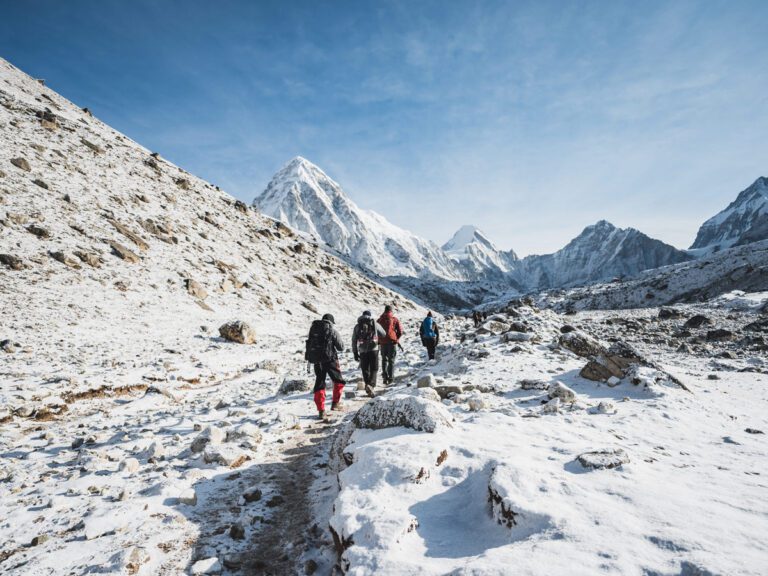
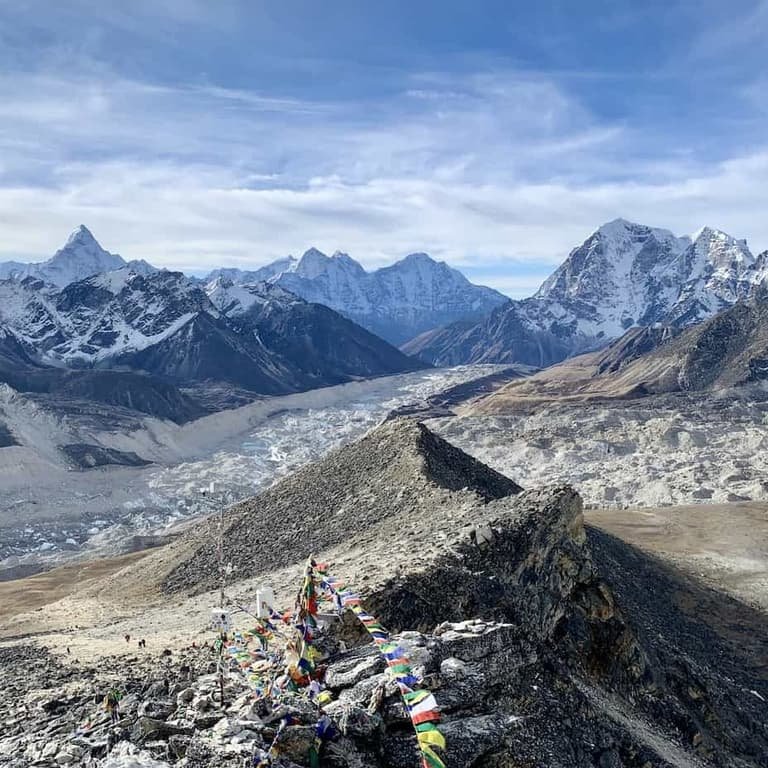
Trekkers do not enter the Icefall, but you will see it up close from Base Camp and from Kala Patthar on the Everest Base Camp Trek.
Khumbu Icefall at a glance
- Altitude: from about 5,400 m at Base Camp to about 6,000 m at Camp I
- Height gain: roughly 600 m through the ice
- Movement: the ice moves an estimated 1 m or more a day in places
- Route makers: the “Icefall Doctors”, Sherpa specialists working for the Sagarmatha Pollution Control Committee
- Climbers’ crossing time: usually 4 to 12 hours, starting before dawn
- Can trekkers enter? No, only climbers with an expedition permit
- Best views: Everest Base Camp and Kala Patthar
How the Icefall forms
Snow from Everest, Lhotse and Nuptse collects in the Western Cwm, a high glacial valley above 6,000 m. As this ice flows downhill it reaches a sudden steepening of the valley floor. Glacier ice cannot bend fast enough, so it cracks and breaks into huge blocks called seracs, some as big as houses, separated by deep crevasses. Because the glacier keeps moving, the Icefall is never the same two days running: towers collapse, new crevasses open and ladders have to be moved constantly.
The Icefall Doctors
Every spring a small team of experienced Sherpa climbers known as the Icefall Doctors finds a line through the Icefall and fixes it with ropes and aluminium ladders, sometimes several tied together across wide crevasses. They work for the Sagarmatha Pollution Control Committee (SPCC), and every climbing team pays a fee to use the route. They maintain it all season, often rebuilding sections overnight after collapses. Without them, the South Col route would be almost impossible for most expeditions.
Why the Icefall is so dangerous
The main dangers are falling seracs, avalanches from the slopes above and crevasses opening underfoot. Climbers cross early in the morning, when the ice is frozen hardest, and try to limit the number of trips through it by acclimatising on nearby peaks. The worst single accident happened on 18 April 2014, when an ice avalanche killed 16 Nepali climbers carrying loads through the Icefall. The tragedy led to changes in insurance and working conditions for Sherpa climbers, and many of those lost are remembered at the Thukla Pass Memorial.
Seeing the Khumbu Icefall as a trekker
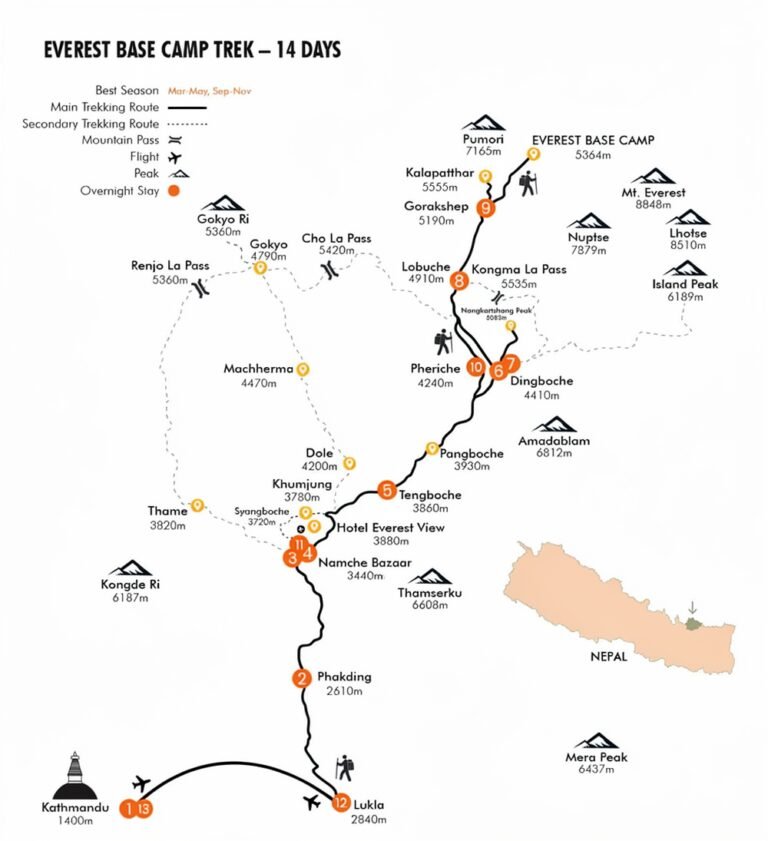
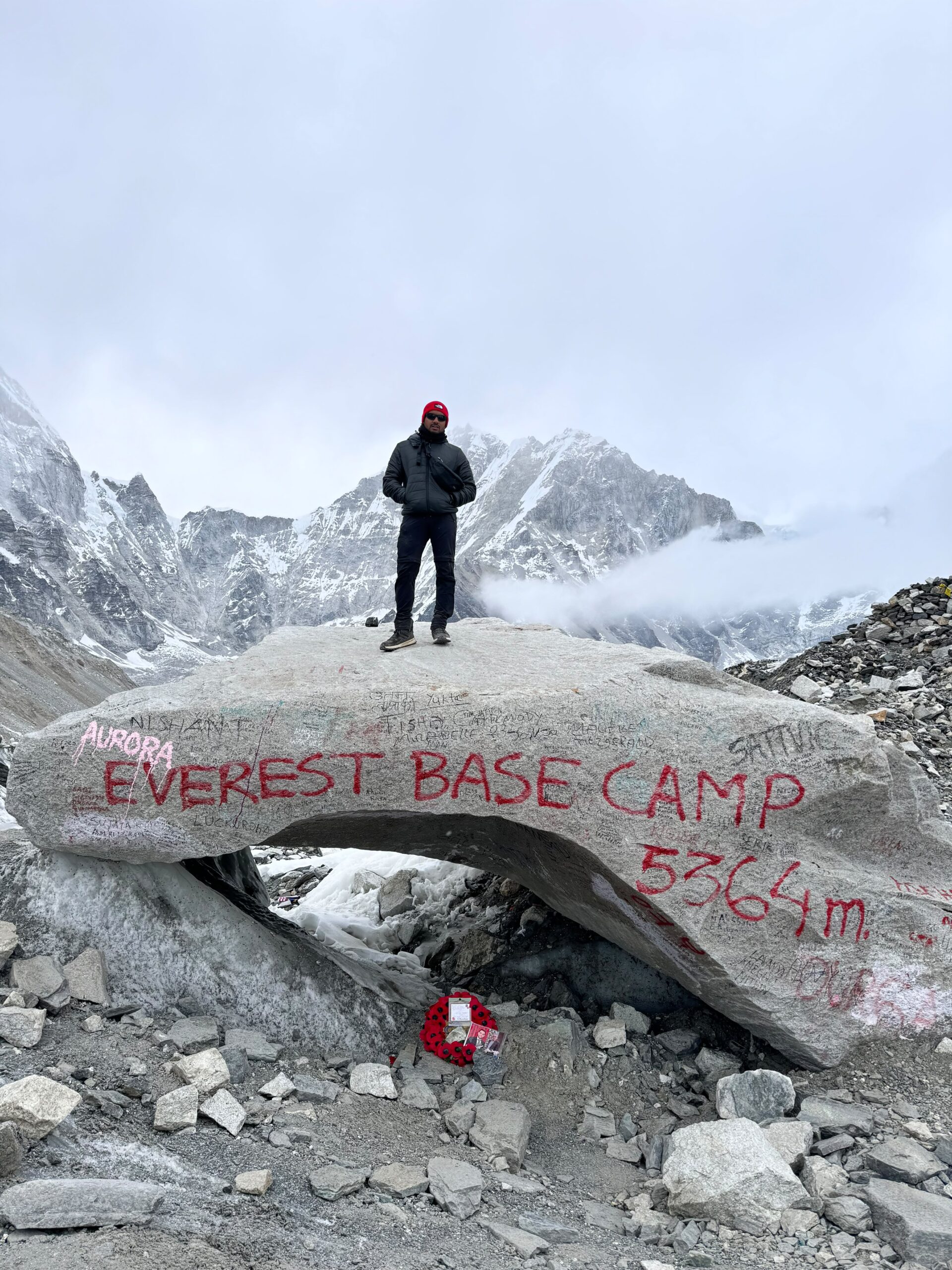
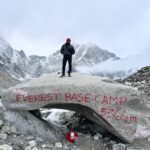
- From Everest Base Camp (Day 9): the Icefall rises directly above the rocks and prayer flags of Base Camp. In April and May you may see climbers’ head torches moving through it before dawn, and hear the crack of shifting ice.
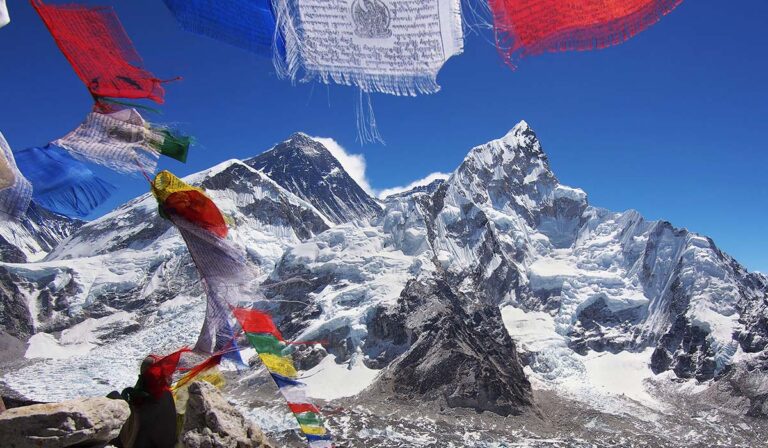
- From Kala Patthar (Day 10): the view shows the whole Icefall spilling out of the Western Cwm between Everest and Nuptse, the best way to understand its scale.
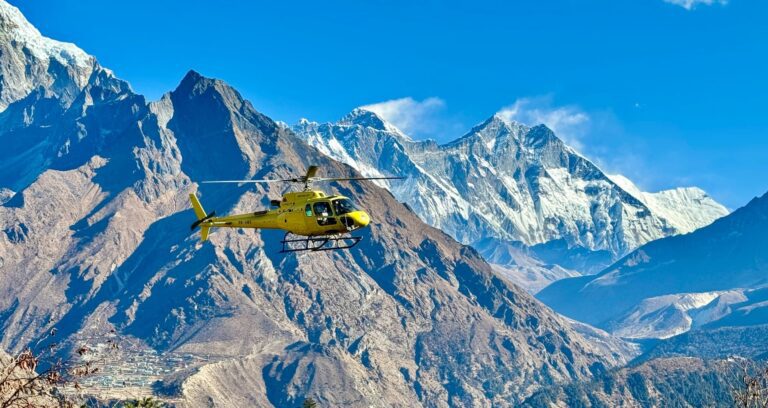
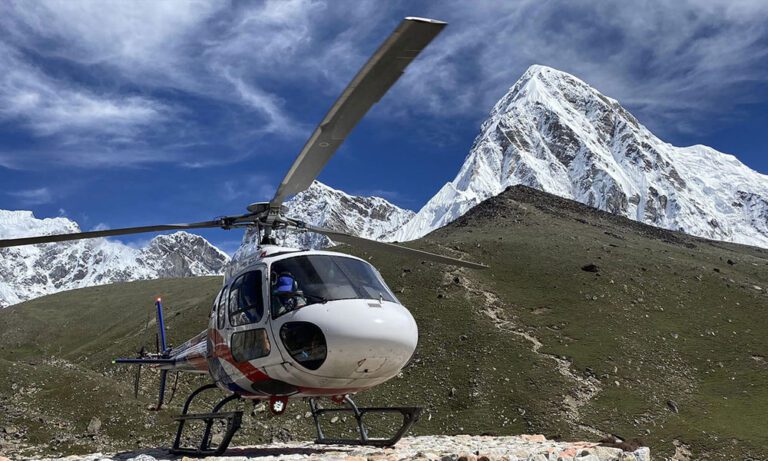
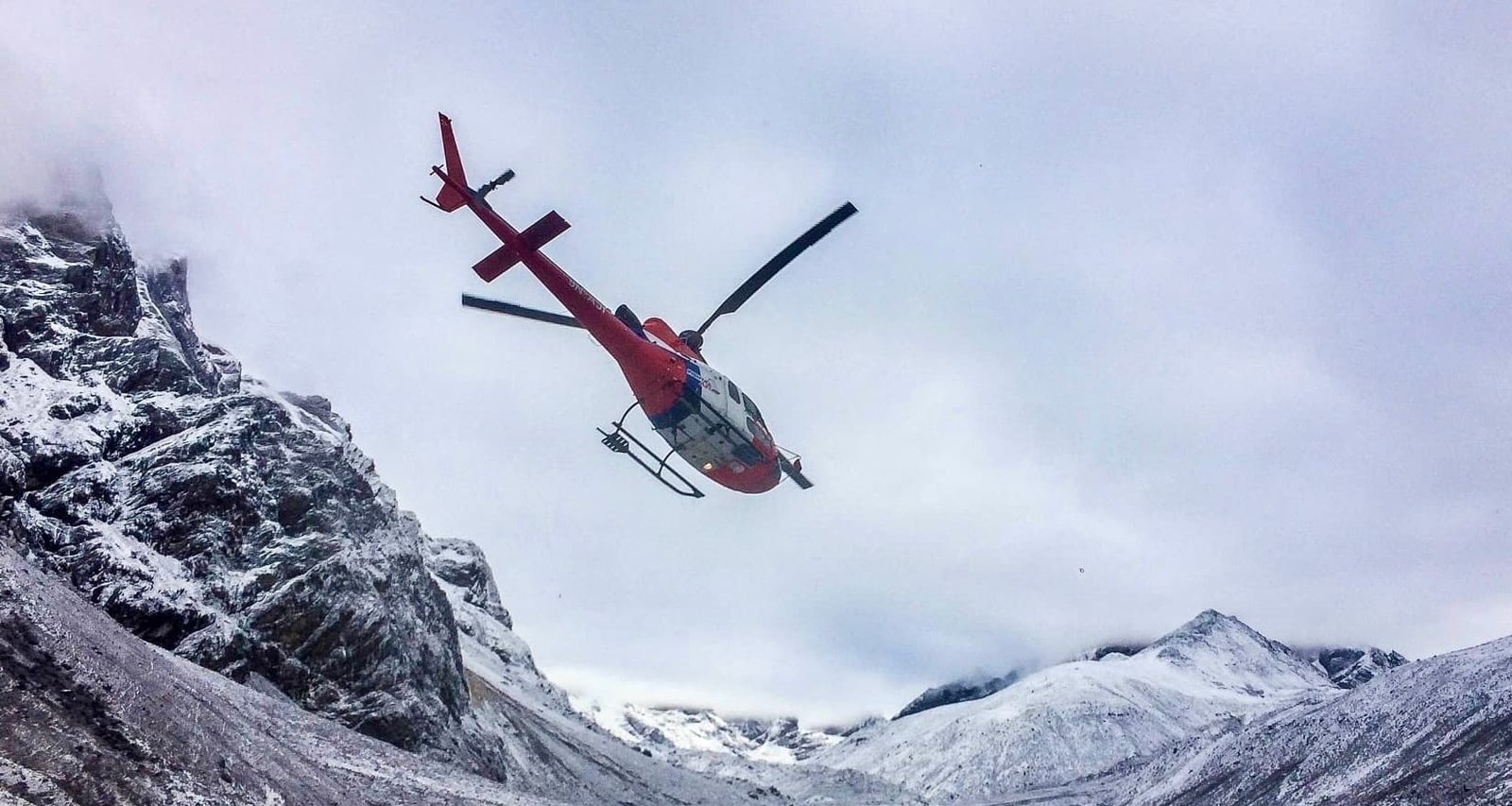
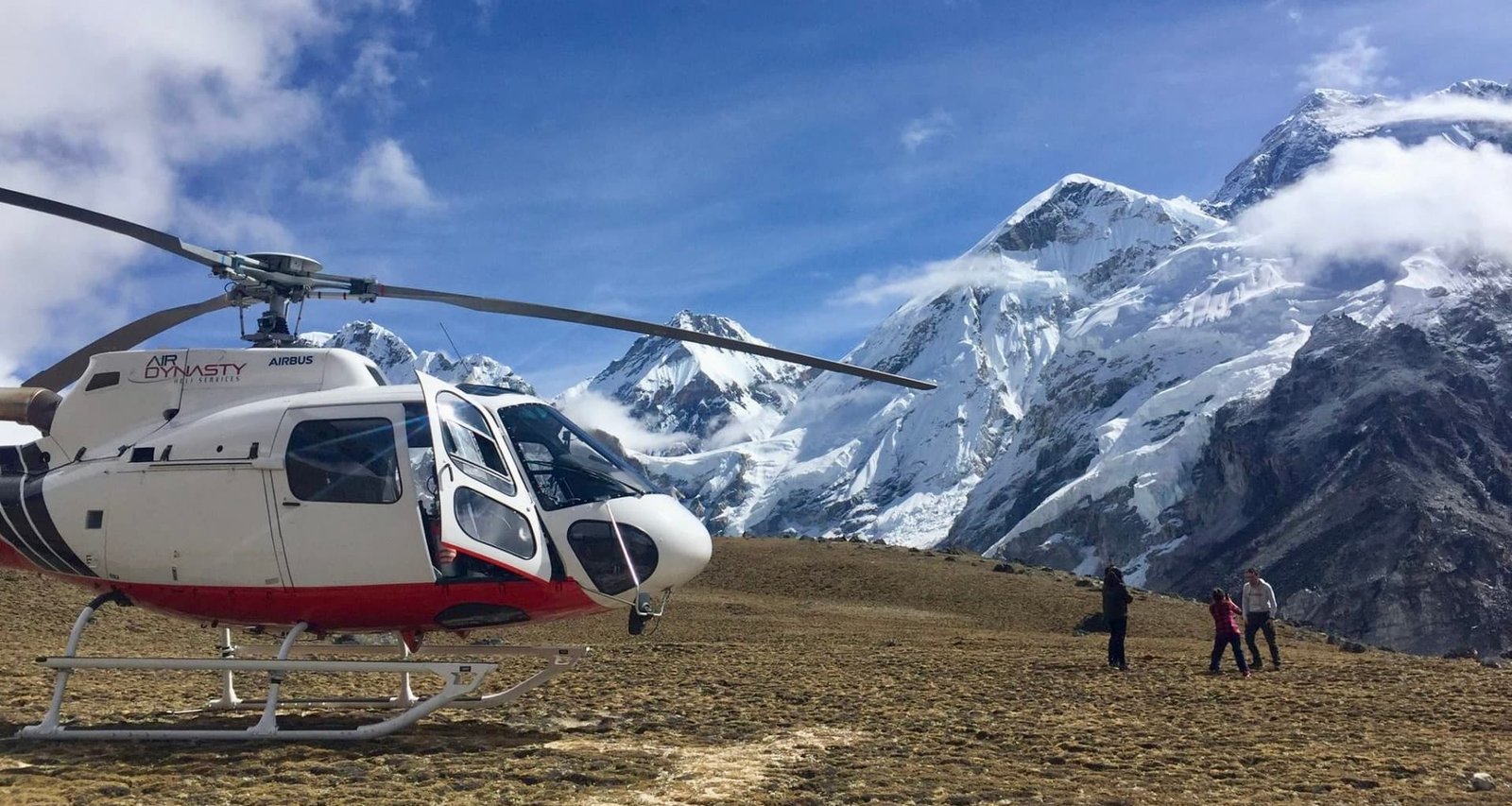
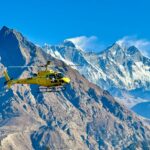
- From the air: our Everest helicopter day tour flies past the Icefall before landing at Kala Patthar.
Stay on the trail at Base Camp and do not walk onto the glacier towards the Icefall. The ice is unstable, crevasses are hidden, and the expedition area is off-limits without a climbing permit.
History: Hillary, Tenzing and the first crossing
The Icefall was first explored by Eric Shipton’s British reconnaissance in 1951, with a young Edmund Hillary in the team. In 1953 Hillary and Tenzing Norgay’s expedition forced a route through it with ladders and ropes on their way to the first ascent of Everest. It has been the gateway to the South Col route ever since.
Khumbu Icefall on the 14-day Everest Base Camp Trek
You see the Icefall on Day 9 at Everest Base Camp and again from Kala Patthar on Day 10. Read more about the trail on our day-by-day itinerary.
Highlights
- See the Icefall towering above Everest Base Camp
- Watch climbers' head torches in the ice before dawn in spring
- Understand its scale from the top of Kala Patthar
- Hear the crack and rumble of moving ice
- Learn how the Icefall Doctors build the route
Gallery

Location
Open in Google MapsFrequently asked questions
What is the Khumbu Icefall?
It is a steep, broken section of the Khumbu Glacier just above Everest Base Camp, where the ice falls out of the Western Cwm and breaks into seracs and crevasses. It is the first section of the South Col climbing route.
Can trekkers walk into the Khumbu Icefall?
No. It is very dangerous and only climbers with an Everest expedition permit may enter. Trekkers see it from Everest Base Camp and Kala Patthar.
How high is the Khumbu Icefall?
It climbs from about 5,400 m near Base Camp to about 6,000 m at Camp I.
Who are the Icefall Doctors?
A team of experienced Sherpa climbers who find and maintain the route through the Icefall every season with ropes and ladders, working for the Sagarmatha Pollution Control Committee.
Why is the Khumbu Icefall dangerous?
The ice moves constantly, so seracs can collapse, crevasses can open and avalanches can fall from the slopes above. Climbers cross early in the morning when the ice is most stable.
Can you see the Khumbu Icefall from Kala Patthar?
Yes. Kala Patthar gives the best overview of the Icefall spilling out between Everest and Nuptse.