



All travel info for Tours & Activities
Money in Nepal: ATMs, Cards, Cash & Tipping
Useful for: HolidaysTours & ActivitiesTrekking ToursMountain AdventuresTrekking AdventuresEverest Base Camp Trek
- Currency
- Nepali rupee (NPR)
- Pay with
- Mostly cash
- ATM limit
- NPR 10,000–35,000
- ATM fee
- NPR 500–800
- Card surcharge
- Often 3–4%
- On treks
- Cash only
- Tip a guide
- USD 10–15 / day
- Tip a porter
- USD 8–12 / day
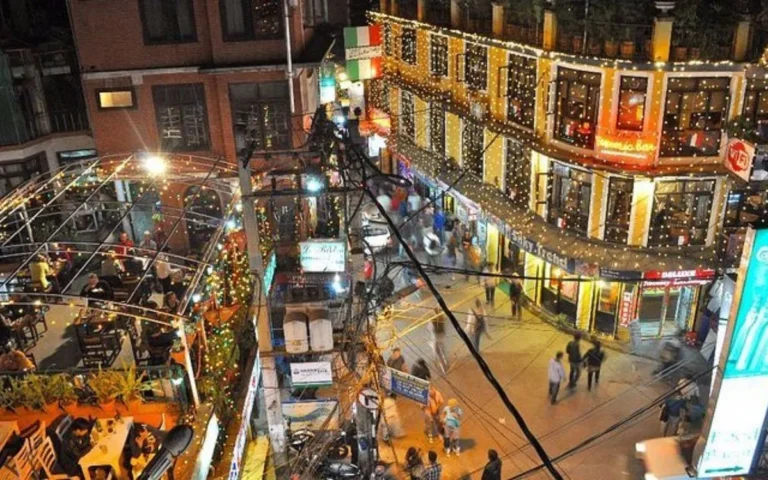
Nepal still runs mostly on cash. In Kathmandu and Pokhara you can pay by card in hotels, bigger restaurants and trekking shops, and ATMs are on almost every street in Thamel. Outside the cities, and on every trekking route, it is cash only. This guide explains how to get Nepali rupees, what ATMs and cards really cost, how much cash to carry on a trek, and how much to tip your guide, porter and driver.
Cash, Cards or Both?
Bring both, and expect to use cash for most things.
Cash (Nepali rupees) pays for taxis, local restaurants, entry tickets, small shops, tips and everything on a trek. Notes come in 5, 10, 20, 50, 100, 500 and 1,000 rupees. Keep a stack of 100s and 500s, because small sellers and taxi drivers often can't change a 1,000.
Cards (Visa and Mastercard; American Express less often) work in mid-range and upscale hotels, tour and trekking agencies, supermarkets, outdoor gear shops and many Thamel restaurants. A 3–4% surcharge is common, so ask before you pay.
Mobile wallets and QR codes are everywhere in Nepal, but most (Fonepay, eSewa, Khalti) need a Nepali bank account or phone number, so they are not much use to visitors yet. A few hotels and shops in tourist areas accept Alipay or WeChat Pay.
Nepali rupees can't be bought easily outside Nepal, so arrive with some US dollars, euros or pounds, or plan to use an ATM at the airport or in Thamel.
Nepali Rupee Converter
Live rates are a guide. Money changers and banks pay a little less than the rate shown, and ATMs use your card network's rate.
ATMs in Nepal: Limits and Fees
| What | Typical amount | Notes |
|---|---|---|
| Withdrawal limit per transaction | NPR 10,000–35,000 | Higher at Global IME, Himalayan and Standard Chartered; shown on screen |
| Nepal ATM fee | NPR 500–800 per withdrawal | Charged by the Nepali bank |
| Your home bank's fee | USD 3–5 or 1–3% | Check before you travel; travel cards often refund it |
| Currency conversion | Choose NPR | If the ATM offers to charge you in your home currency, decline: it costs 3–7% more |
| Daily total | About NPR 30,000–60,000 | Depends on your card and the bank |
Limits change and differ from machine to machine. Because each withdrawal carries a fixed fee, take the largest amount the ATM allows rather than several small amounts.
How to Withdraw Cash Safely
- 1Tell your bank
Let your bank know you are travelling to Nepal so the card isn't blocked on the first withdrawal.
- 2Use a bank ATM
Pick an ATM attached to a bank branch or inside a lobby with a guard, ideally in daylight.
- 3Take the maximum
Withdraw the most the machine allows to cut down on fixed fees.
- 4Decline conversion
When the screen offers to charge you in your home currency, choose NPR.
- 5Take your card
Some machines return the card after the cash. Wait for both before you walk away.
- 6Split your cash
Keep some notes in your wallet and the rest in a separate pocket or your hotel safe.
Exchanging Money in Nepal
Where to change. Banks, the exchange counters at Kathmandu airport and licensed money changers in Thamel and Lakeside Pokhara all change major currencies. Licensed changers display their licence and rates and give a receipt. Rates in Thamel are usually close to bank rates and better than at the airport.
Bring clean notes. US dollars, euros and pounds are the easiest to change. Torn, marked or very old notes are often refused, and USD 100 notes get a slightly better rate than small ones.
Keep your receipts. You need exchange receipts to change leftover rupees back at the airport, and you cannot use Nepali rupees outside Nepal. Spend or change them before you fly.
Indian travellers. Indian rupees are widely accepted at a fixed rate (INR 100 = NPR 160). Since late 2025, INR 200 and 500 notes are allowed again alongside INR 100 notes, within a per-person limit (reported as INR 25,000). Check the current rule before you travel.
Large amounts. If you carry a large amount of foreign cash (over about USD 5,000), declare it to customs on arrival.
Tipping in Nepal: How Much to Give
| Who | How much | Notes |
|---|---|---|
| Trekking guide | USD 10–15 per day | From the whole group, given at the end of the trek |
| Porter | USD 8–12 per day | Give it to each porter directly, not through the guide |
| City tour guide | USD 5–10 per day | For a half or full day of sightseeing |
| Private driver | USD 3–5 per day | More for long days or airport runs at night |
| Restaurants | 5–10% | Skip it if a 10% service charge is already on the bill |
| Hotel staff | NPR 100–200 | For carrying bags or extra help |
| Taxi driver | Not expected | Round up the fare if you like |
Tipping is not compulsory, but trekking crews earn a large part of their income from tips, and it is a normal part of every trek. Many groups put the tip in an envelope and hand it over at a small thank-you dinner in Kathmandu or Pokhara.
Money on Treks: Bring All Your Cash
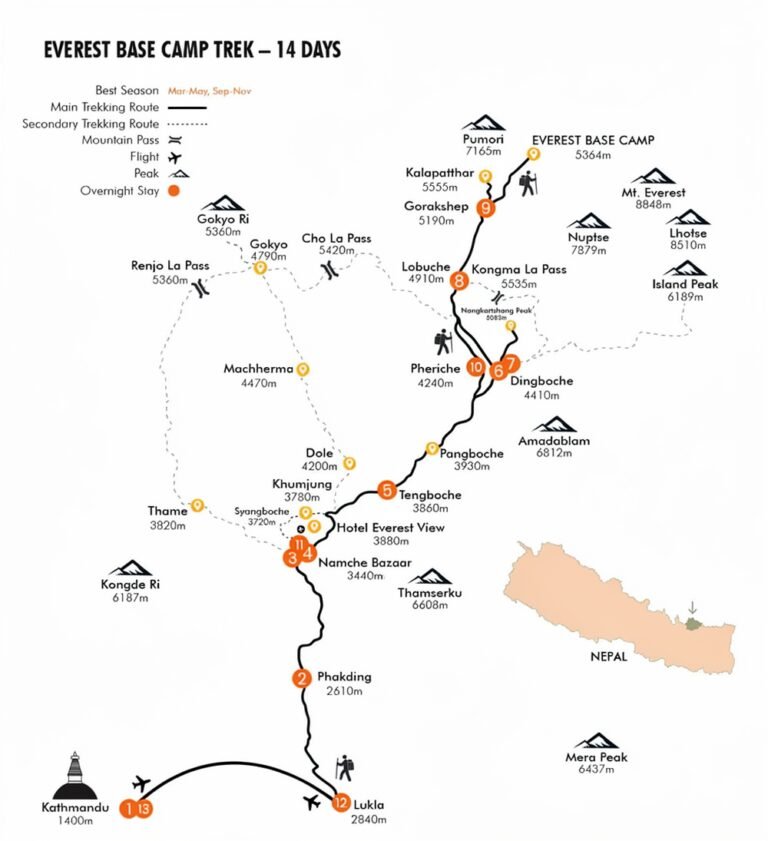
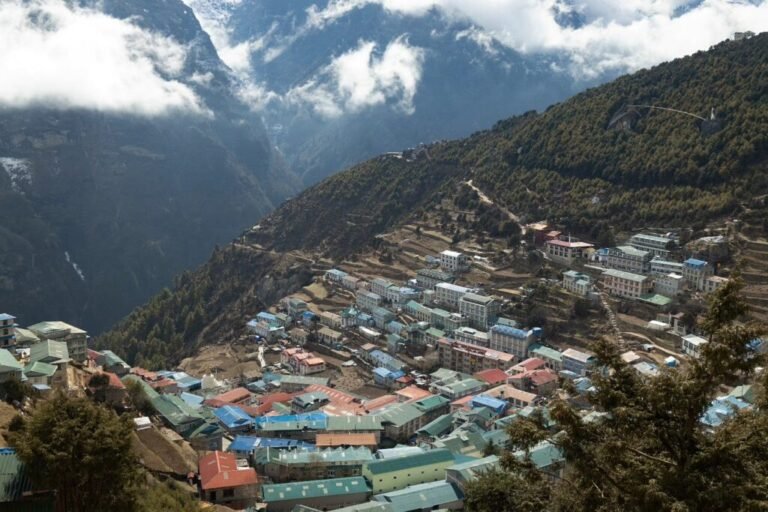
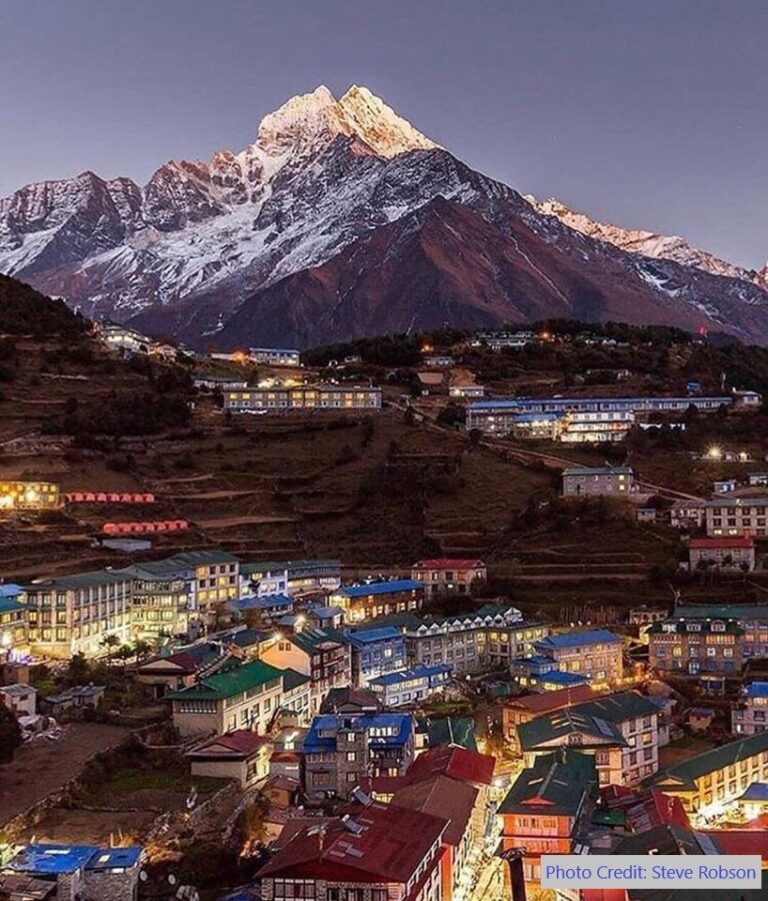
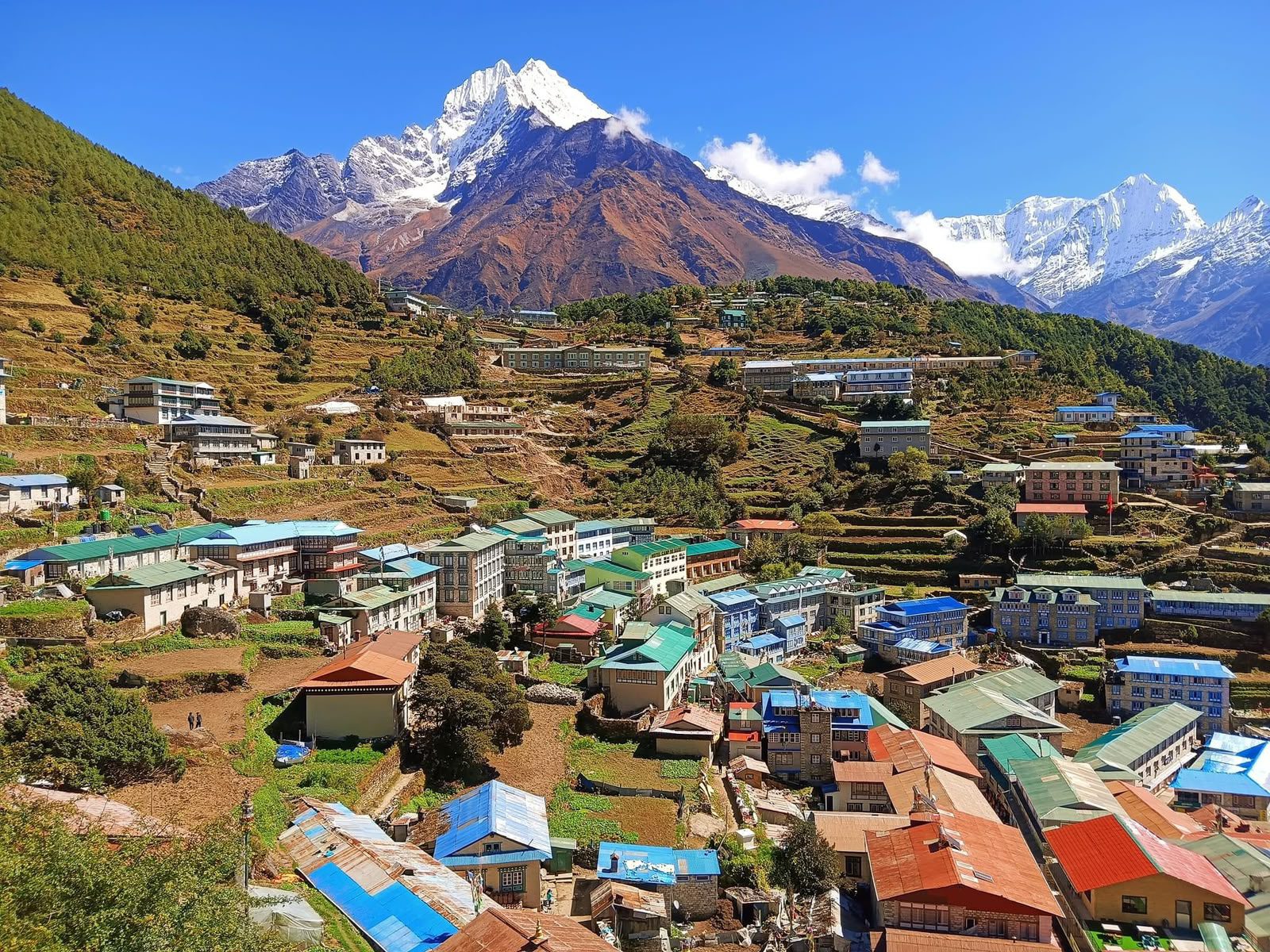
There are no reliable ATMs on trekking routes. Lukla and Namche Bazaar have machines, but they often run out of cash or go offline, and every lodge above them is cash only.
- Withdraw everything in Kathmandu or Pokhara before you start.
- On the Everest Base Camp Trek budget about USD 20–35 a day for things a package doesn't cover: drinks, snacks, hot showers, WiFi, charging and extra meals. Our Everest Base Camp trek cost guide has a full breakdown.
- Carry tip money for your guide and porter in a separate envelope.
- Keep rupees in a waterproof bag; damp, torn notes are hard to spend.
Daily Budget Calculator
Guesthouse, local food, buses and walking
Comfortable hotel, restaurant meals, taxis or a private car shared
Boutique hotel, guided tours, private car with driver
Per person per day in Kathmandu or Pokhara, not counting treks, flights or tours. For two or three days of sightseeing, see our 2 days in Kathmandu and 3 days in Kathmandu itineraries, which include full budget tables.
Money Do's and Don'ts
Do
- Carry small notes (NPR 100 and 500) for taxis, tickets and tips
- Agree taxi fares before you get in, or book a fixed-price car
- Ask about a card surcharge before you pay
- Keep exchange receipts until you leave Nepal
- Tell your bank you are travelling
Don’t
- Rely on ATMs above Lukla
- Accept charges in your home currency at ATMs
- Bring torn or marked foreign notes to exchange
- Flash large amounts of cash in markets
- Leave Nepal with rupees you can't spend
Money Checklist Before You Fly
0 / 0 packed
Before you leave home
In Nepal
Getting From the Airport Without Cash
If you land late and the ATM queue is long, you don't need cash for your ride. A private airport transfer to Thamel or a private taxi with driver booked online is paid in advance by card, and the driver waits at arrivals with your name. Read our Kathmandu Airport arrival guide for the ATM, exchange and SIM counters in the arrivals hall, and our SIM card guide to get connected on day one.
Frequently asked questions
Should I bring cash or use ATMs in Nepal?
Both. Bring some US dollars, euros or pounds in clean notes to exchange, and use ATMs in Kathmandu and Pokhara for the rest. Cash is needed for taxis, local restaurants, tickets, tips and all trekking costs.
Do ATMs in Nepal accept foreign cards?
Yes. Most bank ATMs in Kathmandu, Pokhara and other cities accept Visa and Mastercard. Global IME, Himalayan, Nabil, NIC Asia and Standard Chartered are popular with travellers.
How much can I withdraw from an ATM in Nepal?
Usually NPR 10,000–35,000 per withdrawal depending on the bank, with a fee of about NPR 500–800 each time. Take the maximum each time to save on fees.
Can I use a credit card in Nepal?
Yes, in mid-range and upscale hotels, agencies, supermarkets, gear shops and many Thamel restaurants. A 3–4% surcharge is common. Small shops, taxis and trekking lodges take cash only.
Are there ATMs on the Everest Base Camp trek?
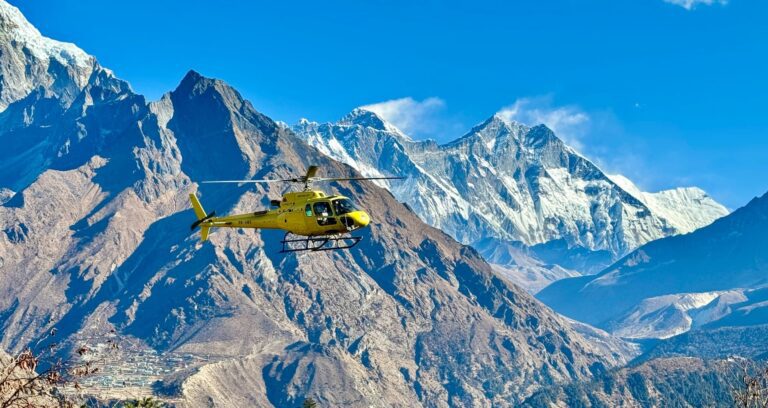
Lukla and Namche Bazaar have ATMs, but they are unreliable and often empty. Withdraw all the cash you need in Kathmandu before you fly to Lukla.
How much cash do I need for the Everest Base Camp trek?
On a package that includes meals and lodges, budget about USD 20–35 per day for drinks, snacks, showers, WiFi and charging, plus tips for your guide and porter.
How much should I tip a trekking guide and porter in Nepal?
About USD 10–15 per day for a guide and USD 8–12 per day for a porter, from the whole group, given at the end of the trek.
Is a service charge added in Nepali restaurants?
Many restaurants add a 10% service charge and 13% VAT to the bill. If the service charge is included, an extra tip is optional.
Can I use Indian rupees in Nepal?
Yes. Indian rupees are widely accepted at a fixed rate of INR 100 = NPR 160. INR 100, 200 and 500 notes are accepted within a per-person limit; check the current rule before you travel.
Can I exchange Nepali rupees back before I leave?
Yes, at Kathmandu airport or a bank, if you show your exchange receipts. Nepali rupees can't be used or easily exchanged outside Nepal.
More Nepal travel info
All Nepal travel info (4)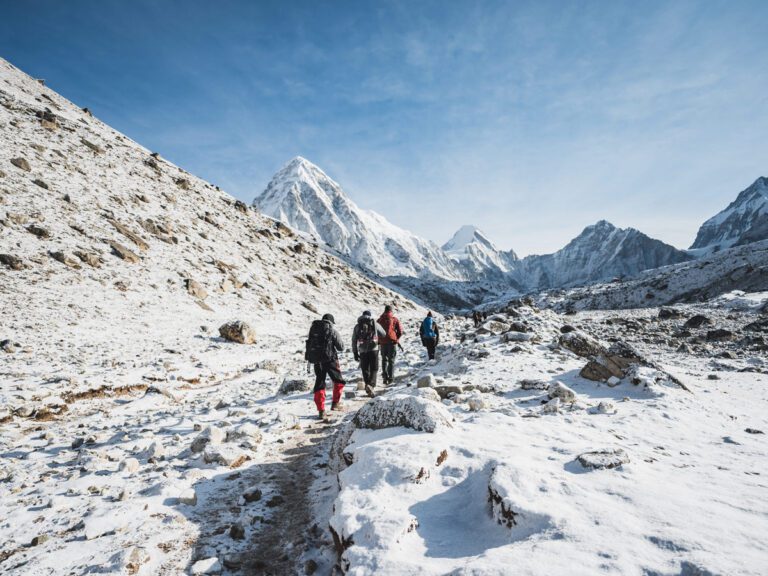
Traveller questions
No questions yet — ask the first one and our team will answer.